
You have likely walked away from a deal with the thought that you could have negotiated better. That feeling often comes from realizing your approach fell short and it cost you more than what you had anticipated.
This is not your fault because the majority of us have never been trained on how to negotiate, yet we are expected to be good at it from the very begining.
The truth is that negotiation is a skill that you can develop. The professionals you observe who are doing well in business and law acquired effective negotiation skills and perfected them with time.
This guide is here to help you improve your negotiation skills so you can show up to your next negotiation with actual confidence.
Let’s dive in.
Key Takeaways
- Negotiation skills are the strategies an individual or a business employs to settle on agreements with other people in case there is a divergence between what one wants and what the other desires.
- You need to prepare beforehand in order to achieve the optimum result at the negotiation table.
- When negotiating, you must closely watch the body language of the other person and not just what they say.
- The most effective method of knowing whether you are improving your negotiation skills is by keeping a record of your successful negotiations.
What Is Negotiation Skills
Negotiation skills are the skills you employ to achieve a mutual understanding with another individual when you each desire different results. The idea is that you negotiate till you reach the point where the deal becomes a win-win.
Any negotiation skills training you take would make one thing clear: Negotiation is not about winning a fight or forcing someone to submit to your demands.
The core of it all is negotiating such that you arrive at a solution that is just to both parties, rather than competing to win.


Never Worry About AI Detecting Your Texts Again. Undetectable AI Can Help You:
- Make your AI assisted writing appear human-like.
- Bypass all major AI detection tools with just one click.
- Use AI safely and confidently in school and work.
Essential Negotiation Techniques To Learn
You can take the techniques in this negotiation skills course as a pathway for you to become a master negotiator and achieve better outcomes in your future negotiations.
Prepare Before You Start
Without proper preparations, you cannot get into a negotiation because you will fail to secure more favorable deals. Successful negotiators plan their next course of action before they come to the negotiation table.
This is supported by a study conducted in 2002, which indicated that negotiators who made specific goals would always perform better than their unprepared counterparts who made no specific goals.
This means that you have to find out what the other party wants and offer that in exchange for what you want in the deal.
The other aspect of preparation is to evaluate those areas you can let go of so that you can achieve a satisfactory result.
Identify Your BATNA (Best Alternative to a Negotiated Agreement)
This is basically your backup plan if you can’t get a beneficial deal or the negotiation falls apart completely.
Although you want a mutually beneficial deal in a negotiation, you have to leave your options open, so you’re not stuck in a bad deal.
For example, if you are negotiating a job offer, you can comfortably negotiate from a position of strength if you already have another solid offer elsewhere.
Harvard even suggests that negotiators who identify their BATNA before entering negotiations are significantly more likely to achieve favorable outcomes.
Find Your Leverage
The leverage could be information, time or an advantage that the other individual badly requires that you can provide.
The better you get to know the position of the opposing party, the easier it is to identify the leverage points and softly drive the negotiation process towards an outcome that will benefit everyone.
In practical terms, if a client of yours needs your service before a tight deadline, then you have a time leverage that works in your favor.
This could be a home seller whose property has sat on the market for six months with no offers. As a buyer, you can use this situation to negotiate a lower price for the home.
Build Rapport Early
You can also take some minutes to chat before you plunge into the negotiation with figures or terms. This will reduce tension and establish a better mood so that the other individual becomes relaxed with you.
It will also create a positive view of you in their eyes and increase your chances of them accepting your terms.
Establishing rapport does not imply attempting to be best friends with them. Rather, you are demonstrating to the other individual that you regard him or her as a human being. This little investment in the relationship goes a long way.
Anchor the Negotiation
During a negotiation process where funds are involved, the first person to put a price on a service or a product forms a benchmark on which the parties will negotiate.
This is a cognitive bias that is well recorded in psychology and referred to as the anchoring effect.
This can be utilized to your advantage whether you are selling or purchasing something. For instance, when selling an artwork, you need to begin with a huge price that the other person haggles down to a lower price. But you have to make sure that your anchor is moderate so that your negotiation partner does not end things right away.
Find Tradeoffs
You can’t be too rigid in a negotiation as you both are trying to reach a middle ground. This is where you need to have flexible areas that don’t cross your bottom line.
This technique is important because a point that matters a lot to your negotiation partner might matter little to you. This also works the other way around.
Based on this, you may seek tradeoffs, sacrificing something cheap in favor of something of high value. A freelancer may accept a rate that is slightly reduced, say, with a longer contract offered with assured steady earnings.
Plan for the Implementation Stage
The moment you shake hands does not mean your negotiation is finished. The deal is just half complete.
After the process of negotiation is closed, it is high time that everything is written out clearly, spelling out what is expected of each party, and above all, what happens when one of the parties fails to perform their part of the bargain.
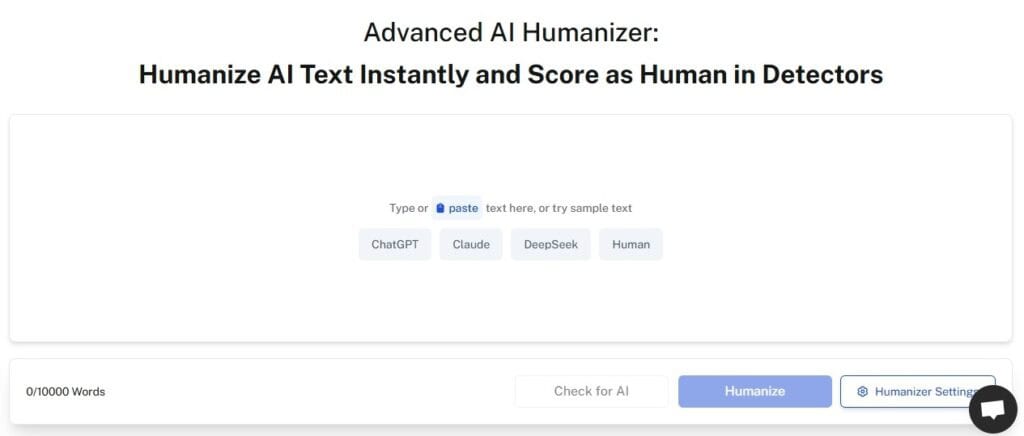
This is just the process our Undetectable AI’s AI Humanizer is designed to help with, ensuring the tone in your emails and client correspondence feels real and natural.
That way, there’s no chance of the other person walking away with a completely different understanding of what was agreed on.
Common Negotiation Mistakes To Avoid
To keep your negotiation from falling apart right from the start, there are some rookie mistakes you must steer clear of:
Overlooking Preparation and Research
Going to a negotiation without research is equivalent to going to an exam without revision. You stand a chance of getting through to the end, but the result will not be a pretty one.
That is why you must not attempt to sail through crucial negotiations without proper preparation. However, with a plan and doing the right research, you will be making strategic long-term decisions.
Focusing Only on Your Own Needs
It is among the worst errors that you can commit during a negotiation. When you only concentrate on what you seek, the other person will feel exploited and be reluctant to cooperate.
You must know that negotiation is not a fight in which one party wins and the other loses. The finest deals occur when both parties believe that they obtained something significant in the bargain.
Ignoring Body Language or Tone Cues
During a negotiation, words can be misleading. Their words can mean a different thing compared to what their body is communicating to you. This is why much of the communication is nonverbal.
For example, when the other individual sits back, crosses his or her arms at the moment you offer something, then it may signify that they don’t like the offer.
Additionally, their tone of voice matters just as much. A change in pitch or a forced enthusiasm can signal doubt or discomfort. You’ll have to pick up on these cues to address concerns before they become deal breakers.
How To Prepare For Successful Negotiations

Your preparation determines your success before you even enter the room, and you can prepare using the following steps:
- You have to look up the background of the other person and note what pain points they may be experiencing that you can solve.
- Also, collect information regarding the prevailing market trends and pricing by competitors so that you can defend your ground.
- You need to write down your lowest acceptable conditions so that you do not lose track when the other party attempts to push your bottom line.
- Think about possible objections that they will present and come up with answers beforehand.
- In the event that the negotiation falls through, you need to have a very good contingency plan so you can walk away from a bad agreement.
Applying Negotiation Skills In Daily Life
Oftentimes, we think of negotiation as an activity that happens exclusively in boardrooms and between mega corporations. But negotiation is part of everyone’s daily life more than you realize.
You need to consider improving negotiation skills in these daily life scenarios:
- At Work: This is a common place where you get to negotiate your job offer and ensure the benefits you get match the value you bring to the organization. This can even happen when you negotiate deadlines and deliverables with your manager.
- At your Company: When you own a business, you’ll have to negotiate deals with clients and contractors so you get favorable outcomes. On the other hand, when working with freelancers on sites like Upwork and Fiverr, you’ll have to negotiate service fees with them.
- At Home: In this domestic scenario, you can negotiate chores and holiday destinations with your partner or kids. Your home is full of opportunities for you to negotiate on day-to-day activities.
- Negotiating Major Purchases: This is another common scenario where you want to buy your dream car or home. Most prices on major purchases are not as fixed as they appear. You can meet the manager or seller and negotiate prices that fit into your budget.
- During Conflicts: When you disagree with someone you care about, your emotions will run high. The conflict can escalate because both sides think they’re not being heard. At such times, you need to negotiate and be able to come to some form of agreement. Being able to negotiate better enables you to listen more to the other individual and build strong relationships.
How Undetectable AI Can Assist In Negotiation Skills
Good negotiation begins long before you are at the table, since a lot of this occurs in the proposals that you prepare and the emails that you exchange with the person.
Undetectable AI will come in handy in your preparation process with its suite of tools designed to make your writing persuasive and clearer while preserving your voice.
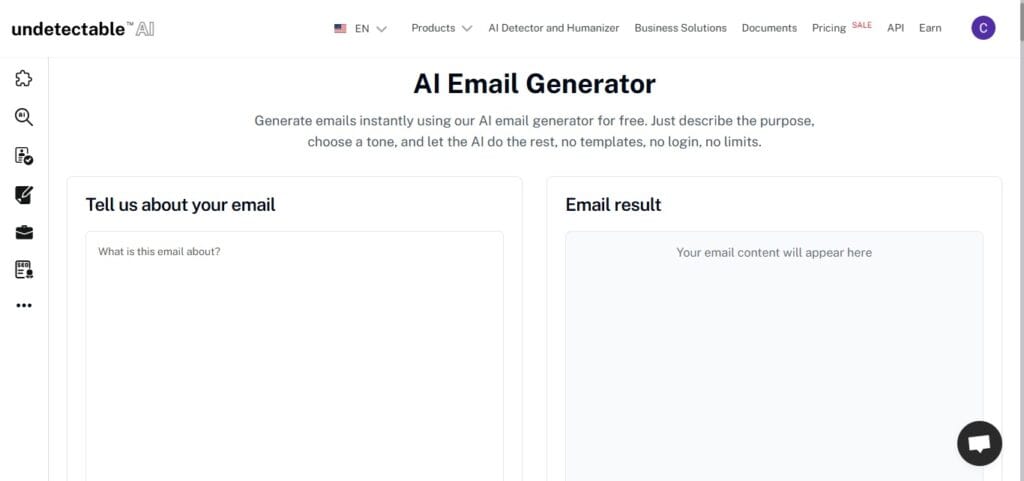
For instance, rather than sitting by a computer screen, not knowing how to write a professional negotiation email, our AI Email Generator can draft a customized and polished email that’ll catch your client’s attention.
This also helps save your time so you can concentrate your efforts on strategy and preparation.
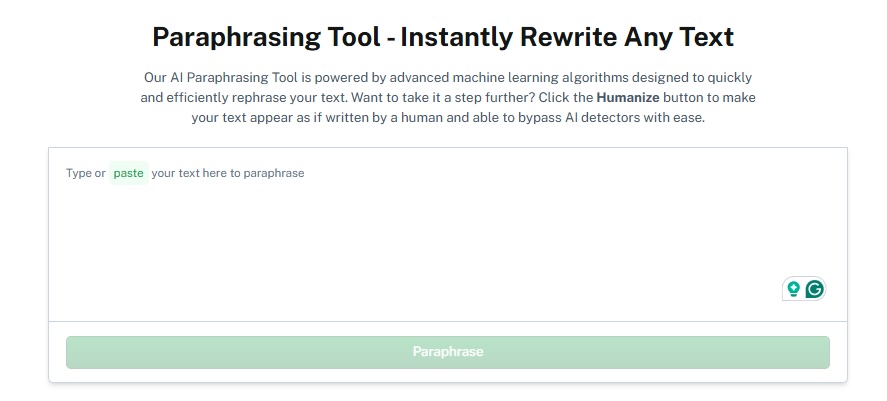
In addition to that, our AI Paraphrasing Tool lets you refine your negotiation messages, ensuring they don’t sound cold and transactional. You can tweak the results until the tone meets your needs while still making your case.
Tracking Your Negotiation Progress Over Time
You can treat negotiation as a measurable skill that can be improved as you practice your negotiation skills.
Use the following steps to set up a consistent review system:
- Record the details of every deal you attempt and compare the initial offer to the final agreement.
- Reflect on specific techniques you used during the negotiation and which ones worked well with your client, or shortcomings you need to improve on.
- Look back on how you felt when the other person pushed back on your demands. A strong reaction indicates that you need to be calmer under pressure as you negotiate.
- You can ask your colleague or a neutral observer for feedback. Sometimes they’ll catch things in your tone or body language that you completely missed in the moment.
- Lastly, create a simple scorecard with the core negotiation skills you want to develop so you can work on them.
Give the AI Detector and Humanizer a try right below!
Final Thoughts
Nobody becomes a great negotiator overnight. It takes actual skills and long-term practice to become a master negotiator. However, by learning the techniques and being willing to look for that middle ground, you will get to walk away from future negotiations with better outcomes.
In the meantime, as you are practicing these skills, the tools on Undetectable AI are there to help you show up sharper in the written parts of the process of negotiation, such as emails, proposals, and follow-ups. The rest is practice.
Refine your negotiation emails, proposals, and follow-ups with Undetectable AI so every message lands clearly and professionally.