
Read this sentence…
“Time flies like an arrow; fruit flies like a banana.”
What did you feel while reading this? Did you think it was talking about how fast time passes? Or did you realize it’s about insects that love bananas?
The sentence you just read is a paronomasia example.
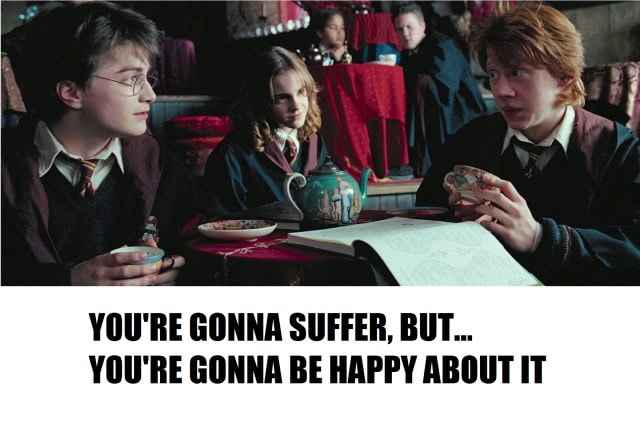
If you’ve watched the Harry Potter series, you’ll remember Fred Weasley’s iconic line:
“You’re going to suffer, but you’re going to be happy about it”
Here, he’s playing on “suffer” and “Hufflepuff.”
Today in this blog, we’re covering this fascinating rhetorical device.
We’ll explore what paronomasia is, its meaning, powerful paronomasia examples, and how it works in your brain.
Then we’ll discover why writers use it so heavily, what common mistakes to avoid, the different types, and real-world exemple paronomasia from literature, speeches, and pop culture, including paronomasia music.
Let’s dive in.
Key Takeaways
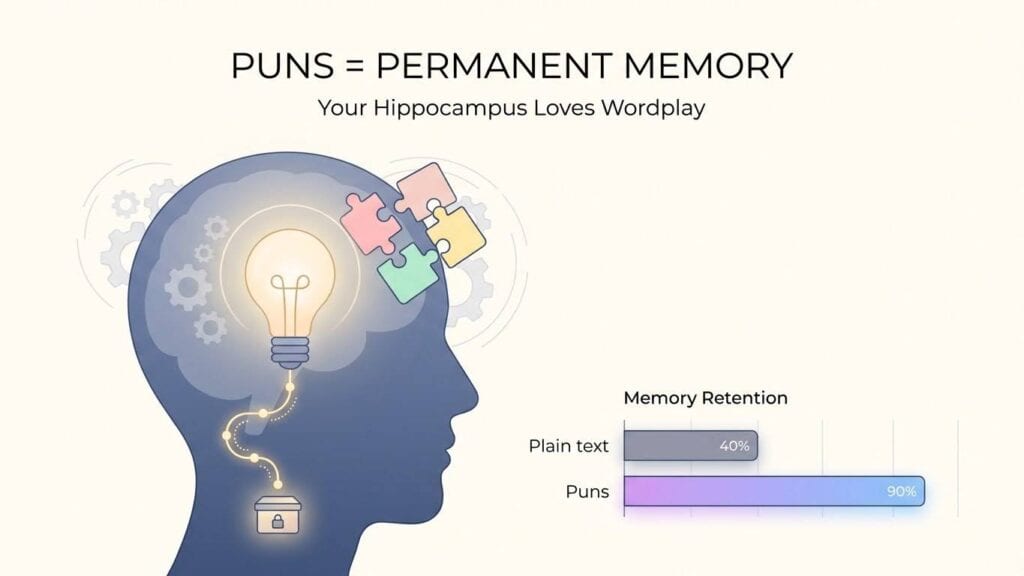
- Paronomasia is wordplay where similar-sounding words create double meanings, making ideas stick in memory longer than plain statements.
- Paronomasia examples range from Shakespeare’s 3,000+ puns to modern hip-hop lyrics.
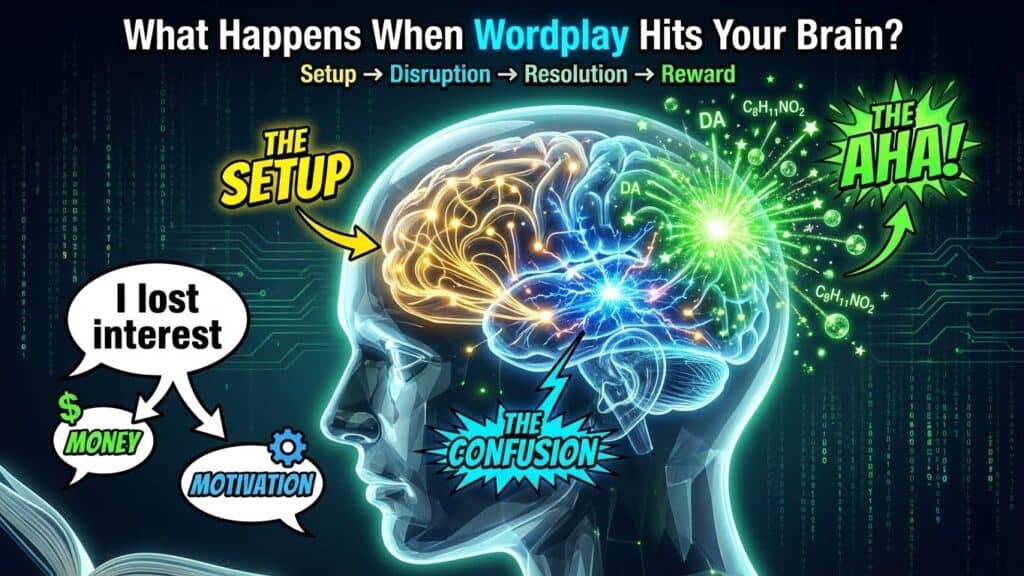
- Your brain activates three regions when processing puns: expectation building, ambiguity resolution, and the rewarding “aha” moment.
- Paronomasia music in Hip Hop, K-Pop, and Country uses bilingual and compound wordplay to layer meaning within beats.
- Writers use paronomasia to grab attention, soften criticism, add intelligence without explanation, and make content instantly memorable.
What Is Paronomasia?
Paronomasia is a figure of speech that plays with sound and meaning.
Simply put, paronomasia uses words that sound the same (or almost the same) but have different meanings.
This similarity in sound creates a double meaning that makes the sentence more interesting, clever, or memorable.


Never Worry About AI Detecting Your Texts Again. Undetectable AI Can Help You:
- Make your AI assisted writing appear human-like.
- Bypass all major AI detection tools with just one click.
- Use AI safely and confidently in school and work.
- Paronomasia Definition
The word paronomasia comes from the Greek term paronomasía (παρονομασία):
- para = beside
- onoma = name
Literally, it means “to name beside,” placing one meaning next to another. From this, we get the definition:
Paronomasia is a rhetorical device in which similar-sounding words are placed close together to create double meaning, wordplay, or humor.
Example:
“I used to be a banker, but I lost interest.”
Here, the word interest works on two levels:
- Financial interest (money)
- Personal interest (motivation)
The sound stays the same, but the meaning shifts, and that shift is what makes the sentence witty and effective.
Roman rhetoricians later referred to paronomasia as agnominatio. They viewed it not as a joke, but as a deliberate technique for emphasis, persuasion, and memorability.
- Paronomasia Examples
Below are five strong paronomasia examples, followed by a simple breakdown of why each one works.
- “I’m reading a book on anti-gravity. It’s impossible to put down.”
Put down works in two ways:
- Physically stopping reading
- Gravity-related meaning
- “A bicycle can’t stand on its own because it’s two-tired.”
Breakdown:
- Two-tired sounds like too tired
- One refers to wheels, the other to exhaustion
- “Time flies like an arrow; fruit flies like a banana.”
Breakdown:
- Flies shifts from a verb (moving fast) to a noun (insects)
- The sentence structure stays similar, but the meaning flips
- “I wondered why the baseball was getting bigger. Then it hit me.”
Breakdown:
- Hit me works literally (the ball) and figuratively (realization)
- Same phrase, two interpretations
- “Seven days without pizza makes one weak.”
Breakdown:
- Weak sounds like week
- One refers to strength, the other to time
These classic exemple paronomasia demonstrate how a single sound can carry multiple meanings simultaneously.
How Paronomasia Works
Now, let’s get into the science of why your brain enjoys puns. When you hear paronomasia, multiple brain regions activate at the same time.
Step 1: The Setup (Expectation Building)
Your brain starts predicting the meaning.
Example:
If a sentence says “I spent all day at the library…”, your brain immediately activates book-related concepts like reading, shelves, pages, studying.
This process happens in the left superior frontal gyrus, which handles linguistic context and expectation.
At this stage, your brain commits to the most likely meaning.
Step 2: The Hinge Word (Disruption)
Then comes the word that sounds the same but carries another meaning (called the hinge word).
Example:
“I spent all day at the library and still couldn’t check out.”
At first, “check out” is processed as borrowing a book. But as the sentence finishes, that meaning no longer fits cleanly. Something feels off.
Step 3: The Switch (Ambiguity Resolution)
That discomfort triggers a mental pivot.
The left inferior frontal gyrus (LIFG) jumps in to resolve the ambiguity. Your brain reopens the word and searches for an alternative meaning, leaving instead of borrowing.
Now your brain holds both meanings at once instead of discarding either.
Step 4: The Reward (The “Aha” Moment)
Once the ambiguity clicks, the ventromedial prefrontal cortex (vmPFC) and amygdala activate.
These regions are tied to reward, emotion, and pleasure. This is the “aha” moment.
Why Writers Use Paronomasia
Writers use paronomasia for various reasons, such as:
- To Grab Attention Instantly
Most writing is predictable. A pun breaks that pattern. When a word suddenly carries two meanings at once, the brain has to slow down and re-read. That pause forces engagement.
- To Make Ideas More Memorable
When one sound points to two meanings, the brain creates a stronger memory trace. Mental work activates the hippocampus, which is why puns stick longer than plain statements.
This is especially useful in headlines, slogans, poetry, and dialogue.
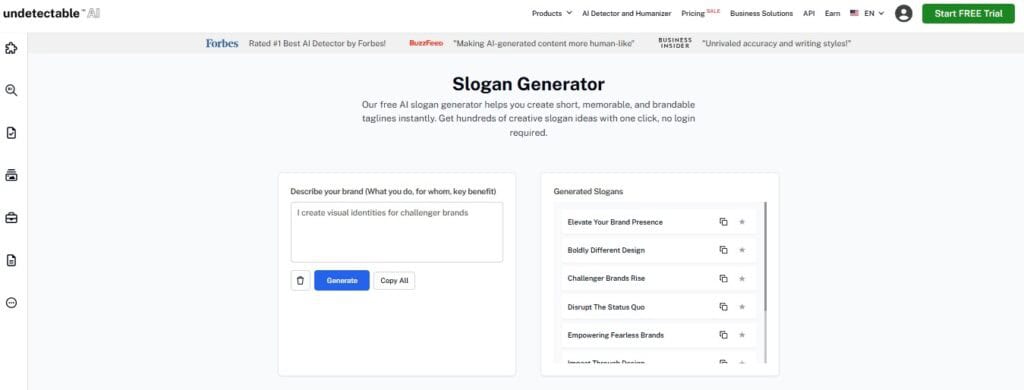
To apply this cognitive “hack” to your own brand, try using Undetectable AI’s Slogan Generator.
It is a specialized tool designed to inject clever paronomasia into your marketing for a tagline that is both witty and memorable.
By inputting your business category and core values, the generator can find those surprising “hinge words” that turn a standard service description into a clever, dual-meaning hook.
- To Add Intelligence Without Explanation
Paronomasia lets writers say more without saying more. Instead of explaining a joke, an emotion, or a critique, the double meaning does the work quietly.
- To soften Criticism and Sharpen Satire
Historically, paronomasia has been used to dodge censorship and deliver critique safely. Because the meaning is layered, the writer can always retreat to the surface interpretation.
- To Add Rhythm And Play To Language
Paronomasia turns language into a game. The playfulness keeps writing lively and human. That’s why it appears so often in Shakespeare, hip-hop lyrics, advertising, and everyday jokes.
Types of Paronomasia
Here are the top 7 exemple paronomasia types:
| Type | What It Means | How It Works | Example |
| Homophonic | Words sound the same but are spelled differently | The brain hears one sound but thinks of two meanings at the same time | “Atheism is a non-prophet institution.” (prophet / profit) |
| Homographic | Words are spelled the same but have different meanings | The brain reads the same word in two ways | “Ask for me tomorrow, and you shall find me a grave man.” (grave = serious / dead) |
| Homonymic | Words sound and are spelled the same but mean different things | Context tells the brain which meaning to use | “The battery charged the soldier.” (battery = device / attack / legal action) |
| Compound | A whole sentence or phrase has two meanings | Each part of the sentence works on a literal and a figurative level | “I’m reading a book on anti-gravity. It’s impossible to put down.” |
| Portmanteau | Two words are blended into one | The new word combines both meanings | Mockumentary (mock + documentary) |
| Recursive | The pun depends on knowing the first part or extra knowledge | You need to understand the first part to get the joke | “π is only half a pie.” |
| Bilingual | Words in two languages sound similar | Your brain connects the sound from one language to another meaning | “One egg is un oeuf.” (French un œuf / English enough) |
You can use an AI Paragraph Generator to quickly list types of paronomasia along with short examples.
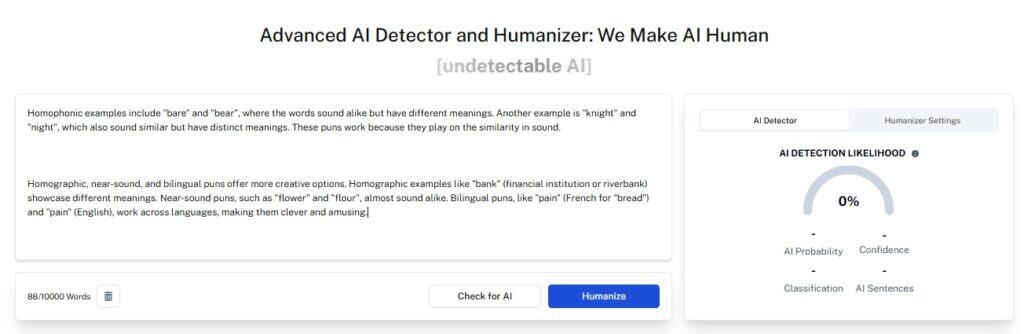
It’s a handy way to organize ideas, explore wordplay, and even spark your own creative twists without losing the nuance of each type.
Paronomasia in Literature, Speeches, and Pop Culture
Let’s explore how paronomasia examples work in different contexts:
- Shakespeare
Shakespeare wielded over 3,000 puns to explore human complexity and irony.
For example:
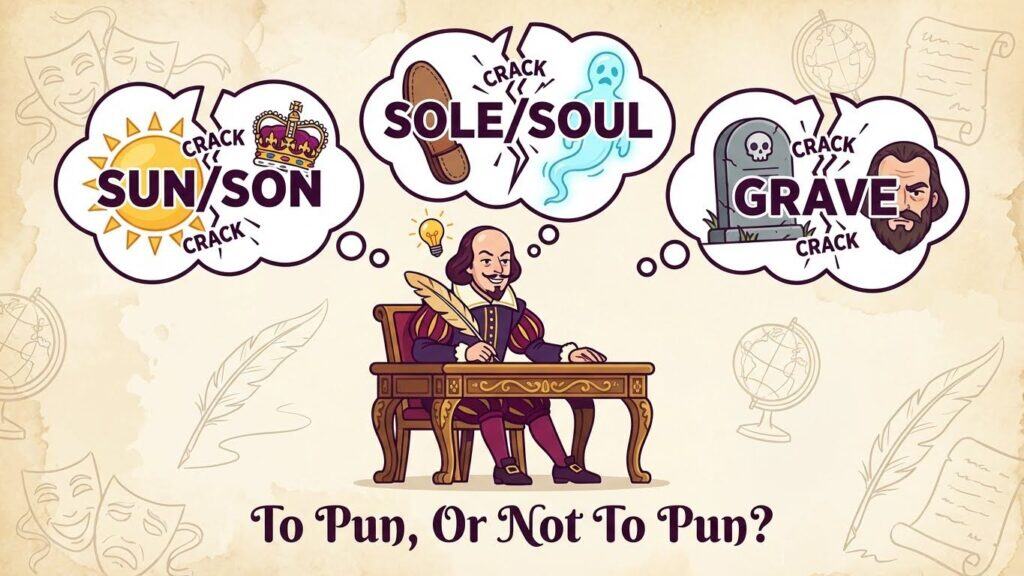
- In Hamlet, he writes, “I am too much in the sun/son,” playing on “sun” (light) and “son” (heir) to highlight Hamlet’s conflicted feelings toward his uncle.
- In Romeo and Juliet, “nimble soles; I have a soul of lead” contrasts physical lightness with emotional heaviness through the words “soles” and “soul.”
- Paronomasia in Speeches
Paronomasia in speeches makes ideas memorable and impactful.
For example:
- John F. Kennedy’s iconic line, “Ask not what your country can do for you—ask what you can do for your country,” reverses expectations.
- Barack Obama in 2008 reminded listeners, “We are the change that we seek,” using repetition and subtle wordplay to reinforce personal responsibility.
- Modern Literature
James Joyce and other modernists turned paronomasia into a structural principle.
For example:
- In Finnegans Wake, the word “commodius” blends “commodious” (spacious) with the Roman emperor “Commodus,” forcing readers to unpack multiple layers of meaning.
- Music
Music, especially lyric-heavy genres like Hip Hop, Country, and K-Pop, thrives on paronomasia.
For example:
- Jay-Z’s lyric “Hoes turn their heads like owls / I’m the man of the hour” plays on “hour” (time) and “owl” (bird), creating a memorable exemple paronomasia in modern rap.
- Kanye West’s “Too many Urkels on your team, that’s why your wins low” uses “Wins low” versus “Winslow,” referencing both a score and a TV character.
- K-Pop often uses bilingual puns. Blackpink’s “Solo” line “bich-i naneun solo” means “shining solo” in Korean, but sounds like “Bitch, I’m a solo” in English, adding attitude for international audiences.
These paronomasia music examples show how artists layer meaning within beats, making lyrics work harder while keeping the flow smooth.
Common Mistakes With Paronomasia
With paronomasia, it’s easy to slip into errors that make a pun feel awkward, forced, or flat.
Here are the common pitfalls and how you can fix them to help your wordplay land naturally and effectively.
- Overly Forced Puns
A common mistake is shoehorning a pun into a sentence where it doesn’t fit the context. For example:
- “I’m reading a book on clocks. It’s about time I started.”
Here, the pun exists, but it feels strained.
- Mechanical Insertion
Some puns are clearly written for effect but lack flow or subtlety. For example:
- “I wanted to be a baker, but I couldn’t make enough dough.”
While functional, it reads rigid. Smooth the phrasing to make it conversational:
- “I thought about baking as a career, but I realized I just couldn’t make the dough.”
- Ambiguity Without Clarity
A pun can fail if the secondary meaning is too obscure. For example:
- “The musician was sharp, but he also played flat.”
Without context, it might confuse readers. Add subtle clues:
- “The musician hit all the right notes, though sometimes he played flat.”
- Overloading Multiple Puns
Stacking too many puns in one sentence can be overwhelming. For example:
- “I was reading about birds, but it was a real fowl experience that ruffled my feathers.”
Too many wordplays dilute the humor. Keep one strong pun per sentence:
- “I read about birds—what a fowl experience!”
Whenever you try a pun for the first time, mistakes are normal. Even clever wordplay can feel forced, awkward, or predictable.
That’s where AI can step in to help without taking away your creativity.
First, use an AI Detector. This tool scans your writing and flags puns that feel mechanically inserted or overly forced.
It highlights places where the humor might read as unnatural, giving you a clear signal of what needs work.
Next, bring in the AI Humanizer. Once the detector flags the sentence, the Humanizer ensures the pun flows naturally, lands at the right moment, and feels genuinely human-crafted.
Also, our Undetectable AI’s AI Chat acts as a collaborative partner to help you brainstorm creative wordplay and paronomasia.
By engaging in a back-and-forth dialogue, you can refine your puns through interactive, conversational prompts until they hit exactly the right note.
Get started with our AI Detector and Humanizer in the widget below!
FAQs about Paronomasia
Is Paronomasia always funny?
Not always. Paronomasia, or punning, plays with words that sound alike but have different meanings. While many puns are meant to be humorous, their effect depends on context, audience, and cleverness.
Conclusion
Paronomasia is a mini brain workout disguised as a joke.
From ancient Hebrew prophecy to Shakespeare’s quips, from clever lyrics to Kanye’s punchlines, this trick of language has been making people think (and laugh) for centuries.
The best puns make your brain pause and do a double take.
They force you to hold two meanings at once, giving that satisfying “aha” moment.
Whether you’re writing headlines, lyrics, or essays, knowing how to use paronomasia gives your words extra punch.
So next time someone groans at your pun, they’re just lighting up their brain’s reward center. Science-approved.
And if you want to make sure every pun hits just right, Undetectable AI can help polish your wordplay, smooth out the rhythm, and make sure every example of paronomasia lands perfectly.
Write smarter, not harder, and make your words impossible to forget.