How do you tell your boss he’s being an idiot without getting fired?
You don’t say, “That’s a stupid idea.”
You say, “Don’t put all your eggs in one basket.”
You used a proverb, and probably saved your job.
What is a proverb?
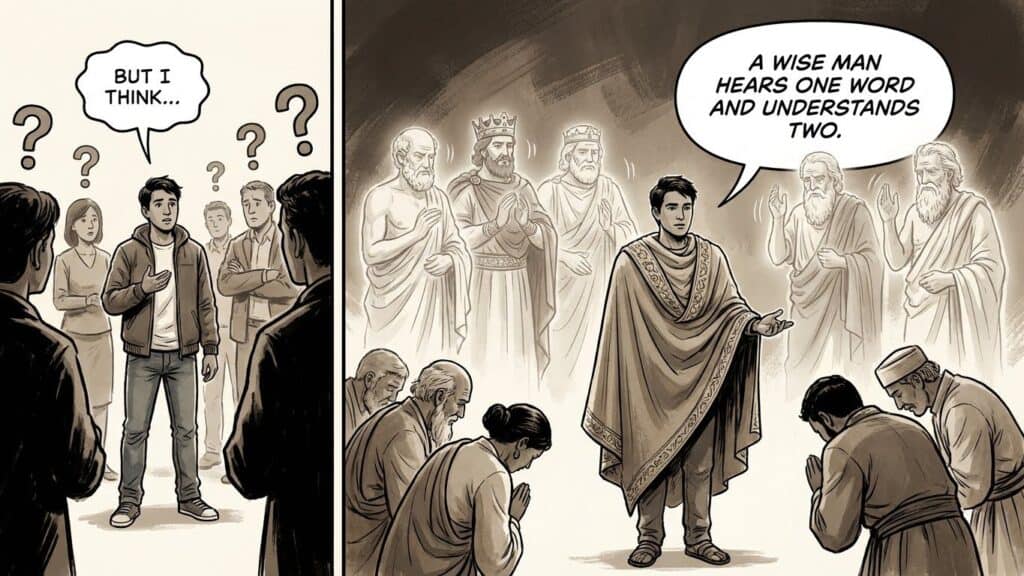
Proverbs are short, easy-to-remember sayings that carry shared wisdom.
People use them to give advice, warn others, or even criticize gently, all while sounding polite and respectful. (Wink, wink.)
In this blog, we’ll explore everything you need to know about proverbs.
We’ll break down what is a proverb, unpack the deeper proverb meaning, and analyze famous proverb examples that have survived centuries.
You’ll discover why writers and speakers swear by them, how they work in real conversations, and the common mistakes that turn these elegant tools into awkward clichés.
Let’s dive in.
Key Takeaways
What is a proverb? A proverb is a common saying that shares wisdom and has been passed down through generations.
Proverb meaning comes from the Latin proverbium (public word) and the Hebrew mashal (ruling word), showing that proverbs were meant to guide people’s behavior.
Famous proverb examples like “A rolling stone gathers no moss” have changed in meaning over time, reflecting changes in culture and thinking.
Writers and speakers use proverbs because they sound trustworthy, are easy to remember, and help ease tension during disagreements.
To use proverbs well, you can change them slightly (anti-proverbs), use them as the main idea of your message, or apply them literally in real-life situations.
What Is a Proverb?
To understand the proverb meaning, we have to look at the “bones” of the word:
The word proverb comes from the Latin word proverbium.
Pro: means “forth” or “publicly.”
Verbum: means “word.” So, a proverb is literally a “public word.”
Proverb Definition
What is a proverb?
Never Worry About AI Detecting Your Texts Again. Undetectable AI Can Help You:
Make your AI assisted writing appear human-like.
Bypass all major AI detection tools with just one click.
A proverb is a shared rule that everyone in a community knows and uses. It is not a private idea or a one-time thought.
In fact, in ancient Hebrew, the word for the proverb is mashal, which also means a “ruling word.” This suggests that they were meant to guide or “rule” how people behaved.
As the saying goes, it is the “wisdom of many and the wit of one.” According to this proverb, there are two meanings: wisdom and wit.
Concept
The Side
Description
Example
The Wit
The Clever Side
It uses rhyme, rhythm, or catchy words to make the saying creative.
“Easy come, easy go.”
The Wisdom
The Social Side
It represents a shared truth that a whole community agrees with.
“Rome wasn’t built in a day.” (Everyone agrees that big things take time and patience).
Classic Examples of Proverb
Let’s analyze some of the classic proverb examples:
“A Rolling Stone Gathers No Moss”
This means “flipping.”
Original Meaning: Hundreds of years ago, “moss” was seen as a good thing (like roots, wealth, and stability). A stone that kept rolling was a person with no friends or money.
Modern Meaning: Today, we see “moss” as being stuck or stagnant. Now, the “rolling stone” is a hero, someone who stays active and free.
“Rome Wasn’t Built in a Day”
First appearing in a French poem around 1190, this proverb reminds us that great achievements take time. Even Queen Elizabeth I used this in speeches to show she was being “strategically slow” rather than just lazy.
“Blood Is Thicker Than Water”
Most people think this means “family comes first.”
While that has been the standard proverb meaning for centuries, some people recently invented a new version (“the blood of the covenant…”) to argue that chosen friends are more important.
“Barking Up the Wrong Tree”
This is a 19th-century American proverb about hunting raccoons. Raccoons are clever and would jump to another tree, leaving the hunting dog barking at an empty one.
Today, we use it in offices to describe a failed marketing plan or a wrong guess.
“Bury the Hatchet”
This was a literal ritual! The Iroquois tribes in North America would bury their weapons (hatchets) under a “Tree of Peace” to show that a war was officially over.
Explaining the deep cultural impact of a proverb is a complex task. Standard AI often struggles with this because it just gives you a dictionary definition.
This is where the Undetectable AI’s Essay Writer helps.
It can merge history, grammar, and modern memes to show how proverbs function as the “memes of the 1800s.” Most importantly, it avoids the repetitive, “robotic” patterns of other AI tools.
It ensures that your explanation of ancient wisdom sounds like it was written by a thoughtful, human expert.
Why Writers and Speakers Use Proverbs
Proverbs are “persuasion power-ups” used by everyone from world leaders to top-tier marketers.
Here is why they are so effective when you speak or write:
They Sound Authoritative Without Sounding Bossy
When you give an opinion, people naturally want to debate it. But the moment you drop a proverb, you aren’t the one talking anymore, history is.
If I say, “You should be more careful,” it’s just my advice. If I say, “Better safe than sorry,” I’m citing a cultural rule that has existed for centuries.
2. Catchy Words Feel More True
Our brains have a weird glitch: we tend to think things are more “true” if they sound catchy. This is known in psychology as the Keats Heuristic.
Researchers compared the phrase “Woes unite foes” with “Misfortunes unite enemies.”
Even though the proverb meaning is exactly the same, people consistently rated the rhyming version as more accurate and profound.
3. They Signal “I Get You”
Using a proverb is a way of saying, I belong to your world.
Think about how people reference Proverbs 31. In many circles, you don’t need to explain that you’re talking about a woman who is hard-working, virtuous, and strong.
Just mentioning “a Proverbs 31 woman” acts as a linguistic shorthand, immediately signaling a specific set of shared values and respect.
4. They Let People Save Face
In a heated argument, direct criticism usually makes people defensive. Saying, “You’re being too greedy,” feels like a personal attack.
Saying, “A bird in the hand is worth two in the bush,” moves the conflict away from the individual and turns it into a universal human dilemma.
This gives the other person a “face-saving” exit ramp, they can agree with the proverb without feeling like they “lost” the fight.
5. They Make Big Ideas Feel Obvious
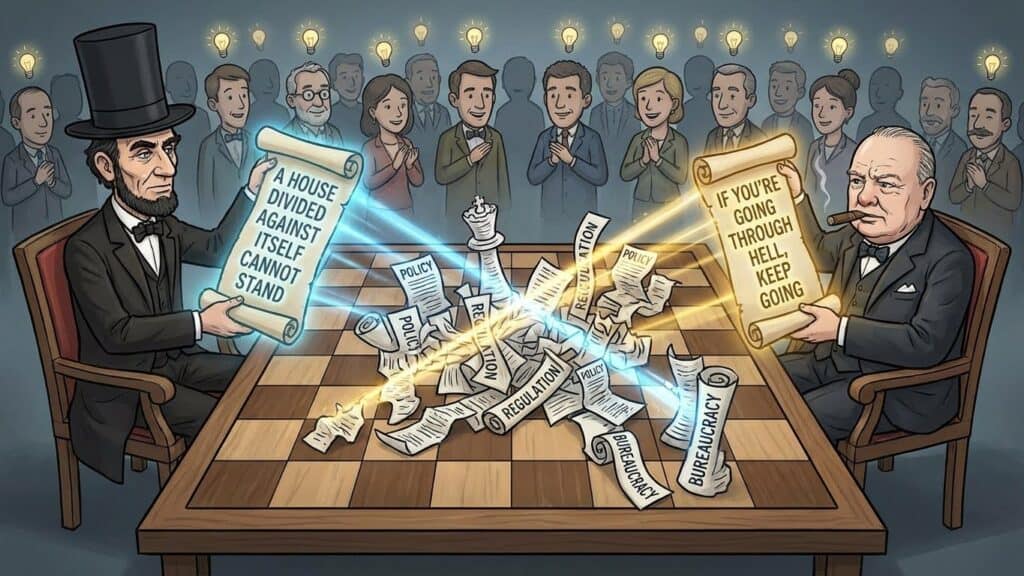
Politicians and leaders use proverbs to make complicated policies feel like simple, everyday logic.
Abraham Lincoln didn’t just talk about the risks of the Civil War; he quoted the Bible: “A house divided against itself cannot stand.”
Winston Churchill used proverbs to connect with the working class, making his high-level war strategies feel like the same “common sense” his audience used at home.
How Proverbs Work in Communication
This is how proverbs work in communication…
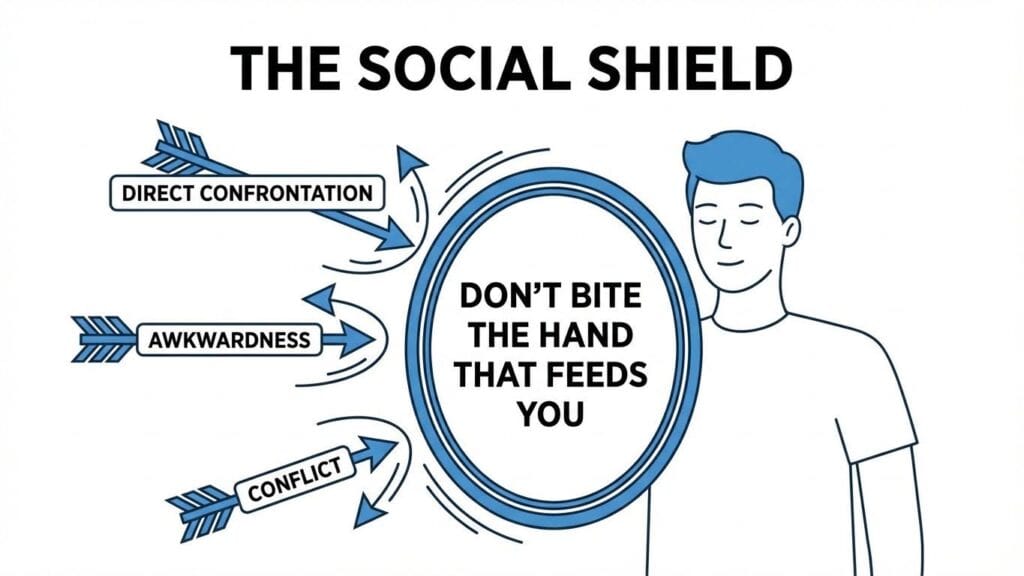
They allow a speaker to deliver a complex or sensitive message while maintaining a layer of protection.
Instead of a direct confrontation, a speaker can use a proverb to provide plausible deniability.
For example, if a boss tells an employee, “Don’t bite the hand that feeds you,” they are delivering a sharp warning under the guise of general advice.
Because the speaker is “just quoting a saying,” they can test the waters of a conflict without fully committing to a hostile stance, allowing for smoother social navigation in high-stakes environments.
Furthermore, proverbs are processed differently than standard speech because they are anchored in our semantic memory (general world knowledge) rather than episodic memory (personal life events).
Recent findings in 2025 highlight that this is why people with severe memory loss often retain proverbs even after they have forgotten the specific details of their own lives.
Common Mistakes When Using Proverbs
Even though proverbs are useful, they are high-risk tools. If you use them incorrectly, you risk looking like a “patchwork” thinker who can’t come up with original ideas.
The “Malaphor”
A malaphor happens when you accidentally splice two proverb examples together. While sometimes funny, they usually just make the writer look confused.
Example:
We’ll burn that bridge when we get to it. (Combines “Burn your bridges” + “Cross that bridge when we come to it”).
It’s not rocket surgery. (“Rocket science” + “Brain surgery”).
Cultural Blind Spots
Many common sayings have origins rooted in history that can be unintentionally offensive.
Example:
“Lowest on the totem pole”: In many Indigenous cultures, the figure at the bottom is the most important because it supports the entire structure. Using it to mean “least important” is factually wrong and culturally dismissive.
“Grandfather clause”: This term comes from laws in the 1800s American South designed specifically to prevent Black Americans from voting. Using it casually in a contract can carry a weight of systemic racism that you might not intend.
Toxic Positivity
Proverbs are general, but pain is specific. Telling someone who just lost their job that “When one door closes, another opens” can feel dismissive.
In moments of acute pain, using a generalized proverb often comes off as “toxic positivity” rather than genuine empathy.
If you feel like a proverb is too “dusty” or cliché, you don’t have to scrap the wisdom.
You can use an AI Paragraph Rewriter to keep the core lesson while changing the “packaging.”
Original Cliche: Don’t count your chickens before they hatch.
Refined Version: Let’s wait until the ink is dry before we celebrate.
How to Use Proverbs Effectively
Here is how to move proverb meaning from cliché to creative.
The “Twist” Technique (The Anti-Proverb)
The most powerful way to use a proverb is to break it. This is known as creating an “anti-proverb.”
The human brain loves pattern recognition, so when you set up a familiar phrase and then subvert the ending, you create a moment of surprise (witticism).
Standard: Knowledge is power.
The Twist: Knowledge is power, but only if you have the clearance to use it.
Standard: What doesn’t kill you makes you stronger.
The Twist: What doesn’t kill you gives you unhealthy coping mechanisms and a dark sense of humor.
Use Them as Structural Pillars
Don’t just drop a proverb in the middle of a paragraph. Use it to hold up the entire piece. A well-placed proverb works perfectly as a title that sets the stage or a conclusion that snaps everything into focus.
If you are writing an article about diversifying investments, title it “Don’t Put All Your Eggs in One Basket.” It does the heavy lifting before the reader even reads the first sentence.
The “Literalization” Method
This technique involves taking a metaphorical proverb and applying it to a literal situation. It creates a satisfying “click” in the reader’s mind because the figurative and the real align perfectly.
If you are writing a story about a construction crew facing delays, use “Rome wasn’t built in a day.” If you are writing about a tailor or fashion designer, use “A stitch in time.” It grounds the abstract wisdom in physical reality.
To ensure your readers walk away with a clear understanding of your message, you can use Undetectable AI’s Conclusion Generator to help you summarize the lasting impact and moral lessons of a famous proverb in your closing paragraph.
This tool helps you transition from a specific example to a universal truth, leaving your audience with a polished final thought that reinforces the “ruling” power of the proverb.
Proverbs in Different Writing Genres
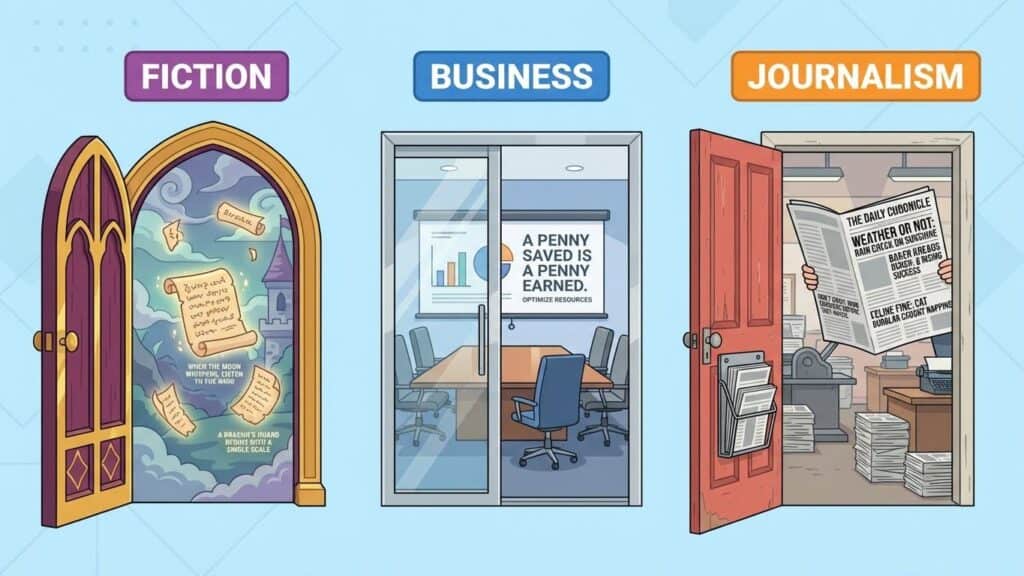
Here is the breakdown of how proverb meaning function across different writing genres:
Genre
Primary Function
Examples
Fiction & Creative Writing
World Building & Character Voice
Invent Sayings: If you write about a warrior culture, make up a saying like “Steel speaks louder than gold.” It tells the reader what they value. Character Voice: Give an older character sayings like “Even a blind squirrel finds a nut” to make them sound wise and “country,” not fancy. Use an AI Humanizer to add these “folk sayings” so your characters don’t sound like robots.
Business & Copywriting
Strategy Shorthand & Trust
Keep it Simple: Don’t say “Maximize your retention.” Just say, “A penny saved is a penny earned.” It sells better because people understand it instantly. Signal Safety: Banks use phrases like “Safe as houses” because they sound old and reliable. It makes customers feel safe. Warning: Don’t use annoying buzzwords like “low hanging fruit.”
Academic & Journalism
Hooks, Puns & Cultural Illustration
Journalism: Use puns to make headlines fun. Example: A story about a coffee CEO could be titled “A Whole Latte Trouble.” Academic/School: Don’t use proverbs as “proof.” Use them to explain a culture. Example: To explain how Japanese society values the group over the individual, quote the saying: “The nail that sticks out gets hammered down.”
Start using our AI Detector and Humanizer widget here.
Conclusion
So what is a proverb?
Proverbs may sound old, but they are anything but outdated.
They are tiny packets of wisdom that help us say difficult things without starting fires, persuade without preaching, and sound smart without sounding arrogant.
Used well, a proverb is not a cliché, it’s leverage. It borrows authority from history, clarity from rhythm, and safety from indirectness.
Used poorly, it becomes verbal wallpaper, something noticed by no one and respected by none.
So the next time you need to give advice, make a point, or quietly warn someone without turning it into a confrontation, don’t overexplain.
Let the proverb do the work.
After all, as the wisdom of many has already figured out, why reinvent the wheel when it’s been rolling just fine for centuries?
Keep your proverbs and advice authentic with Undetectable AI.