
The distinction between sceptical and skeptical does not involve meaning. It’s about geography.
The American writers spell it one way and the British writers spell it the other and they are both right in their respective territories.
The word connotes doubt, questioning or critical thinking, however, how you spell it can tell which type of English you are working on.
When you make a mistake, it does not change your message, but it makes the readers know that you have not thought about who you are addressing.
We will explain under what circumstances each form of this spelling should be employed and how to be consistent with a particular form based on your audience.
Let’s dive in.
Key Takeaways
- “Skeptical/Sceptical” are synonymous. It means to be doubtful, questioning, or uncertain when claims are being made.
- The spelling is also used in such related words as skeptic/sceptic, skepticism/scepticism.
- Apply skeptical to US audiences but sceptical to UK, Australian, and Commonwealth readers.
- Writing in academic or professional worlds adheres to whichever local style guide your education or publication chooses.
- The decision is relevant to SEO since American and British users search for different spellings.
What Does Skeptical or Sceptical Mean
The two forms of spelling were employed to convey the same meaning: doubt, questioning or reluctance to make claims without evidence.
Sceptical (or skeptical) does not mean that you necessarily believe what you are told. You want evidence, you compare other possibilities and distance yourself from things that are not proven.
The sceptical or skeptical meaning incorporates various related yet different uses. You may distrust a certain statement or another. You might describe the general disposition of somebody with it, and you may refer to skeptical inquiry as a methodology.


Never Worry About AI Detecting Your Texts Again. Undetectable AI Can Help You:
- Make your AI assisted writing appear human-like.
- Bypass all major AI detection tools with just one click.
- Use AI safely and confidently in school and work.
The word is of Greek origin, skeptikos, which means questioning or thoughtful. It was introduced into English from Latin scepticus. The word had a Greek root that contained a sound k, something that American English retained.
The Latin spelling tradition, where c is pronounced the same way, was borrowed in British English. This etymological division justifies the existence of two different ways to spell the same word nowadays.
British vs American English Usage
Now, let’s break down the is it sceptical or skeptical usage.
The confusion of “skeptical” and “sceptical” is in keeping with the greater tradition of American English simplifying the spelling and British English preserving the old ways of writing.
The following is a guide to the usage of the word in both American and British English:
Sceptical = British English
British authors, publications, and institutions prefer to use “sceptical” all the time. This encompasses the United Kingdom, Ireland, Australia, New Zealand, South Africa and the majority of former British colonies.
The spelling appears in:
- UK Newspapers and Magazines: In reporting by The Guardian, The Telegraph, The Times and BBC, the expression sceptical is used. In British journalism, the term skeptical identifies you as either an American or someone who is not well versed in the UK enigma.
- British Academic Institutions: The UK universities (Oxford, Cambridge and more) demand sceptical in academic papers and dissertations. Adherence to the American spelling at a British academic level can cost you marks or revisions.
- Australian and New Zealand Writing: These nations subscribe to British spelling rules universally, including “sceptical.” When you are writing to the people of Sydney or Auckland, write in the British form.
- Professional and Business Writing in Commonwealth Countries: In most commonwealth countries, sceptical is used in corporate activities, legal documents, and official correspondence. The only exception is Canada which combines British and American conventions according to the situation.
The question of whether it is sceptical or skeptical in British English has a definite response: always sceptical.
Any deviation from this norm will appear as though your writing has been Americanized or rather edited with sloppiness.
Skeptical = American English
American writers, publications, and institutions use “skeptical” as the standard spelling.
This applies to:
- US Newspapers and Magazines: The New York Times, The Washington Post, The Atlantic, and all other leading American magazines, as well as US Newspapers and Magazines, employ skeptical. The inclusion of the word sceptical in US journalism appears as a British error or a spelling mistake.
- American Academic Institutions: Universities, research journals and scholarly publishing in the US demand “skeptical.” Both the Chicago Manual of Style and APA have stipulated American spelling, and therefore, “skeptical” is only acceptable in most academic settings in the USA.
- US business and Professional Communication: Corporate writing, marketing materials, and official documents in the United States use “skeptical.” American readers expect this spelling and may perceive “sceptical” as pretentious or foreign.
- Canadian Writing: Canada is complicated because it mixes British and American spelling conventions. For this particular word, Canadian usage leans slightly toward American “skeptical,” though both forms appear. When writing for Canadian audiences, check the specific publication’s style guide rather than assuming.
The question is it skeptical or sceptical has a definitive answer in American contexts: use “skeptical.” This form dominates US writing to the point where “sceptical” looks incorrect to most American readers.
Common Situations Where the Words Are Used
Skeptical and sceptical are encountered in virtually all kinds of writing, both scholarly and informative blogs.
You can identify the natural spelling pattern of different words in order to use them accordingly without misplacement of the correct regional spelling.
Academic Writing and Research Papers
Sceptical/skeptical is also applied in academic writing to discuss the reservations in thought, caution in the interpretation of data, and the lack of confidence in assumptions.
The decision is purely a matter of the academic conventions you are adhering to in the country you are in.
In the context of scientific publications, the term is applied to signify proper methodological caution.
For example, “The fact that the team was skeptical about their interpretation of correlational data is an indicator of good research conduct.” You spell it skeptical or sceptical, depending on whether you have written an American or a British journal.
Critical readings of writing, or critical feelings towards hegemonic accounts, are mentioned in literature and humanities articles.
The phrase “A skeptical interpretation of the dependability of the narrator” is used in American academic writing, whereas the British say “sceptical interpretation.”
Journalistic Reporting and Editorials
Journalists employ skeptical/sceptical when they talk about how they treated the official statements, press releases or claims that had to be verified. The spelling is in the style of the publication.
An example is how American reporters report: “Voters still do not believe campaign promises after years of broken promises.
British journalists post: “Citizens are still cynical about campaign promises. The scepticism is identical, the spelling rule is different.
Investigative journalism tends to refer to journalists as being skeptical observers or advising the readers to have a skeptical attitude.
It will be skeptical or sceptical depending on what side of the Atlantic the publication is working on.
Everyday Conversations and Opinion Pieces
In informal writing, blogs, social media and conversational writing, skeptical/sceptical is used to mean doubt about a product, trend, claim or idea.
“I am skeptical that this new diet will actually work,” is used to show personal doubt in American English. The British version is “I am sceptical whether this new diet will actually work.” The degree of doubt is the same in both messages.
Product reviews frequently use the term: “I was skeptical at first, but this product exceeded my expectations.”
British reviewers write: “I was sceptical at first, but this product exceeded my expectations.” The narrative arc of initial doubt followed by pleasant surprise works identically in both versions.
Opinion articles on technology, politics or social trends discuss writers as becoming or strongly becoming skeptical in their judgments about a range of claims. The spelling used regionally indicates the audience that the writer is writing to.
Business and Professional Communication
Corporate communications use skeptical/sceptical when discussing market analysis, risk assessment, and evaluation of business proposals.
- American business writing: “Investors remain skeptical about the company’s growth projections given recent market conditions.”
- British business writing: “Investors remain sceptical about the company’s growth projections given recent market conditions.”
Marketing materials sometimes reference overcoming customer skepticism.
- American writing: “We understand you might be skeptical about trying a new brand”
- British Writing: “We understand you might be sceptical about trying a new brand.”
Acknowledging and addressing doubt is a common persuasive strategy that requires the appropriate regional spelling.
Professional reports and analyses describe skeptical assessments of data, skeptical evaluations of forecasts, and skeptical interpretations of trends.
Whether you use “skeptical” or “sceptical” depends on the location of your company and audience.
Examples of Skeptical or Sceptical in Sentences

Below is a table showing you how to use skeptical or sceptical in sentences:
| Context | American English | British English |
| Doubt about claims | “I’m skeptical of that statistic” | “I’m sceptical of that statistic” |
| Scientific caution | “Researchers were skeptical” | “Researchers were sceptical” |
| Consumer doubt | “Customers remain skeptical” | “Customers remain sceptical” |
| Questioning attitude | “She has a skeptical mind” | “She has a sceptical mind” |
| Philosophical position | “skepticism about knowledge” | “scepticism about knowledge” |
| A Person who doubts | “He’s a natural skeptic” | “He’s a natural sceptic” |
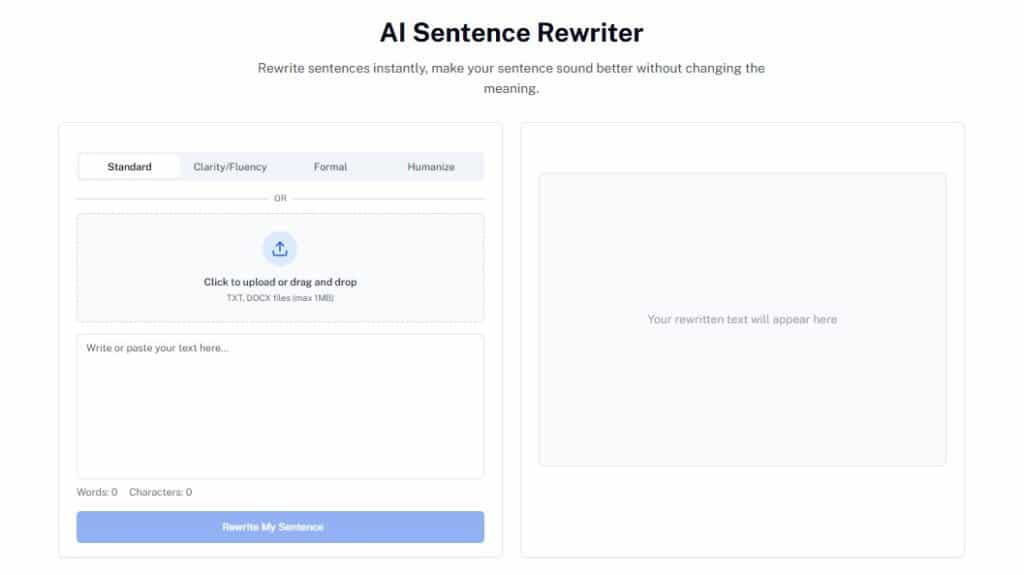
In a situation where you require a variety of ways to convey the same skeptical message, Undetectable AI Sentence Rewriter can modify expressions for you.
The tool rewrites sentences by producing variations with skeptical or sceptical meaning naturally in context. This prevents repetition but the same degree of doubt exists.
AI Tools for Writing Skeptical vs Sceptical
When writing at volume or producing content that will be used internationally, it quickly becomes tiresome to manage regional variations in spelling by hand.
Auto-enforcement of your preferred standard, consistency across documents, and natural sounding writing in either American or British English can all be generated with AI writing tools.
AI Humanizer and Detector
The tone must sound like a real person and not machine or formal when you are writing about sceptical or skeptical meaning.
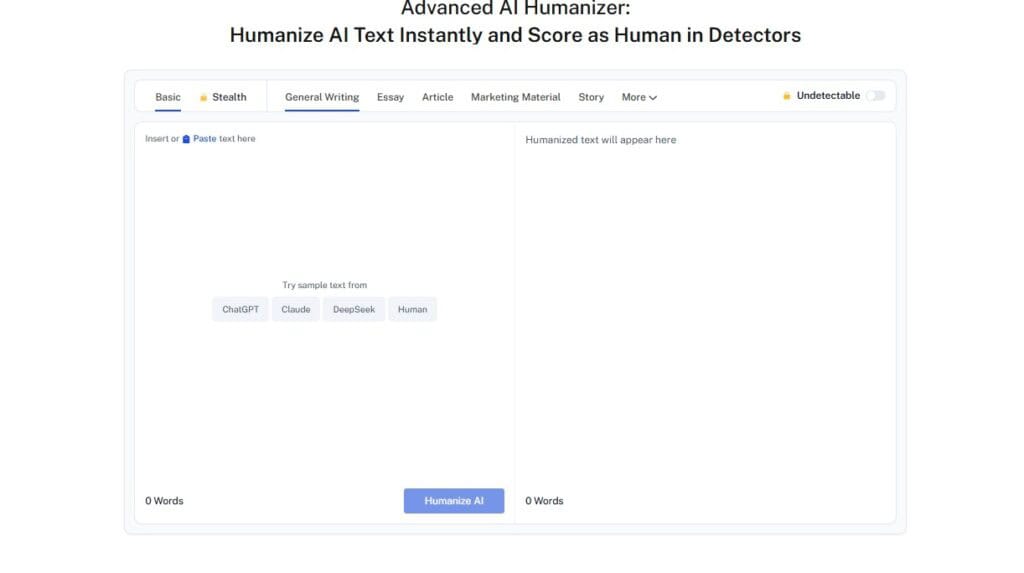
Undetectable AI Humanizer makes sure that your content has a natural flow without the wrong regional spelling.
Say you type “Many consumers are skeptical of marketing claims that are too good to be true,” the humanizer can revise it to say: “Most people do not fall into marketing hype that sounds too good to be true” and it continues to use your preferred spelling convention when the literal wording is necessary.
The tool also comes in handy when you are translating between the American and the British versions of a story.
In the case where a paragraph has skeptical all the way through and you require a version in British English, the humanizer does not simply change skeptical to sceptical.
It will produce a natural reading of the whole passage in British English, modifying idioms, words and sentences that could otherwise sound American, even with the correct British spelling.
Undetectable AI Detector, on the other hand, provides a solution to making sure that your content does not read like it was produced by an AI.
This is particularly important when you are composing opinion pieces, editorials, or analytical articles with skeptical reasoning as the main focus of your argument. Spelling irregularities are also picked up by the detector.
In case you have confused “skeptical” and “sceptical” in the same paper, it indicates the difference and you can ensure consistency.
This is an error that will not be detected by a normal spellchecker since both spellings are technically correct.
Sentence Rewriter
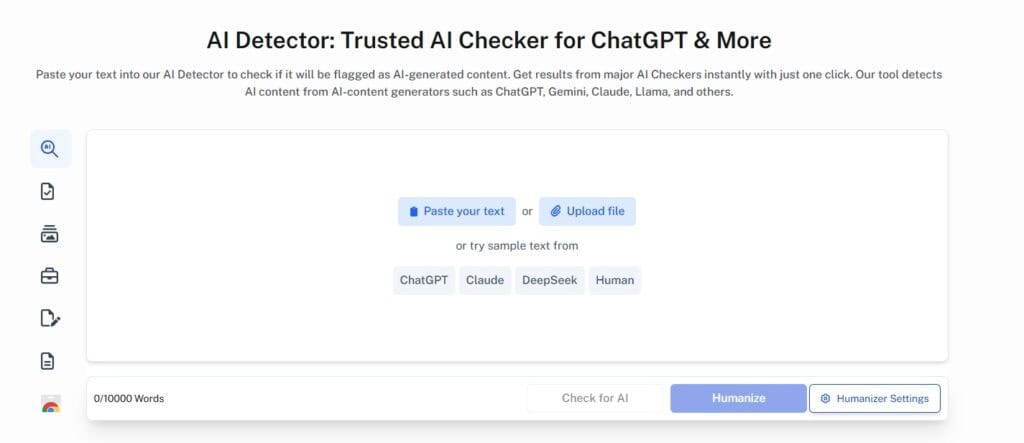
Undetectable AI’s Sentence Rewriter creates variations to fit your style and readability needs while maintaining correct spelling.
If you’ve used “skeptical” or “sceptical” multiple times in close proximity, the tool offers alternatives that express doubt without repetition.
For writers creating content in both American and British English, the Sentence Rewriter generates parallel versions that maintain the same meaning while using appropriate regional spellings and idioms.
Tips for Choosing the Correct Form
When you have the distinction between skeptical and sceptical, the next hurdle is making the correct judgment for your particular circumstance.
The following tricks can assist you in determining what spelling to use and be consistent in your work.
- Know your Primary Audience’s Location: In case the majority of your readers reside in the United States, then write “skeptical.” In the UK, Australia, or other Commonwealth countries, use “sceptical.” Don’t think too hard about exceptions or edge cases. Go with the majority.
- Follow Institutional or Publication Guidelines: There are numerous house style guides in many organizations that define American or British English. When your employer, university, or publication has made such a decision, do so, no matter what your personal choice is or which audience you are reaching. It is the consistency of an organization that is more relevant than individual optimization.
- Check Previous Content for Consistency: When creating an addition to an existing site, blog or publication series, follow the spelling rule that is already in use. Setting up an alternative spelling rule brings inconsistency that your audience can feel and that defeats your credibility.
- Don’t mix Spellings within the Same Piece: Always avoid the use of “skeptical” and “sceptical” in the same article, email, research paper or document. Choose one and stick with it. Combining them is an indication of negligence or ignorance concerning the regional conventions.
Our AI SEO Content Writer helps produce readable, optimized content using the correct spelling of skeptical or sceptical for your target audience.
The tool knows the search patterns in the region and can create an article that will appear highly ranked in American or British Google.
It will automatically translate it to “skeptical” on US keywords and “sceptical” on UK keywords so that it is right in the searches that your target market does.

Explore our AI Detector and Humanizer in the widget below!
Final Thoughts
It is all a matter of place and the expectations of your audience, whether you write skeptical or sceptical. American readers are used to skeptical, British are used to sceptical, and both retell the same thing.
The issue is staying consistent when you are creating content on a large scale or operating in cross-country markets.
Undetectable AI’s Grammar Checker catches spelling inconsistencies automatically, the AI Humanizer ensures your content reads naturally while maintaining correct regional conventions, and the AI Detector verifies everything sounds authentically human.
Stop second-guessing regional spelling choices and let automated tools maintain consistency while you focus on your message. Try Undetectable AI free and handle spelling differences effortlessly.
Keep your spelling consistent and your content naturally human with Undetectable AI.