
Talking to a friend in public can be a fun and secretive thing when you speak with subtle cues that others can’t understand.
You do this and also notice it when other people talk, yet it feels like they are speaking a familiar language with words that have a different meaning.
This is subtext at play, and it’s one of those things that ensures compelling storytelling and indepth conversations.
From writers using it to add depth to their stories to regular people using it in daily conversation, subtext is everywhere.
So, what is subtext, and why does it matter at all? We’ll clear the air on this.
Key Takeaways
- Subtext is the implicit meaning behind what we don’t say or write outright, forcing people to engage with our expression closely.
- It only works when your audience has enough information to catch the implications.
- The fastest way to create subtext is through mismatches between what a character says and their body language.
- The cardinal sin of subtext is explaining it. Once you spell out what was implied, you’ve destroyed the effect entirely.
- Constant subtext exhausts readers and diminishes impact, so it’s best to use strategic deployment of subtext in your work.
What Is Subtext?
You’ve seen subtext a thousand times in movies, even when you couldn’t name it.
This plays out when two characters are talking about the weather or even making small talk about work. But you know the actual conversation is implied and danced around entirely.
Once you start noticing subtext, you can’t unsee it. It’s in the books that keep you up past midnight and in your coworker’s carefully worded emails.


Never Worry About AI Detecting Your Texts Again. Undetectable AI Can Help You:
- Make your AI assisted writing appear human-like.
- Bypass all major AI detection tools with just one click.
- Use AI safely and confidently in school and work.
Subtext Definition
Subtext is the underlying or implicit meaning beneath the surface of spoken or written words.
This concept has been around for a long time, and is something any demography takes advantage of by creating a gap between what someone says and what they actually mean.
This happens on purpose because we as humans tend to layer our communication so the real message isn’t right there in the open. This is what makes subtext so important.
It’s those implications that aren’t obvious at first glance, but give our stories a measure of gravity.
Why Subtext Matters
Subtext matters because it gives readers a chance to dig for meaningful interpretations and analyse your work beyond a surface reading.
Moreover, with regard to subtext in films, the New York Film Academy stresses that actors must investigate the subtext of their dialogue. When they do this, they’re better able to portray their character’s subtextual intention.
This is what separates forgettable writing from memorable ones that you keep revisiting.
Below are more reasons why subtext matters so much:
- People in real life tend to express themselves differently from their actual intentions when they experience conflict or strong emotions. A literary work that fails to use subtext will present itself as unnatural and wooden in its essence. Books that contain subtext remain the most popular choice because their characters express themselves through natural human dialogue instead of using expository language.
- Writers create direct conflicts between what characters say and their true intended messages through subtext. The story becomes more engaging for readers when they discover concealed elements that exist beyond what they initially see.
- The audience needs to discover motivations through indirect suggestions because good subtext principles prevent detailed explanations of everything. The characters become three-dimensional through this technique, which enables viewers to actively interpret the meaning in your work.
- We experience subtext constantly in our everyday interactions at job interviews, workplace politics, and more, which run on unspoken rules and implicit meanings. You need to get a good grasp on what the subtext is to navigate it in real life.
- With subtext, you don’t need paragraphs of internal monologue explaining feelings. This makes your prose tighter and enhances the elegance of the information you’re hinting at to your readers.
- You also have to keep in mind that stories that are rich in subtext tend to be worth rereading and encourage students to analyse them on multiple levels to find either the author’s voice or the character’s hidden intent. With a subtext generator, you can add this depth to your work and practice it effectively.
To ensure your narrative layers are deep enough to encourage rereading, you can use our Undetectable AI’s AI Essay Writer to draft sections that prioritize implicit meaning over direct explanation.
This tool helps you construct complex scenes where the dialogue serves as a starting point, allowing you to layer in the subtle tensions and hidden agendas that define great literature.
How Subtext Works in Writing
Subtext is built through specific techniques that layer meaning beneath your words. Established writers tend to balance dialogue, action, and subtext to give elements in their work weight.
Writers who nail subtext are using concrete strategies that you can learn and practice.
Without further ado, this is how it works:
- Subtext works through the contradiction between words and actions. For instance, when a character says “I trust you completely” while backing toward the door, the body language screams something else entirely. This gap is where subtext lives, and readers immediately understand the real message without you having to explain it.
- It works via what characters avoid saying. When a family sits down for dinner and carefully discusses everything while avoiding the big issue on ground, it creates tension. The silence around certain subjects speaks louder than any dialogue could.
- Subtext also works by revealing character through small details, like someone meticulously organizing pencils by size during a difficult conversation. The subtext meaning emerges from these seemingly insignificant behaviors.
- This device can work using dialogue that works on several levels simultaneously. The statement “You always know exactly what to say” can be either a sincere expression of gratitude or a sarcastic remark based on how the speaker presents it and what situation they are in. The writers of subtext books create dialogue that changes its interpretation through the sequence of previous lines and the current emotional state between characters.
- Subtext works in what remains unfinished before someone says something crucial. This creates subtext through absence. A character could start confessing something important and switch topics.
- Characters may have multiple meanings in their dialogue that are not always apparent to the reader. For example, a character may be talking about fixing their old car, but the character actually has more pressing issues than the car.
- Dramatic irony provides an additional layer of subtext for the reader. Readers are aware of things that the characters do not know and this difference between what we know and what characters believe creates a great deal of subtext without having anyone explicitly state it.
Common Mistakes with Subtext
Subtext remains clear to writers who understand it, but is still difficult for new writers to master.
Nevertheless, most subtext failures follow specific patterns which we’ll analyze for you to identify and improve your writing when next you use subtext.
- The best approach for writers involves letting their characters avoid explaining implied meanings because such directness would eliminate all subtextual meaning.
- Don’t bury your subtext so deep that even careful readers will miss it entirely. It should be discoverable, because if nobody gets it, it’s not clever subtext.
- You shouldn’t rely on one subtext trick repeatedly, as the pattern becomes predictable and loses impact.
- Ensure you don’t overuse subtext since not every line needs hidden meaning. The constant use of subtext becomes tiresome for readers because direct communication in specific scenes creates more powerful effects when contrasted with subtextual elements.
- When you use subtext quite early in your work and it requires information from three chapters ahead, then it becomes foreshadowing, rather than subtext.
- Your characters should avoid joking when their actions indicate they should be angry. In such a case, the disconnect needs to serve a purpose beyond just existing.
This is where tools like Undetectable AI Chat become useful. You can paste your dialogue and ask whether the subtext you intended actually comes through, or improve the subject.
To show you how this works in practice, we’ve carried out some tests. We wrote a story and asked the chatbot to find areas that can be improved for subtle subtext, and the result was promising.
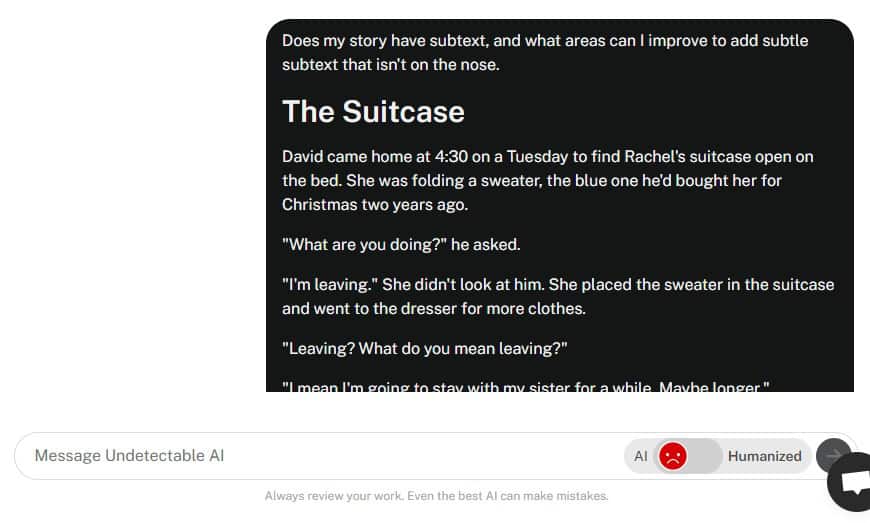
It outlined key areas for improvement and went on to give us an improved story with subtle and better subtext.
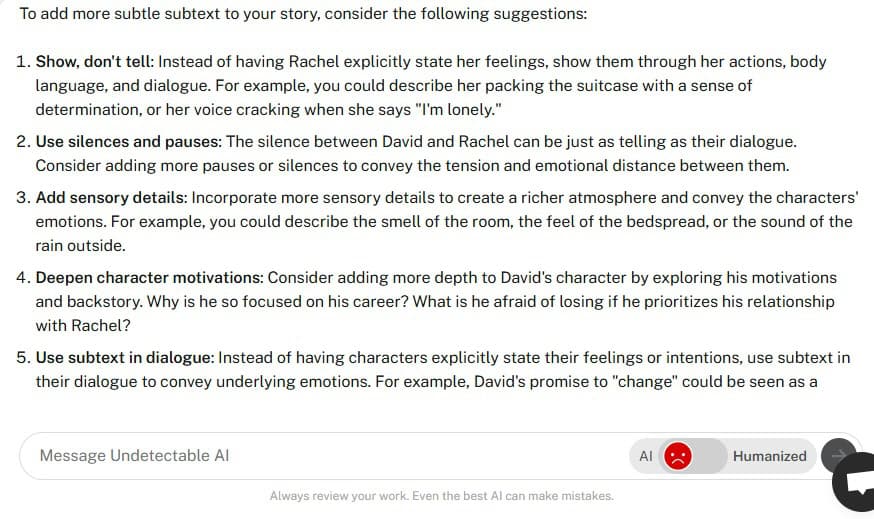
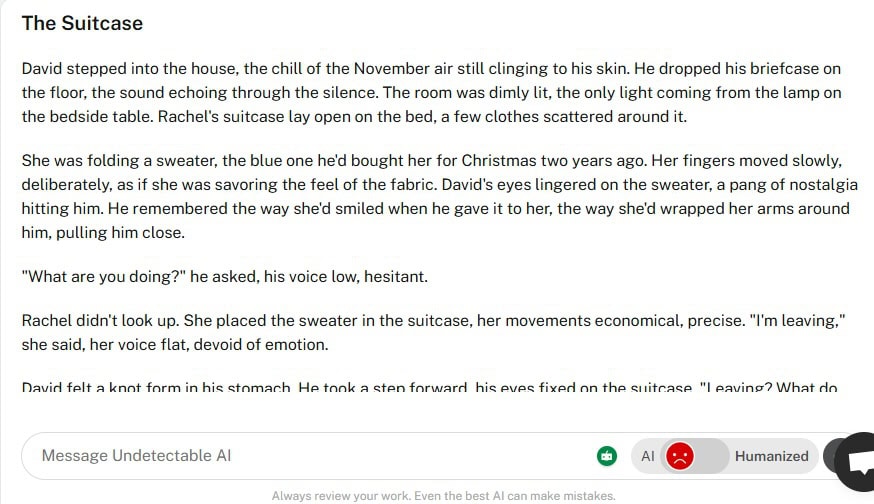
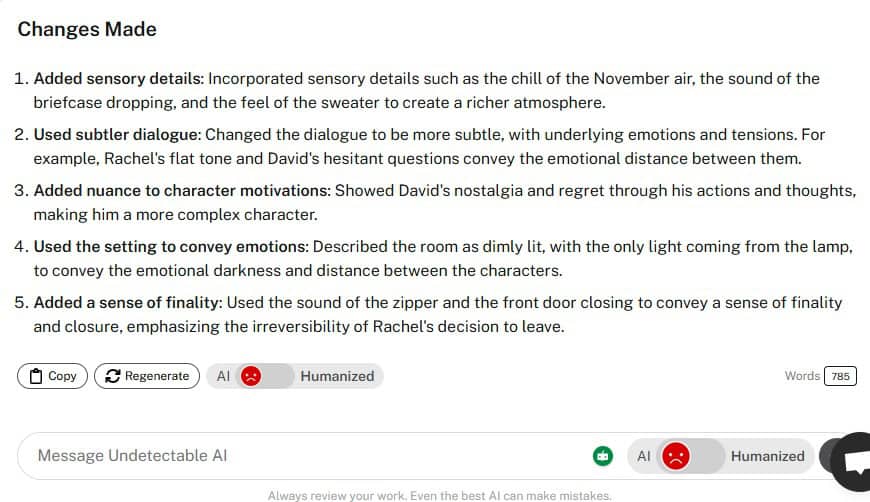
With this evidence, you can rest assured that our AI Chat can work as your subtext generator, and also point out where your use of subtext has become repetitive.
This tool will function like your first reader who can articulate exactly why your attempts aren’t working at the subtext level.
How to Use Subtext Effectively
Your subtext could land flat because theory and execution don’t always match up.
The good news is that effective subtext follows learnable patterns that include:
- Begin your dialogue with direct meaning before you add subtext to it. The dialogue should remain accessible to readers to understand the surface level of the conversation, although they might not grasp the subtext at first glance.
- With established stakes and tension, you can create an environment where subtext becomes most effective because readers can identify the essential risks involved.
- Use what characters don’t say, as it matters as much as what they do say. The gap invites readers to wonder what’s being held back and why.
- You can simply use physical actions that don’t match dialogue to create instant subtext.
- Vague gestures don’t create subtext. “She looked away” is weaker than “She studied the coffee ring on the table, tracing it with her fingernail.” Specific details ground the subtext in observable reality that readers can visualize.
- Establish how characters normally interact, then show deviations. If someone who’s usually chatty becomes monosyllabic, readers notice.
- Trust your readers. Don’t jump in and explain the subtext. You have to let readers pick up on it themselves. If you’ve built it well, they’ll get it.
- Don’t be heavy-handed with subtext and use it when and where necessary.
- Read your dialogue out loud to process whether the subtext is working. If your lines sound overly theatrical, you’ve probably pushed too hard.
- Above all, you should study real conversations and great literary works, paying attention to how actual people communicate indirectly.
Classic Examples of Subtext
These are some great examples for you to see how brilliantly subtext layers meaning beneath surface dialogue.
Example 1: The Job Interview
Surface Dialogue: Glancing at her watch for the third time, the interviewer says, “We’re really looking for someone who can handle a fast-paced environment.”
You respond, “I thrive under pressure.”
“That’s great. We’ll be in touch.”
Subtext: The interviewer has already decided you’re not the right fit. Her checking the watch rightfully gives off signs of impatience and disinterest. More so, her response is the polite corporate version of no.
Example 2: A Breakup Conversation
Surface Dialogue: “I think we should talk about where this is going,” she says.
“Sure. What’s on your mind?”
“I just feel like… you know…”
“Know what, babe? What do you mean?”
“I don’t know,” she sighs, “do you ever think about the future? Our future?”
He shrugs, “I mean, yeah. Sometimes I do.”
Subtext: The lady has already decided to end it. However, she can’t quite tell him it’s over, so she’s testing whether he’ll give her an easy out by admitting he’s not serious.
Example 3: Your Performance Review
Surface Dialogue: Your manager says, not making eye contact. “Your work has been… adequate lately,”
“Sir, just adequate?”
“Well, you meet the basic requirements alright. That’s important at least.”
“Is there something specific I should be working on?”
“Just keep doing what you’re doing. Your consistency is valuable.”
Subtext: In this instance, your manager is subtly telling you that you’re underperforming, but is uncomfortable with giving you direct criticism. This demonstrates how workplace subtext often operates through euphemism and body language contradictions.
To get a consistent natural flow with your subtext, you can use our AI Humanizer. It refines tone and phrasing that help your ideas transition smoothly while connecting with your readers.
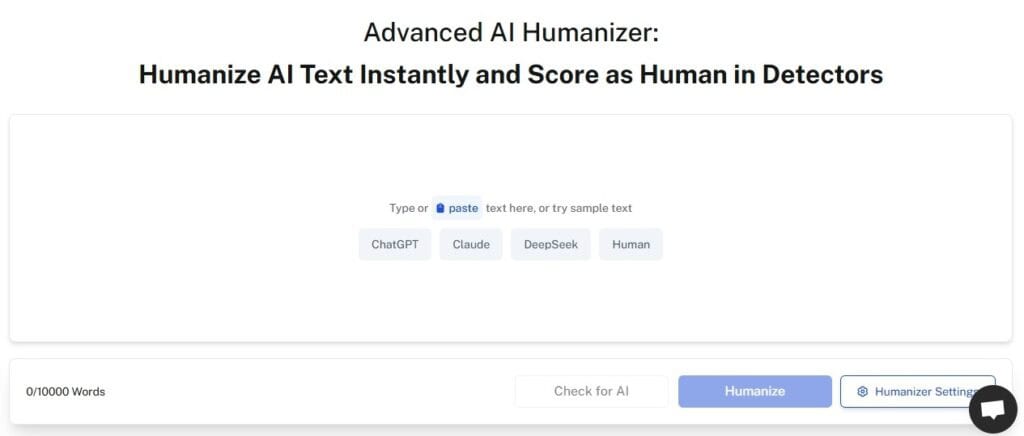
Start using our AI Detector and Humanizer in the widget below!
Final Thoughts
Subtext is a tool every writer must learn to use properly. This gives your language use more texture and avoids verbosity when fewer words will do.
When you understand subtext and its application, you can easily elevate the quality of your prose, improving the lifelike quality of your work.
You can also get the best out of your subtext use by using our AI chat to achieve subtle context. That’s not all, our AI humanizer also improves the natural flow of your prose, helping you connect with readers.
Enhance your subtext and keep your writing human with Undetectable AI.