
Reports are a fundamental part of communication across almost every professional and academic field.
From school assignments to high stakes business meetings, a report is how we share big ideas, crunch the numbers, and demonstrate progress to stakeholders.
In the professional world, the importance of clear documentation is undeniable, as research suggests that employees spend nearly 25% of their work week simply searching for and gathering information.
A well structured report bridges this gap by making critical data accessible and organized for decision makers. However, staring at a blank page can be incredibly intimidating because these documents demand a high level of attention to detail and a very specific structure.
This guide provides a rundown of the step by step process of creating a stellar document that communicates effectively without burying your audience in data.
Let us dive in.
Key Takeaways
- A structured outline is the foundation of a successful report because it prevents disorganized thoughts and ensures every finding leads to a logical conclusion.
- Different formats suit different goals so choosing between an academic, business, or technical style is the first step toward effective communication.
- Undetectable AI offers a suite of tools like the Paragraph Rewriter and AI Humanizer to help you flesh out bullet points into professional, authoritative prose.
- Clarity always beats complexity which means avoiding unnecessary jargon and using visuals like charts or tables to make dense information more digestible.
- Actionable insights are the goal of every modern report as stakeholders need to move quickly from understanding the data to implementing specific recommendations.
What is a Report?
At its core, a report is a structured piece of writing designed to present findings, analysis, or recommendations to a specific audience.
It essentially functions as a way to say, “Here is what is going on, and here is what it means for our goals.” While a standard essay might explore a broad theme or a personal opinion, a report is grounded in evidence and objective data.
It is a tool for decision-making that takes complicated information and organizes it into a format that is easy to navigate and understand.


Never Worry About AI Detecting Your Texts Again. Undetectable AI Can Help You:
- Make your AI assisted writing appear human-like.
- Bypass all major AI detection tools with just one click.
- Use AI safely and confidently in school and work.
A report outline is the blueprint that defines this organization. It is a hierarchical list of the headings and subheadings that will eventually make up the finished document.
Creating this outline helps you organize your ideas before you start writing, ensuring that you don’t miss any critical data points or skip necessary steps in your logic.
Skipping this step often leads to messy writing where the reader struggles to follow the transition from one finding to the next.
By mapping out your sections in advance, you can ensure that your analysis flows naturally from the introduction through to the final recommendations.
Different Types of Reports You Might Need to Outline
Academic Reports
In a university setting, these documents focus on demonstrating a deep understanding of a subject or a specific set of data.
They often follow a very rigid structure, including an abstract, methodology, and a discussion of results.
The goal is to show your work and prove that your conclusions are backed by academic rigor and credible sources. Because they are often lengthy, a detailed outline is essential to keep the various arguments aligned with the central thesis.
Business Reports
Business reports are usually focused on efficiency and decision-making. They might include sales updates, market analyses, or project summaries designed for stakeholders or management.
These documents are polished and to the point, often prioritizing the executive summary so that busy professionals can get the most important information quickly.
An outline here focuses on logical sections that lead the reader toward a specific business case or financial goal.
Research Reports
These are vital for sharing breakthroughs and contributing to the global pool of knowledge in scientific or technical fields.
They are heavy on data, methodology, and experimental results. A research report outline must be incredibly precise, ensuring that the process is documented well enough for another researcher to replicate the study.
It serves as a formal presentation of the progress and final results of specialized investigation.
Technical Reports
For the detail lovers, technical reports dig deep into the “how” and “why” of a project or system.
These are perfect for engineers, scientists, and other specialists who need to understand the minute details of a process.
The outline for a technical report usually includes detailed specifications, safety protocols, and troubleshooting data, acting as a comprehensive reference guide for specialized users.
Incident Reports
The purpose here is to document exactly what happened during a specific event, such as a workplace accident or a security breach.
These are “facts only” documents with no room for creative frills.
An incident report outline ensures that the who, what, where, and when are all recorded accurately, helping organizations fix issues and prevent future occurrences through clear documentation.
Progress Reports
These are the “status updates” of the professional world.
They answer three simple questions: What have we done? What are we doing now? What is next? A progress report outline is usually built around a timeline or a set of milestones.
It is designed to keep a boss or a client informed without overwhelming them with unnecessary details, often using bullet points for maximum readability.
Informal vs. Formal Reports
The level of formality depends entirely on the intended audience.
A formal report is a long, highly structured document intended for external clients or senior leadership, often requiring a title page and a full bibliography.
An informal report might be a shorter internal memo or a detailed email. Regardless of the length, both benefit from an outline to ensure that the core message remains clear and professional.
Key Elements Every Report Outline Should Include
1. Title and Purpose of the Report
Every good outline starts with a clear title and a statement of purpose. The title should be official and straight to the point, including the subject and the date.
Below this, define exactly why you are writing the document. Is it to propose a new budget? Is it to analyze last quarter’s decline in sales? Defining the “why” upfront ensures that every subsequent section in your outline serves that central goal.
2. Introduction Section
The introduction sets the stage for the reader. It should introduce the topic, explain the scope of the report, and preview the main points that will be covered.
In your outline, list the specific background information the reader needs to understand your findings.
This section is where you hook the reader and establish the context for why the information you are about to present is important to them or their organization.
3. Main Body Sections and Subpoints
The main body is the star of the show. This is where you organize your information into logical sections using clear headings.
In your outline, you should list each major heading followed by subpoints that detail what will be covered in each area. This hierarchical structure creates a flow that makes your information easy to follow and ensures that you aren’t throwing data into a blender and hoping for the best.
4. Data, Evidence, or Findings
This is where you lay out the actual proof. Whether it is experimental data, financial figures, or feedback from a survey, this section presents the raw facts.
In an outline, you should specify which visuals, such as tables or charts, will accompany each finding. Remember that context is king; your outline should also include a space for the analysis of what these numbers actually mean for the reader.
5. Conclusion and Recommendations
The final section ties everything together. The conclusion summarizes what you have learned, while the recommendations propose clear next steps.
This is where you shift from “here is what we found” to “here is what you should do about it.”
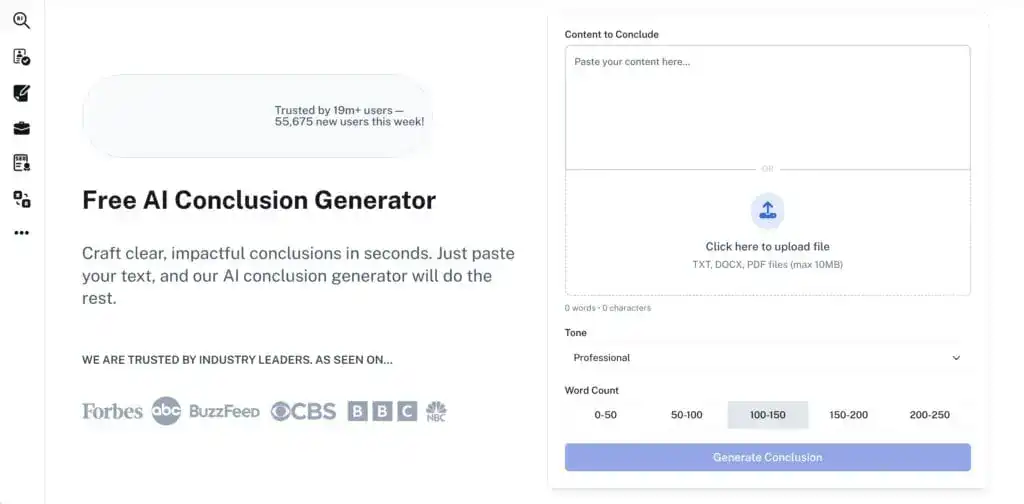
To guarantee your findings lead to meaningful results, you can use our Undetectable AI’s Conclusion Generator to help you synthesize the key findings into a logical and actionable final section.
This tool helps you pull together diverse data points into a cohesive closing statement that sounds authoritative and professionally polished.
What Should Be Included in a Report
To move from a simple collection of notes to a formal, authoritative document, your report must contain specific structural elements that provide both evidence and ease of navigation.
While the specific topic or industry might change, the following components are the building blocks that ensure your findings are transparent, credible, and useful for the reader.
- Executive Summary: A one-page preview of the entire document designed for busy readers who need the main takeaways immediately.
- Clear Purpose Statement: A direct explanation of what the document aims to achieve and the specific problem it is addressing.
- Methodology: A transparent account of how you gathered your data or conducted your research to ensure your process is reproducible and credible.
- Visual Aids: Strategic use of graphs, charts, and diagrams that break up long walls of text and make data trends easier to visualize.
- Citations and References: Proper credit to every external source and dataset to maintain academic and professional integrity while avoiding plagiarism.
- Appendices: Extra materials like full data sets, technical maps, or interview transcripts that support the main text without cluttering the primary analysis.
How to Write a Report Outline: 7 Easy and Effective Steps

Step 1: Understand the Purpose of Your Report
Before you do anything, ask why you are writing this. Is it to inform, persuade, or analyze? Knowing your goal shapes every word you write.
If you don’t understand the “why,” your outline will lack direction and confuse your audience.
Step 2: Identify Your Main Sections
Look at the type of report you are writing and choose the standard headings that fit.
For a business document, this might be “Market Analysis” and “Financial Projections.” For a research paper, it will likely be “Literature Review” and “Results.”
Step 3: Organize Ideas Into Logical Order
Arrange your headings so they tell a story. You wouldn’t present recommendations before the data.
Start with the background, move to the findings, and end with the analysis. A clear roadmap helps you stay on track throughout the writing process.
Step 4: Add Supporting Details and Evidence
Under each heading, jot down the specific data points or sources you will use.
This ensures that you have enough evidence to support each claim and helps you identify if any sections are “thin” and need more research before you start drafting.
Step 5: Create Clear Headings and Subheadings
Use descriptive titles for each section so a reader can find information quickly.
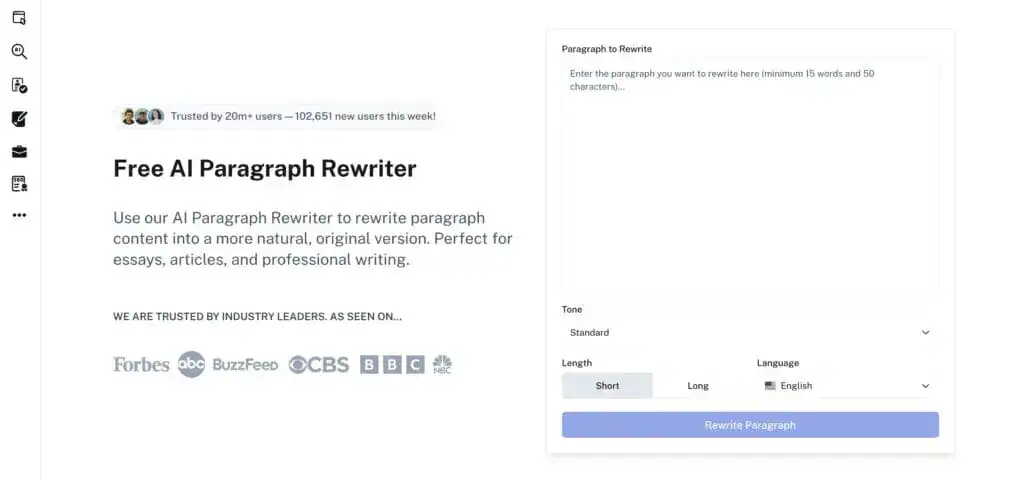
Once your headers are set, you can use our Paragraph Rewriter to help you flesh out your report outline into full, professional paragraphs with a natural flow. This tool is perfect for taking a simple bullet point and expanding it into a sophisticated analysis.
Step 6: Review for Flow and Structure
Read through your completed outline. Does the transition from one section to the next make sense?
Ensure that your structure creates a flow that makes your information easy to follow and engaging to read, just like a well-built house invites people in.
Step 7: Refine and Simplify Your Outline
Remove anything that doesn’t serve the central purpose. Don’t bury your readers under irrelevant details.
Being selective at the outline stage saves you hours of editing later. A lean, focused outline leads to a lean, focused report.
Examples of a Well-Structured Report Outline
Example 1: Academic Report Outline
I. Title Page
II. Abstract
III. Introduction: Background of the study and thesis statement.
IV. Methodology: Description of participants and data collection tools.
V. Results: Presentation of raw data with accompanying charts.
VI. Discussion: Interpretation of what the data means in the context of existing literature.
VII. Conclusion: Summary of findings and suggestions for future research.
Example 2: Business Report Outline
I. Executive Summary: High-level overview for leadership.
II. Introduction: Current market challenges and report goals.
III. Competitive Analysis: Strengths and weaknesses of the top three rivals.
IV. Financial Projections: Expected growth over the next four quarters.
V. Strategic Recommendations: Three specific actions the company should take.
VI. Conclusion: Final pitch for the proposed strategy.
Example 3: Research Report Outline
I. Introduction: Problem statement and objectives.
II. Theoretical Framework: Concepts and theories guiding the research.
III. Experimental Design: Variables, controls, and procedures used.
IV. Findings: Statistical analysis of the experimental outcomes.
V. References: List of all scientific journals and books cited.
Example 4: Simple One-Page Outline
I. Background: Brief history of the project.
II. Current Status: What has been achieved this month.
III. Key Issues: Any roadblocks preventing progress.
IV. Next Steps: Action items for the coming week.
Common Mistakes to Avoid When Creating a Report Outline
- Being Too Vague With Headings: Using generic titles like “Section 1” or “Data” makes it hard for readers to navigate. Use descriptive headings that summarize the content of the section.
- Adding Too Much Detail Too Early: An outline is a skeleton, not the whole body. Keep your subpoints concise so you can still see the overall structure of the document at a glance.
- Poor Organization of Sections: Jumping between different topics without a clear transition confuses the audience. Ensure each section builds logically on the information presented in the one before it.
- Skipping the Outline Entirely: Diving straight into writing is a recipe for chaos. Paying attention to detail and structure demonstrates your commitment to producing high-quality work that people actually want to read.
- Ignoring the Audience: Writing a technical report for a non-technical audience will lead to frustration. Always tailor the complexity of your outline to the people who will be reading the final version.
When to Use Templates vs. Starting From Scratch
Templates are incredibly useful when you are writing a standard document like an annual sales update or a lab report.
They ensure you don’t forget essential elements like the title page or the bibliography.
Using a template can save significant time and help you maintain a professional standard that matches the business writing benchmarks found in major industries.
However, starting from scratch is better when your project is unique or doesn’t fit into a traditional mold. If you are proposing a radical new project or analyzing an unprecedented incident, a custom outline allows you to build a structure that specifically highlights your most important points.
Whether you use a template or build your own, the goal remains the same: making complicated information easy to digest for your specific audience.
How Undetectable AI Can Help You Build a Better Report Outline
Writing a professional document doesn’t have to be a solo mission. Undetectable AI offers a suite of business solutions designed to make your writing tasks easier and smarter.
You can generate structured outline ideas quickly by inputting your raw data and goals into the system, allowing you to see different ways your information could be organized for maximum impact.
This helps you overcome the initial hurdle of a blank page and provides a professional roadmap in seconds.
The platform also helps improve the clarity and organization of your headings.
Furthermore, our AI Paraphrasing Tool is perfect for rewording headings to ensure better flow throughout the document.
To protect your professional reputation, our AI Plagiarism Checker verifies that your report is 100 percent original and free from unintentional copying, which is essential for maintaining integrity in both academic and business environments.

Finally, our Undetectable AI’s AI Humanizer ensures that your writing sounds natural and authoritative. It is a tool designed to transform machine-generated text into human-like writing, enhancing readability and engagement.
This is particularly useful when you are fleshing out your outline and want to ensure the tone is professional yet relatable.
By using the AI Detector and Humanizer, you can refine your prose until it matches the standards of a human expert, making your report a true mic-drop moment for your audience.
Try the AI Detector and Humanizer tools in the widget below!
FAQs
How long should a report outline be?
A good outline is usually one to two pages long. It should be detailed enough to show the full structure of the document but concise enough that you can see the overall flow at a glance.
Is an executive summary the same as an abstract?
They are similar but serve different purposes. An abstract is a brief summary of a research paper, while an executive summary is a condensed version of a business report that focuses on findings and recommendations.
Why is structure so important in a report?
Structure is what separates a professional document from a disorganized pile of data. It creates a logical path for the reader to follow, ensuring that your findings are understood and your recommendations are taken seriously.
Conclusion
Creating a solid report outline is the most important step in the entire writing process. It provides the blueprint that ensures your data is organized, your analysis is logical, and your recommendations are actionable.
By following a step by step approach, understanding your purpose, identifying your sections, and refining your structure, you can go from a chaotic mess of notes to a polished document that demonstrates your brilliance.
Whether you are crunching numbers for a business meeting or presenting breakthroughs in a scientific study, a clear roadmap is what makes your information easy to digest and impactful.
Grab your keyboard and start building your outline today; your masterpiece is only a few sections away.
Use Undetectable AI to structure your report, refine your ideas, and turn complex data into clear, professional writing.