
When Kendrick Lamar said, “I was in a dark room, loud tunes, looking to make a vow soon,” It felt right and sounded good even without a traditional rhyme scheme.
That’s what assonance looks like. It’s one of the most commonly used sound devices by artists, poets, and writers.
Now, we’re not saying Kendrick Lamar is doing exactly what Emily Dickinson or Edgar Allan Poe did in the 1800s.
However, the technique is centuries old, and when a skilled writer or rapper uses it, it still sounds fresh.
Dickinson used assonance to make her pieces feel like whispered secrets. Poe wanted to build a sense of dread.
Meanwhile, Kendrick Lamar and other modern artists used it to make you feel the weight of every syllable.
The common thread? Assonance makes language stick.
It creates rhythm without relying on perfect rhyme. It makes prose feel poetic, and poetry feel alive.
Whether you’re writing a novel, crafting lyrics, or simply trying to make your sentences sound more effective, assonance gives you a tool that’s been working for thousands of years.
Key Takeaways
- Assonance is the repetition of vowel sounds within nearby words, creating rhythm and mood without requiring rhyme
- Writers use assonance to enhance flow, emphasize themes, and make language more memorable
- You’ll find assonance everywhere, including poetry, song lyrics, speeches, and literary prose
- Different vowel sounds create different effects—long vowels slow things down, short vowels speed them up
- Identifying assonance means listening for repeated vowel sounds in stressed syllables, not just any vowel repetition
What Is Assonance?
Assonance is one of those literary devices that works best when you don’t notice it consciously.
It operates below the surface of meaning, in the realm of sound and feeling. When done right, assonance makes your writing feel intentional without calling attention to itself.
As the poet Dylan Thomas once said, “These poems, with all their crudities, doubts, and confusions, are written for the love of Man and in praise of God, and I’d be a damn fool if they weren’t.”


Never Worry About AI Detecting Your Texts Again. Undetectable AI Can Help You:
- Make your AI assisted writing appear human-like.
- Bypass all major AI detection tools with just one click.
- Use AI safely and confidently in school and work.
Thomas was a master of sound devices, and his work demonstrates how assonance can elevate language from merely communicating to actually singing.
Assonance Definition
Assonance is the repetition of vowel sounds in nearby words, typically within a line or passage.
Unlike alliteration, the keyword here is vowel sounds, not vowel letters or consonants. We’re talking about how words sound when spoken, not how they look on the page.
For example, “fleet feet sweep by sleeping geeks” uses the long “e” sound repeatedly.
The words don’t rhyme in the traditional sense, but they create a sonic pattern that unifies the phrase.
Assonance differs from rhyme because the consonant sounds don’t have to match. It differs from alliteration because you’re repeating vowel sounds, not consonant sounds.
Think of it as the middle ground between the two, creating a subtler form of repetition that works particularly well in modern writing.
Assonance Examples
Let’s look at some clear examples so you can see how this works in practice.
- From Poetry: “Hear the mellow wedding bells” (Edgar Allan Poe, “The Bells”). The repeated “e” sound in “hear,” “mellow,” and “wedding” creates a soft, harmonious feeling that matches the content perfectly.
- From Song Lyrics: “I’m beginning to feel like a Rap God” (Eminem, “Rap God”). The short “i” sound in “beginning” and “feel” followed by the long “e” in “feel” and “god” creates a rhythmic pattern that drives the line forward.
- From Prose: “It was the best of times, it was the worst of times” (Charles Dickens, A Tale of Two Cities). The repeated “i” sound in “times” appears twice, bookending the famous phrase and giving it symmetry.
- From Modern Literature: “The rain in Spain stays mainly in the plain” (My Fair Lady). This one’s almost too obvious, but it demonstrates how assonance can be playful and memorable. The long “a” sound dominates the entire sentence.
- From Hip-Hop: “Dead in the middle of Little Italy, little did we know that we riddled some middlemen who didn’t do diddly” (Big Pun, “Twinz”). The repeated short “i” sound creates a machine-gun effect that mirrors the content of the lyric about shooting.
Notice how each example uses vowel repetition differently. Some feel soft and melodic, while others feel sharp and aggressive.
The vowel sound you choose matters just as much as the fact that you’re repeating it.
Why Writers Use Assonance

Assonance isn’t just a fancy trick for English teachers to point out in classic literature. It serves real purposes in writing, and understanding those purposes helps you use it intentionally.
First, assonance creates musicality without the constraints of rhyme. Perfect rhyme can feel forced or childish in certain contexts.
Assonance gives you that sonic cohesion without making your work sound like a nursery rhyme. This is why contemporary poets love it, as they want the music without the baggage.
Second, assonance helps emphasize key ideas.
When you repeat a vowel sound around important words, those words start to feel connected.
The sound pattern tells the reader’s brain, “These concepts belong together.” Look at how Martin Luther King Jr. used assonance in his speeches.
The repeated sounds weren’t accidents but strategic choices that made his words more powerful and more memorable.
Third, assonance controls pacing. Long vowel sounds slow readers down. Short vowel sounds speed them up.
If you want a passage to feel contemplative, load it with words that use long “o” or “oo” sounds. If you want urgency, use short “i” or “e” sounds. The vowels literally change how fast people read.
Fourth, assonance makes writing more memorable. Our brains are pattern-recognition machines.
When we encounter repeated sounds, we remember them more easily. This is why advertising slogans often use assonance.
“Red Bull gives you wings” works partly because of that repeated short “i” sound. It sticks.
Finally, assonance creates cohesion in longer works. When you establish certain vowel patterns early in a piece, then echo them later, you create a sense of unity.
The sounds become motifs, just like repeated images or themes. Readers might not consciously notice, but they’ll feel that your work holds together.

If you are looking to build that same level of ‘sticky’ recognition, try using our Undetectable AI’s Slogan Generator.
It is a powerful tool for finding the perfect vowel-heavy assonance that makes your slogan pleasing to the human ear.
By entering your core keywords, you can generate rhythmic taglines that use vowel repetition to create a melodic flow, ensuring your brand message is both memorable and satisfying to say.
Common Types of Assonance
While assonance technically refers to any vowel sound repetition, certain patterns show up more frequently than others.
Understanding these common types helps you identify assonance in the wild and use it in your own writing.
- Long vowel assonance uses sounds like “a” in “day,” “e” in “see,” “i” in “fly,” “o” in “go,” or “oo” in “moon.” These tend to create a slower, more contemplative feeling. They elongate words and make readers linger. You’ll see this type in romantic poetry and descriptive prose.
- Short vowel assonance uses sounds like “a” in “cat,” “e” in “bet,” “i” in “sit,” “o” in “hot,” or “u” in “cup.” These create a quicker, punchier rhythm. They’re perfect for action scenes, comedy, or any writing that needs energy and momentum.
- Diphthong assonance uses vowel sounds that glide from one sound to another, like “oi” in “coin” or “ou” in “loud.” These are less common but can create interesting effects when used deliberately. They tend to feel more dramatic or emphatic.
- Adjacent assonance places the repeated vowel sounds in consecutive or very close words. This creates the strongest effect because the repetition is immediate and obvious. “Go slow over the road” uses adjacent assonance with the long “o” sound.
- Distant assonance spreads the repeated vowel sounds across a longer passage, with several words in between each repetition. This creates a more subtle effect, like an echo that keeps returning. It’s harder to execute well, but it can unify an entire paragraph or stanza.
Each type serves different purposes. The key is matching the type to your intention. If you want subtlety, go distant. If you want impact, go adjacent.
If you want contemplation, go long. If you want energy, go short.
Assonance in Poetry, Prose, and Song Lyrics
Assonance adapts to whatever form you’re writing. It works differently in poetry than in prose, and differently still in song lyrics.
Understanding these differences helps you use assonance appropriately for your medium.
- In Poetry: Poetry is where assonance feels most at home. Many types of poetry use it to create internal rhyme schemes that don’t rely on end rhymes. Free verse poets especially love assonance because it gives them structure without forcing them into traditional rhyme patterns.
Take Sylvia Plath’s “Daddy”: “You do not do, you do not do.” The repeated “oo” sound creates an almost childish singsong quality that contrasts with the dark content.
- In Prose: Prose writers use assonance more sparingly, but it shows up in the best literary fiction. Cormac McCarthy uses assonance throughout his novels to create a biblical, incantatory quality. Toni Morrison uses it to make her prose feel lyrical without crossing into purple prose territory.
In prose, assonance often appears in dialogue or in particularly important descriptive passages.
You’re not going to load every sentence with repeated vowel sounds. That would feel exhausting. But when you want a moment to resonate, assonance helps.
- In Song Lyrics: Song lyrics might be where assonance works hardest. Lyricists need their words to flow with the melody, and assonance creates that flow. It helps syllables land on beat and makes phrases easier to sing.
Kendrick Lamar, as mentioned earlier, is a master of this. But so is Taylor Swift, who uses assonance to make her hooks catchier.
Listen to “Shake It Off” and count how many times vowel sounds repeat within lines. It’s not accidental. It’s craftsmanship.
Hip-hop artists might be the modern masters of assonance.
They’re working in a tradition that values internal rhyme and complex sound patterns. MF DOOM, Nas, and Lauryn Hill all use assonance as a fundamental tool, not just an occasional flourish.
How Assonance Affects Tone and Flow
The vowel sounds you repeat don’t just create rhythm but actively change how your writing feels.
Different vowels carry different emotional weights.
If you’re experimenting with how vowel sounds shift mood and pacing, tools like Undetectable AI’s Writing Style Replicator let you test variations quickly.
You can try the same sentence with different vowel patterns and see which one creates the effect you want.

Long “o” sounds tend to feel somber or contemplative.
Think “slow motion over the ocean.” There’s a heaviness there, a weight. Short “i” sounds feel quick and light. Think “little skipping children.” The rhythm speeds up naturally.
Long “a” sounds can feel either elegant or plaintive depending on context. “The gray rain came to stay” feels melancholic.
“The great day finally came” feels triumphant. Same vowel sound, different emotional registers.
“Oo” sounds feel smooth and flowing. They’re perfect for describing movement or creating a sense of continuity. “The moon moved through the gloom” feels liquid, almost like the words themselves are gliding.
Short “u” sounds feel blunt and definitive. “The judge’s judgment was just” has a finality to it. Those short “u” sounds don’t leave room for argument.
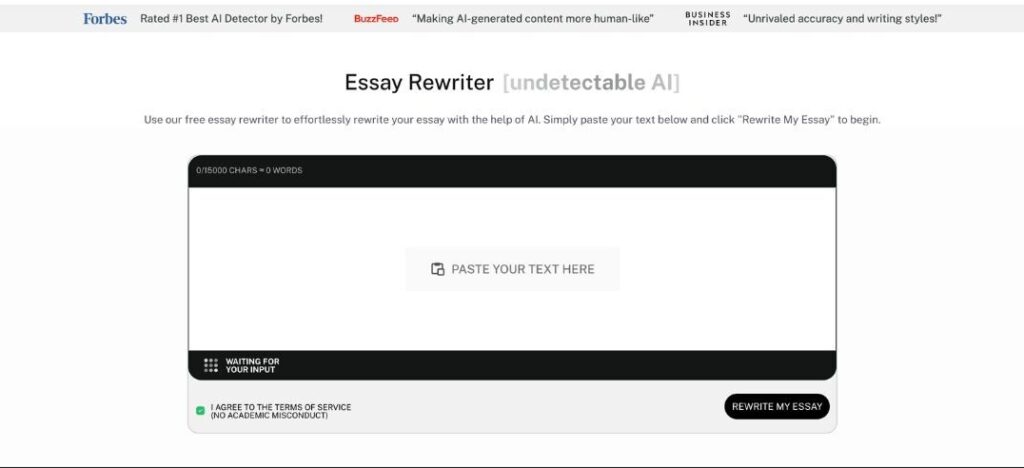
For a deeper analysis of how assonance affects rhythm (whether it creates softness, builds tension, or generates speed), Undetectable AI’s AI Essay Writer can provide short commentary that breaks down these effects in your specific passages.
The key is being intentional. Don’t just repeat vowel sounds randomly.
Choose the sounds that support what you’re trying to convey.
If you’re writing a tense action scene, load it with short, sharp vowels. If you’re writing a love scene, use longer, softer vowels. Let the sounds reinforce the content.
How to Identify Assonance in a Passage
Spotting assonance takes practice. Your ear needs training to pick up vowel patterns while you’re reading.
Here’s how to develop that skill.
- Read aloud. This is non-negotiable. Assonance lives in sound, not in visual patterns. You might miss it completely if you’re just reading with your eyes. When you read aloud, repeated vowel sounds become immediately obvious.
- Focus on stressed syllables. Not every vowel repetition counts as assonance. You’re looking for repeated sounds in syllables that receive emphasis. The unstressed vowels in “about” and “around” don’t really create assonance, but the stressed vowels in “sound” and “ground” do.
- Mark the sounds, not the letters. Remember that assonance is about sound, not spelling. “Great” and “break” use the same vowel sound even though they’re spelled differently. “Cough” and “through” use different vowel sounds even though they both have “ough.”
- Look for patterns in important passages. Writers tend to use assonance in moments that matter, like climactic scenes, important dialogue, and key descriptions. If a passage feels particularly lyrical or memorable, start looking for repeated vowel sounds.
- Watch out for false positives. Students often confuse assonance with rhyme or alliteration. Assonance specifically means repeated vowel sounds with different consonants around them. If the entire word ending matches, that’s rhyme. If the consonants repeat, that’s alliteration.
If you’re analyzing a text and want to flag overly repetitive or mechanical sound patterns, Undetectable AI’s AI Detector can be helpful.
It identifies patterns that might be assonance or might just be awkward repetition. This is especially useful when you’re learning to distinguish intentional assonance from accidental repetition.

When you’re writing your own assonance, and it feels forced or clunky, Undetectable AI’s AI Humanizer can smooth out awkward examples.
The goal is to make vowel repetition feel natural rather than mechanical.
The humanizer helps you find the sweet spot where the assonance enhances your writing without overwhelming it.
Click to use our AI Detector and Humanizer in the widget below!
You Felt That Line for a Reason
Assonance is one of those tools that separates competent writing from writing that resonates.
It works in the background, creating music and meaning without drawing attention to itself.
From Kendrick Lamar to Emily Dickinson, great writers have used assonance to make their words more memorable, more musical, and more effective.
The beauty of assonance is that it’s accessible. You don’t need special software or advanced degrees.
You just need to pay attention to how words sound when you put them together.
Choose one important sentence in your current project and try loading it with a repeated vowel sound.
See how it changes the rhythm and feel, then expand that technique to key paragraphs. Over time, using assonance becomes second nature.
You’ll find yourself choosing words partly for their sonic qualities, not just their meanings.
Ready to take your writing to the next level? Undetectable AI offers tools that help you analyze, refine, and perfect your use of literary devices, such as assonance.
Whether you’re working on poetry, prose, or song lyrics, our platform helps you craft language that sounds as good as it reads.
Try Undetectable AI today and discover how subtle sound patterns can transform your writing.