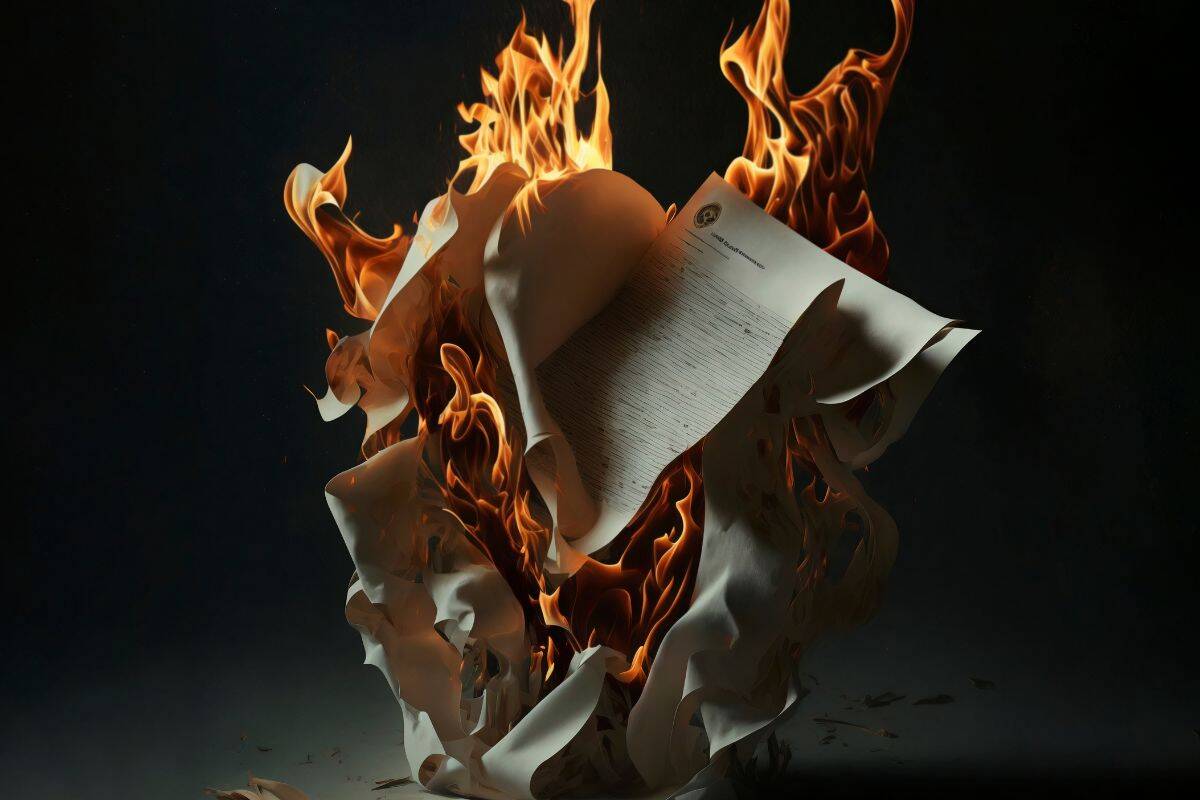
Quick. Fill in the blank:
‘The chicken has ________ down.’
Did you stop to check if it should be burnt down or burned down? Did you think Burned? Or did you write Burnt?

If you picked the first one, you might be American. If you picked the second, you might be British.
Or… you might just be guessing.
English is notorious for giving us two words that sound exactly the same but look different, leaving many writers asking: is it burned or burnt?
So, what is the difference between burnt or burned?
Let’s find out in this blog. We’ll see the regional differences (US vs. UK), explore the grammatical rules, and even clarify if you should say you are burnt out or burned out.
We’ll also learn the 5 common mistakes writers make so you can avoid them forever.
Let’s dive in.
Key Takeaways
- Burnt and burned are both correct past tense forms of the verb “burn.”
- In American English: “burned” is preferred for verbs. Both “burned” and “burnt” work as adjectives.
- In British English: both forms are interchangeable for verbs and adjectives.
- The choice depends on your regional variant and stylistic preference.
- Consistency is important so stick to one form throughout your writing.
- Some fixed expressions use only one spelling (e.g., “burnt sienna,” “burnt offering”).
What Is the Difference Between Burnt or Burned?
Is it burned or burnt?
The short answer… There is no difference in meaning.
Both words are the past tense and past participle of the verb “burn” (meaning to damage, consume, or transform something through fire or heat).


Never Worry About AI Detecting Your Texts Again. Undetectable AI Can Help You:
- Make your AI assisted writing appear human-like.
- Bypass all major AI detection tools with just one click.
- Use AI safely and confidently in school and work.
It comes down to regional preference (American vs. British) and grammatical function.
Regional Preference
- American English: Strongly prefers “Burned” (with an -ed) for verbs.
- British English: Uses both “Burned” and “Burnt” interchangeably, though “Burnt” is very common.
Here is a quick breakdown of how the two regions handle the word:
| Usage Type | American English | British English |
| Past Tense Verb | “Burned” (Standard) | Burned or burnt (Both common) |
| Past Participle | “Burned” (Standard) | Burned or burnt (Both common) |
| Adjective | “Burned” or “Burnt” | Burnt (Preferred) |
While Americans almost always use “burned” for the action (verb), they often use “burnt” when describing the result (adjective).
- Action: I burned the toast.
- Description: I hate burnt toast.
Grammatical Function:
To decide whether to use burnt or burned, look at the role the word plays in the sentence.
- As a Verb (The Action)
When you are talking about the act of burning, “burned” is the safest bet globally, but “burnt” works in the UK.
- Past Tense: The candle burned/burnt for hours.
- Past Participle: The house has burned/burnt down.
For the common phrase “burnt down or burned down”:
- American: The warehouse burned down last night. (standard)
- British: The warehouse burnt down last night. (equally common)
- As an Adjective (The Description)
When you are using the word to describe a noun (like toast, wood, or a smell), both forms work, but “burnt” is very popular in both regions because it sounds snappier.
- Example: The burnt edges of the paper. (Describes the paper).
- Example: A burnt smell filled the room. (Describes the smell).
The phrase “burnt out or burned out” (meaning exhausted) follows the same pattern:
- American: I’m completely burned out from work. (standard)
- British: I’m completely burnt out from work. (common)
- Origin and Understanding
For a long time (pre-1500s), the past tense was fairly standard. People added -ed to the end of the word, just like we do with most verbs today. “Burned” was the dominant king.
But in the 16th and 17th centuries, English speakers started getting lazy with their tongues… or efficient, depending on how you look at it.
They began replacing the -ed sound with a sharp -t sound for certain verbs because it was quicker to pronounce. This didn’t just happen to burn, it happened to a whole family of words:
- Learn → Learnt
- Dream → Dreamt
- Spell → Spelt
- Burn → Burnt
This created a rivalry. Suddenly, “burned and burnt” were fighting for dominance.
| British | America |
| The new -t ending stuck. It became deeply embedded in the culture. By the 18th century, “burnt” was firmly established and often preferred in everyday speech. | The -t ending arrived with the settlers but didn’t survive the long haul. By the late 19th century, American English started regularizing the language. They wanted verbs to follow the standard rules, so they shifted back to “burned.” |
Using Burnt Correctly
Here are the 5 ways to use “burnt” correctly.
The British Rule (Know Your Audience)
If you are writing for an audience in the UK, Australia, Ireland, or other Commonwealth nations. In these regions, “burnt” is the standard.
It is perfectly acceptable (and often preferred) as both a verb (the action) and an adjective (the description). Using “burned” here might look slightly Americanized to a local reader.
- Examples
- The old factory burnt down last week.
- She burnt her hand on the stove.
The Adjective Rule (Universal Usage)
Anytime you are describing a noun, even if you are in America. Regardless of your region, “burnt” works exceptionally well as an adjective. It feels snappier and more descriptive than “burned” when placed before a noun.
- Examples
- The burnt toast ruined breakfast.
- There was a strong burnt smell in the hallway.
When discussing exhaustion, remember that “burnt out or burned out” both work as adjectives:
- The burnt-out employees needed vacation. (British preference)
- The burned-out employees needed vacation. (American standard)
The Fixed Phrase Rule (Cultural Idioms)
There are certain phrases in English that have become fossilized. In these specific contexts, asking “is it burned or burnt” has only one answer, changing the spelling to “burned” would look like a mistake to native speakers.
- Examples
- Colors: The artist used Burnt Sienna and Burnt Umber.
- Religion: They offered a burnt offering.
- Idioms: He was burnt to a crisp in the sun.
- Food: The burnt cream (crème brûlée) was delicious.
Using Burned Correctly
Here are the 5 ways to use “burned” correctly.
The American Standard Rule (Default Setting)
In any American English writing context. If you are writing for a US audience, you can essentially forget that “burnt” exists as a verb.
Americans prefer to regularize their language, meaning they almost always add -ed to past tense verbs.
- Examples
- The house burned down overnight. (Simple Past)
- She burned the letters. (Action)
- The sun burned brightly all afternoon. (Figurative)
The Formal & Academic Rule (Professionalism)
In research papers, business reports, or scientific logs. Even outside of the US, the -ed ending is often viewed as more formal and standardized.
“Burnt” can sometimes feel conversational or rustic. If you are writing a lab report or a financial statement, “burned” is the professional choice.
- Examples
- Scientific: The chemical reaction burned at 1200°C.
- Business: The startup burned through its capital in six months.
- Academic: The study tracks calories burned during intense exercise.
The Passive Voice Rule
When the object is the focus, not the subject. In passive sentence structures (where the action happens to something), “burned” flows very naturally. It maintains a neutral, objective tone that is perfect for news reporting or official documentation.
- Examples
- The forest is regularly burned to prevent wildfires.
- Evidence had been burned before the police arrived.
Are Your Sentences Grammatically Perfect?
Even when you choose the right word, slip-ups can happen in complex sentences, especially when dealing with passive voice or academic tone.
To be absolutely sure your examples are accurate and readable, run your draft through the Undetectable AI’s Grammar Checker.
It ensures your “burned vs. burnt” usage fits the context perfectly and polishes your sentence structure for maximum clarity.
[Check Your Grammar for Accuracy and Readability]
Common Mistakes to Avoid
While the burnt or burned difference often comes down to preference, using them incorrectly can make your writing look sloppy or confuse your reader. Here are the 5 most frequent errors and how to fix them.
Mistake 1: Inconsistency
Writers often flip-flop between “burnt or burned” within the same paragraph or document without a system. This creates a jarring reading experience.
The Fix: Pick a lane. If you are writing for an American audience, stick to “burned.” If you are writing for a British audience, pick one style and maintain it throughout the entire text.
- ❌ Incorrect: Yesterday, I burned the toast, but later I burnt the dinner too. (Inconsistent)
- ✅ Correct: Yesterday, I burned the toast, but later I burned the dinner too. (Consistent American)
- ✅ Correct: Yesterday, I burnt the toast, but later I burnt the dinner too. (Consistent British)
Mistake 2: Changing Fixed Expressions
Some phrases are linguistic fossils. They were established centuries ago and do not follow modern rules. Changing the spelling in these phrases signals to the reader that you are unfamiliar with the language.
- ❌ Incorrect: The artist used burned sienna.
- ✅ Correct: The artist used burnt sienna.
- ❌ Incorrect: They made a burned offering.
- ✅ Correct: They made a burnt offering.
Mistake 3: The Adjective Myth
The Problem: Many writers mistakenly believe that “burned” cannot be an adjective, or that they must use fire-damaged to avoid the word. This limits your vocabulary unnecessarily.
The Fix: Both forms work perfectly as adjectives. You have the creative freedom to choose.
- ✅ Correct: The burned forest was regenerating.
- ✅ Correct: The burnt forest was regenerating.
- ✅ Correct: She scraped the burned bits off the pan.
Is Your Content 100% Unique?
When explaining common grammar rules or using standard examples, it’s easy to accidentally mirror existing content too closely.
Ensure your explanations, examples, and tips are entirely original by running your work through the Undetectable AI’s Plagiarism Checker.
It scans your text to confirm that your writing is unique and safe to publish.
[Check Your Content for Originality]
Tips for Choosing Between Burnt and Burned
Making the right choice between burnt or burned doesn’t have to be a guessing game.
By following these 5 guidelines, you can ensure your writing is polished, professional, and grammatically sound.
| Rule | What To Do | Example |
| 1. Check Your Location | In the USA, use “Burned” for verbs. | The house burned down. |
| In the UK, you can use “Burnt” or “Burned”. | The house burnt down. | |
| 2. Stay Consistent | Do not mix both spellings in the same text. Pick one style and stick to it. | Bad: He burned his hand and burnt the food. |
| Good: He burned his hand and burned the food. | ||
| 3. Action vs. Description | If it is an Action (Verb), use “Burned”. | Action: She burned the toast. |
| If it describes a Noun (Adjective), “Burnt” is better. | Description: I hate burnt toast. | |
| 4. Fixed Phrases | Some famous phrases always use “Burnt”. Never change these. | Burnt Sienna (Color) Burnt Ends (Food) Burnt to a crisp (Idiom) |
| 5. Check the Tone | Use “Burnt” for a sharp, dramatic sound. | Dramatic: The burnt smell filled the air. |
| Use “Burned” for a smooth, factual sound. | Factual: The fire burned all night. |
Even if you follow every grammar rule perfectly, your writing can sometimes feel stiff or robotic, especially if you are trying too hard to be correct.
To ensure your guidance feels practical and your tone connects with everyday readers:
- Check for Robot Vibes: Run your draft through the Undetectable AI’s AI Detector. It highlights sections that sound artificial or overly generated.
- Add a Human Touch: If your text feels too rigid (or if you defaulted to “burned” so much it sounds repetitive), use the Undetectable AI’s AI Humanizer. It rephrases your content to ensure it reads naturally, making your advice feel like it’s coming from a helpful friend rather than a textbook.
[Humanize Your Writing for Better Engagement]
Discover our AI Detector and Humanizer in the widget below!
Final Thoughts
So, there you have it. Whether you prefer the sharp snap of “burnt” or the smooth regularity of “burned,” you now have the tools to choose correctly.
Language is rarely black and white. It’s more like burnt sienna and charcoal gray.
The most important thing isn’t memorizing a rulebook from 1650, but knowing your audience.
If you are in London, feel free to let the fire burnt. If you are in New York, stick to burned.
Just remember…
No matter how you spell it, nobody likes the smell of charred toast. So go forth, write confidently, and try not to set your spellcheck on fire.
Before you hit publish, run your text through Undetectable AI to keep your writing natural, polished, and confidently human.