
“You either die a hero, or you live long enough to see yourself become the villain”.
Deep right? Even Christoper Nolan didn’t understand that sentence at first.
Or when Obama said, “It’s not whether you get knocked down, it’s whether you get up”?
These quotes are lines that will stick with us forever.
The way they’re structured is intentional, and it’s called chiasmus, one of the oldest rhetorical tricks in the book.
The Greeks and Romans loved and used it so much that they made it an essential part of the art of oration.
Chiasmus is basically a reversed repetition of structured ideas in an A-B-B-A pattern. And no, it’s not related to your mom’s favorite ’70s pop group.
It shows up everywhere once you start looking for it. Political speeches. Song lyrics. Movie dialogue. Marketing slogans.
The best writers and speakers have been using the technique for centuries because it works. It sticks in your brain like a catchy hook.
Whether you’re writing an essay, preparing a speech, or simply want to elevate your prose, learning how to craft chiasmus will give your words greater impact.
This guide breaks down everything you need to know to craft your own memorable phrases.
Key Takeaways
- Chiasmus is a rhetorical device that reverses grammatical structure or ideas in successive phrases (AB, BA pattern).
- The technique creates rhythm and emphasis that make phrases more memorable and quotable.
- Strong chiasmus relies on parallel structure, meaningful contrast, and natural flow.
- You can use chiasmus in essays, speeches, creative writing, and everyday communication to add impact.
What Is Chiasmus?
Chiasmus is an ancient and universal rhetorical device that creates a mirrored, symmetrical structure where the second half of the sentence reverses the order of the first half.
Let’s see how it actually works.
Chiasmus Definition
Chiasmus is a rhetorical device where you reverse the grammatical structure of two related phrases or clauses.


Never Worry About AI Detecting Your Texts Again. Undetectable AI Can Help You:
- Make your AI assisted writing appear human-like.
- Bypass all major AI detection tools with just one click.
- Use AI safely and confidently in school and work.
The name comes from the Greek letter chi (X), which represents the criss-cross pattern of the structure.
The basic formula looks like this: AB, BA. You take two concepts in one order, then flip them in the next phrase. The reversal creates a mirror effect that has a nice ring to it and sticks in the mind.
It’s like a verbal backflip. You say something one way, then spin it around and say it another way.
The contrast between the two halves creates tension and resolution at the same time.
Chiasmus Examples
Some of the most famous lines in history use chiasmus. JFK’s “Ask not what your country can do for you, ask what you can do for your country” is probably the most recognizable example.
The structure flips from “country/you” to “you/country.”
Literary examples pop up constantly.
Charles Dickens opened A Tale of Two Cities with, “It was the best of times, it was the worst of times.” Swap “best” and “worst,” and you get the mirror pattern.
Modern examples are everywhere, too. John Mayer’s lyric, “Say what you need to say,” acts as chiasmus when considering the implicit structure.
Marketing loves it as well. “Eat fresh” versus “Fresh eats” uses the same word-class flip.
Mae West’s entire persona was built on chiastic zingers. “It’s not the men in my life, it’s the life in my men” reverses “men/life” to “life/men.”
The structure makes the line quotable decades later.
Even casual speech uses chiasmus without conscious effort.
“When the going gets tough, the tough get going” is pure chiasmus. “Work to live, don’t live to work” flips the verb-object relationship perfectly.
Why Chiasmus Works So Well in Writing and Speech
Our brains love patterns. They also love it when patterns get disrupted in interesting ways. Chiasmus gives you both at once.
The parallel structure creates a rhythm that sounds complete and satisfying.
Your ear expects balance, and chiasmus delivers it. But the reversal keeps things from becoming boring repetition.
It’s familiar enough to feel right, different enough to be interesting.
The technique also creates emphasis through contrast. By flipping the structure, you highlight the relationship between two ideas.
The reversal makes readers slow down and actually think about what you’re saying instead of skimming past it.
Chiasmus is incredibly memorable. The mirrored structure makes phrases easier to recall than standard sentences.
That’s why politicians and speechwriters frequently reach for it. If you want people to quote you, chiasmus is your friend.
The device works across different writing styles. It can sound formal and elevated in academic prose, punchy and modern in advertising, and wise and timeless in advice.
The same basic structure adapts to whatever tone you need.
The Core Structure of a Chiasmus

At its core, chiasmus reverses elements in a specific pattern. You need at least two parts in each half of the structure, though you can get more complex.
The simplest version swaps two words: “Eat to live, don’t live to eat.” Structure A (eat/live) becomes structure B (live/eat). The grammatical function flips completely.
You can reverse phrases instead of single words. “Never let a fool kiss you or a kiss fool you” swaps “fool/kiss” for “kiss/fool” while keeping the verb structure parallel.
Sometimes the reversal is conceptual rather than word-for-word. “It’s not about the destination, it’s about the journey” doesn’t repeat the exact same words, but it flips the focus from one concept to its opposite.
The key is maintaining parallel grammatical structure in both halves. If your first half is noun-verb, your second half should also be noun-verb, just reversed.
The symmetry is what makes the pattern recognizable.
Strong chiasmus often includes contrast between the two halves.
You don’t just rearrange words randomly, but set up a tension or comparison that the reversal makes more powerful.
Step-by-Step Guide to Writing Your Own Chiasmus
Creating effective chiasmus takes practice, but you can learn the process systematically.
Here’s how to craft your own memorable phrases.
1. Start With Two Related Concepts
Pick two ideas that have some connection or tension between them.
Love and hate. Work and play. Success and failure. The stronger the relationship, the more impact your chiasmus will have.
Write them down. Don’t worry about fancy phrasing yet. Just get the basic concepts clear. “Hard work” and “smart work” could be your starting point. Or “speaking” and “listening.”
2. Find the Keywords
Identify the essential words that carry the meaning. These will be the elements you flip. In “Ask not what your country can do for you,” the keywords are “country,” “you,” and “do for.”
Strip away extra words temporarily. You can add them back later for flow. Right now, you just need the core reversible elements.
3. Create a Sentence With Normal Word Order
Build a complete sentence or phrase using your concepts in one direction. Make it sound natural. “You should work hard to succeed” uses normal subject-verb-object order.
This becomes your template where you establish the grammatical pattern before you flip it.
4. Reverse the Key Elements
Now swap the positions of your keywords while maintaining grammatical parallelism.
If your first half was “work hard to succeed,” your reversal might be “success requires hard work.”
Test different word orders. Sometimes you need to adjust phrasing to make the reversal work smoothly. “Work hard to succeed, and success will reward hard work,” maintains the flip while staying readable.
5. Polish for Sound and Rhythm
Read your chiasmus out loud. Does it sound natural? Does the reversal feel intentional or forced?
The best chiasmus has a musical quality that makes it pleasant to say.
Cut unnecessary words. Chiasmus works best when it’s tight and punchy.
“It’s not about working hard, it’s about hardly working” is cleaner than “It’s not always about the act of working hard all the time, sometimes it’s more about hardly working at all.”
6. Test the Meaning
Make sure your reversal actually conveys something meaningful. Chiasmus shouldn’t be just a clever trick. The flipped structure should reveal a truth or make a point.
Ask yourself: Does this add insight, or am I just rearranging words for the sake of it? “Eat food, don’t food eat” is technically a chiasmus, but it’s nonsense. Always prioritize meaning over form.
Tips for Strong and Memorable Chiasmus
- Keep It Short: The longer your chiasmus, the harder it is to track the reversal. Aim for brevity. Ten words or fewer usually work best. Your audience should be able to hold the entire structure in their head at once.
- Use Strong Verbs: Active, specific verbs make chiasmus pop. “Ask” and “do” in JFK’s famous line are stronger than something like “receive” and “give” would have been. Choose verbs with energy.
- Create Real Contrast: The best chiasmus sets up meaningful opposition or comparison. “Work hard or hardly work” contrasts two approaches. “Eat pizza, pizza eat” doesn’t convey any meaningful contrast. Make sure your reversal illuminates something.
- Match Your Tone: Chiasmus can sound formal or casual depending on word choice. “One should not work in order to live, but rather live in order to work” sounds stiff. “Work to live, don’t live to work” says the same thing with a modern vibe.
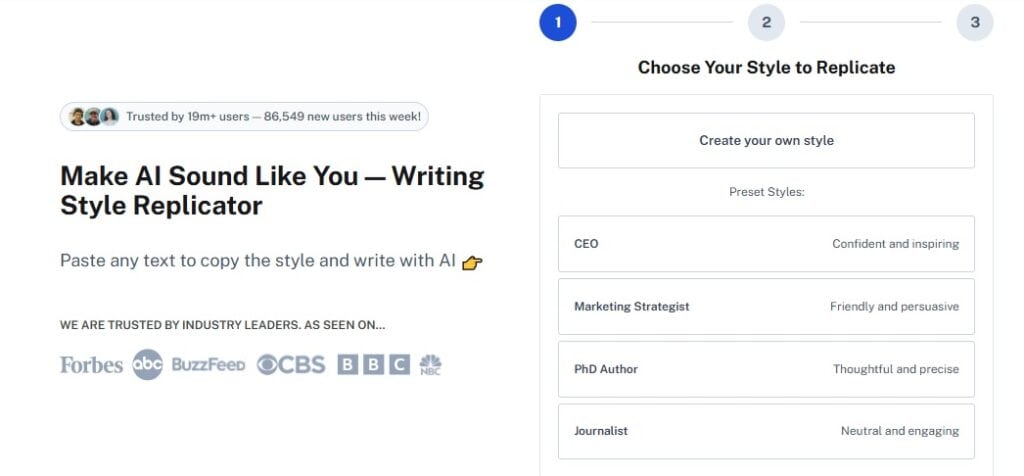
When you’re refining your chiasmus for different contexts, tools like Undetectable AI’s Writing Style Replicator can help you test variations.
You might write a chiasmus that works great in an academic paper, but sounds too formal for a blog post.
The tool lets you adjust tone and emphasis across multiple versions so you can pick one that best suits your audience.
The testing process becomes especially useful when you’re writing multiple chiasmus phrases for a longer piece.
You want them all to match the overall style without sounding repetitive. The replicator helps maintain consistency while giving you fresh options.
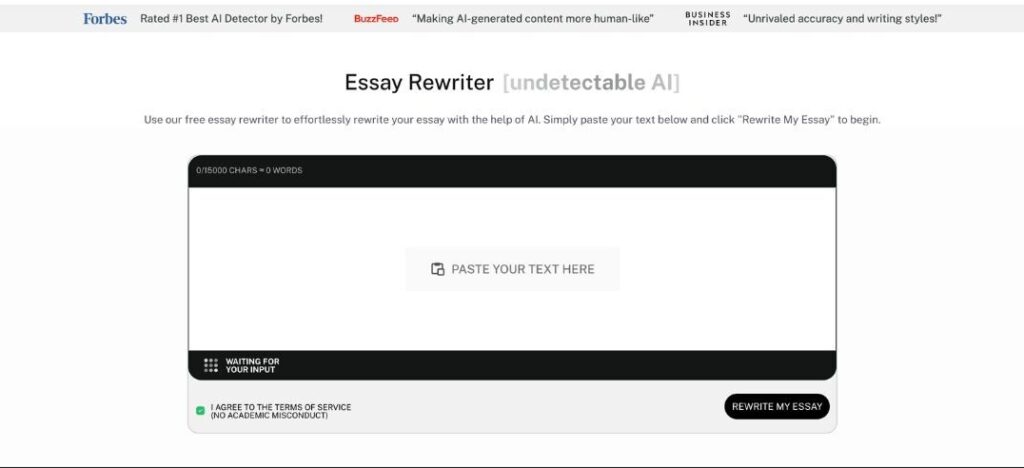
To further refine these results, Undetectable AI’s AI Essay Rewriter offers a specialized way to help restructure literary devices like chiasmus into more natural and flowing prose.
It focuses on the underlying sentence mechanics to suggest subtle tweaks that maintain the mirrored structure while making the delivery feel effortless and human.
Common Mistakes to Avoid
- Forcing the Structure: Don’t shoehorn chiasmus into places where it doesn’t fit. If you have to twist your meaning into a pretzel to make the reversal work, just write a normal sentence. Clarity always beats cleverness.
- Forgetting Parallel Structure: Your two halves need to mirror each other grammatically. If your first half is “to work hard,” your second half should be “to play hard,” not “hardly plays.” The symmetry is essential.
- Overuse: One great chiasmus is memorable. Five chiasmus phrases in a row are exhausting. Use the technique strategically for maximum impact, and save it for the moments that matter most.
- Making It Too Complex: Simple chiasmus is almost always better than elaborate chiasmus. “When times are tough, tough times make us stronger” is clearer than “When the challenges of modern existence present themselves as insurmountable, the insurmountability of the presentations challenge us to exist modernly.” Keep it clean.
- Sounding Unnatural: If your chiasmus sounds like a robot wrote it, rewrite. Tools like Undetectable AI’s AI Humanizer can help smooth out rigid phrasing into more natural rhetorical flow. The best chiasmus sounds effortless, like something someone would actually say out loud.
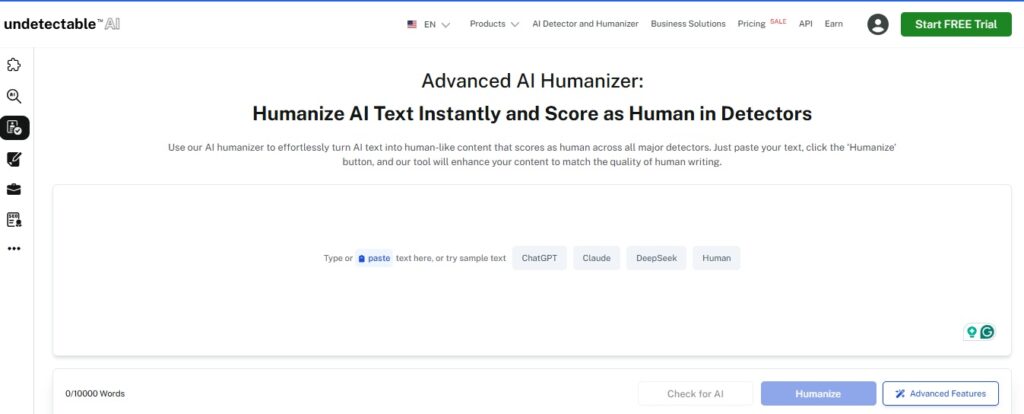
The humanizer is particularly helpful when you’ve generated text that’s technically correct but doesn’t quite flow.
It softens the edges and makes your chiasmus feel less forced, more conversational.
How to Use Chiasmus in Essays, Speeches, and Creative Writing
In Academic Essays
Chiasmus works beautifully in thesis statements and conclusions.
“The question is not whether technology shapes society, but whether society can shape technology” sets up your argument with built-in contrast.
Use it sparingly in body paragraphs. One well-placed chiasmus can emphasize a key point without overwhelming your analysis.
Topic sentences are a great spot for it.
If you’re stuck on how to incorporate chiasmus naturally, Undetectable AI’s AI Essay Writer can generate sample paragraphs that demonstrate the technique in context.
You’ll see how professional writers weave chiasmus into academic prose without making it feel showy.
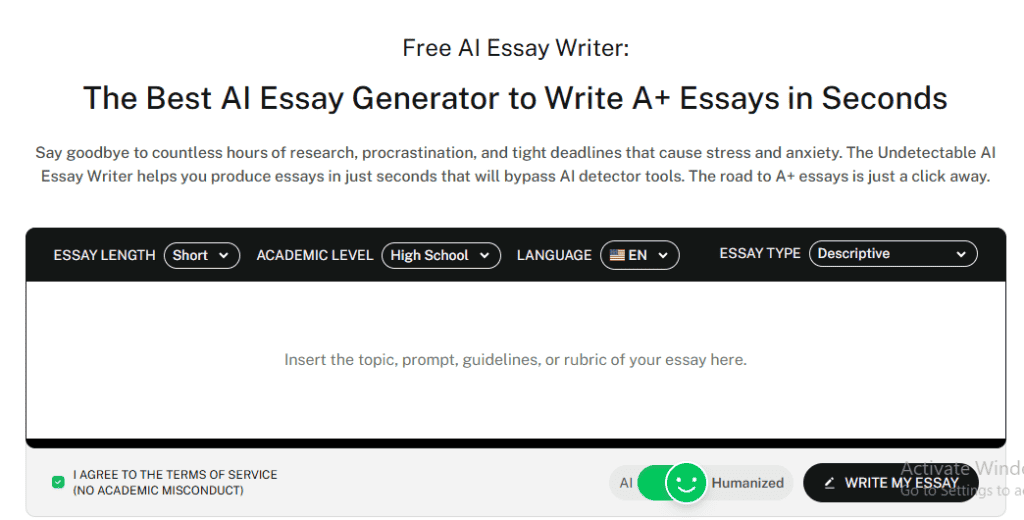
The tool is especially helpful when you’re learning the form. You can study multiple examples and start to internalize what makes chiasmus work in formal writing.
In Speeches and Presentations
Spoken delivery emphasizes the reversal and makes the pattern more obvious.
Use chiasmus at key moments, like your opening, transitions between major points, and your closing.
Pause slightly before the reversal. Let your audience register the first half before you flip it.
“We must stop fighting for peace… and start building peace through cooperation” works nicely with that beat in the middle.
Repeat your chiasmus if it’s especially important. Politicians do this constantly. Say it once, let it land, then reference it again later in your speech.
In Creative Writing
Character dialogue is perfect for chiasmus. A witty character can drop chiastic one-liners that reveal personality.
“You married your work and divorced your life” tells you everything about how this character sees another.
Use it in narrative prose for poetic effect. “The city had built the people who would eventually destroy the city” has literary weight.
Poetry loves chiasmus because of the inherent rhythm. The mirrored structure creates musicality. Experiment with it in your line breaks and stanza structure.
In Marketing and Social Media
Short, punchy chiasmus is gold. “Dress for the job you want, not the job you have” is a chiasmus. It’s memorable, shareable, and fits in a tweet.
Brand slogans often use chiastic principles. As mentioned before, “Eat fresh” flipped to “Fresh eats” is a small change that draws attention. Play with product names and taglines using this structure.
Captions and headlines benefit from chiasmus, too. “Don’t work for your weekend, make your weekend work for you” is more engaging than “Enjoy your weekend activities.”
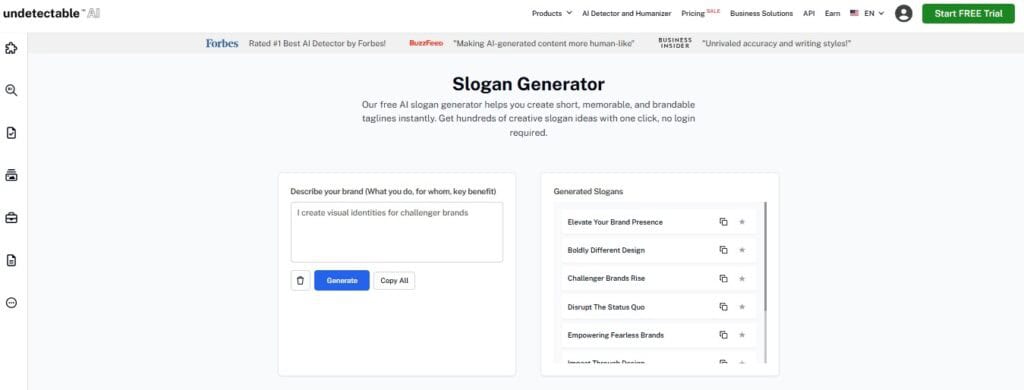
If you are struggling to find that perfect mirrored rhythm, try using our Undetectable AI’s Slogan Generator.
It is a powerful resource for experimenting with advanced structural techniques like chiasmus to create a poetic and balanced tagline.
By entering your core brand keywords, the tool can help you find that elusive ‘AB, BA’ flow that turns a standard business description into an iconic, shareable slogan.
Check out our AI Detector and Humanizer in the widget below!
Cue the Credits
Chiasmus is one of those writing techniques that seems complicated until you actually try it. Then it clicks.
You start to see the pattern everywhere and find opportunities to use it in your own writing.
The key is practice. Start simple with two-word flips, then build up to longer phrases.
Test your chiasmus out loud to hear if it works, and cut anything that sounds forced.
Remember that chiasmus serves your meaning, not the other way around. Use it to emphasize important points, create memorable phrases, and add rhythm to your prose, but never sacrifice clarity for cleverness.
Once you master chiasmus, your writing will sound more polished and quotable. People will remember your phrases, our arguments will stick better, and your characters will sound wittier.
Want to turn good writing into great writing? Undetectable AI offers tools that help writers craft better prose, refine their style, and generate ideas when they’re stuck.
Whether you’re working on essays, speeches, or creative projects, having AI assistance that understands rhetoric and style can speed up your process and improve your results.
Check out what Undetectable AI can do for your writing today.