
Communication influences your work experience and determines how you relate with your coworkers and subordinates. They show how your ideas are accepted at work.
Communication is important because when you get into an organization, and you are not getting heard, it will influence your approach to work.
Whether you are working in a team, sending an email, or giving your opinion in a meeting, how you convey your message is vital.
Most people find communication a bit difficult; however, it is not. Communication can be taught and learnt, you just need to have an open mind about it.
You don’t even have to be a public speaker or great writer to excel at it.
Let’s dive in.
Key Takeaways
- Communication skills in the workplace involve talking, listening, and giving feedback
- Written communication needs the same attention as spoken communication
- Active listening builds trust and collaboration in the workspace.
What are Communication Skills in Workplace
Communication skills in the workplace are the skills every employee must have. They are the skills that determine how you share ideas, feedback, and information with other people in your workplace.
It is more than just knowing how to put sentences together.
The important elements of communication are:


Never Worry About AI Detecting Your Texts Again. Undetectable AI Can Help You:
- Make your AI assisted writing appear human-like.
- Bypass all major AI detection tools with just one click.
- Use AI safely and confidently in school and work.
- Written Communication: It has to do with how you convey messages through emails, Slack, reports, and briefs.
- Non-Verbal Communication: This involves passing messages across with your body movements, facial expressions, and tone.
- Verbal Communication: This is more about how you talk in meetings or one on one conversations with a colleague.
- Emotional Intelligence: Communication sometimes goes beyond knowing how to talk or listen. It also has to do with the feelings and emotions that you show. Emotional Intelligence means knowing what to say and what emotions you should express, depending on who you are talking to.
- Listening: Effective communication skills in the workplace also involve listening, not just nodding your head. It involves active listening, that is, you can hear and understand what is being said at that moment without interrupting.
Having appropriate communication skills at the workplace is one of the most effective ways to prevent misunderstanding in the office. It also ensures that the organisation’s business runs smoothly.
Once members of an organisation lack this skill, it would be difficult to achieve goals. Even the most brilliant ideas fail when they are not conveyed correctly.
This is the reason why companies try to invest in communication skills in the workplace training to foster better work relationships among team members.
Practicing Effective Communication Every Day
You know that saying that small drops make a tiny ocean? That is how effective communication is. One of the easiest ways to build communication is by practicing every day.
You don’t just wake up one day with communication skills, you have to build them brick by brick, but in this case, word by word, till you get it right.
The little habits do make a difference in the long run, as far as communication is concerned. It requires a deliberate effort.
Imagine it is just like visiting the gym, and you cannot expect to achieve the desired results after a single session. You have to show up consistently.
The habits that can be used to practice effective communication every day include:
- Opening a meeting by saying what is on your agenda, so that people can have a clue of what is being discussed.
- Monitoring your teammates, not only in case something goes wrong. This is how you build trust.
- Seeking clarification rather than acting as if you know.
- Complementing and providing feedback in a specific and actionable manner.
- Giving a summary of what was discussed or what happens next
So before you send that message or begin that conversation, you need to take a quick second to ask yourself: “What do I actually want to communicate?” and ‘How am I going to start? You do not know how you can get out of a mess simply by taking a pause.
You can also attend seminars or workshops where you’d get to learn about effective communication.
Assertive communication, being able to give feedback, or even talking to people can be learnt with the help of the right workshop. This might appear to be a lot of work, but they are really useful.
Before responding, take a second to put your thoughts in order. That way, it is easier to communicate with clarity and confidence.
Writing Clear Workplace Emails and Messages

Another form of communication that is most widely used in an office is email. That is why you ought to know how to improve written communication skills in the workplace.
A poorly composed email could lead to miscommunication, and when other individuals get your message wrong, there is a chance of conflict. You can write with a tone in your head, and the reader is reading with a completely different tone.
Here is how to write clear workplace emails and messages:
Keep Emails Concise and Structured
Everyone in a workplace has tasks at hand, and they are not trying to read a novel in their inbox. So if your email takes more than 30 seconds to skim, you have lost the plot.
The person you are sending the mail to should be able to get the information within the first 15 seconds of opening your mail.
Instead of writing an epistle, here is what you can do:
- Start with the purpose immediately
- Give just enough context
- Be direct about the actions or decisions required
- Use bullet points, especially if you cannot help but write a long paragraph
Always try to use the fact that most people skim through emails first before reading to your advantage.
Use Professional yet Friendly Tone
Most individuals think that professional automatically means robotic. It doesn’t. Even when you are trying to be friendly, you can still send a standard email that is casual yet professional.
A friendly tone can still make communication smoother, and it also helps you build better relationships with coworkers.
Instead of saying:
“Send the report today.”
Try saying:
“Hi Sarah, could you please send the report today when you get a chance? Thanks!”
The trick is to write as you would talk to a colleague that you like and respect. Say something not too casual nor formal, something in between.
Avoid Ambiguous Language
Trying to be direct and brief does not mean that you should be vague. Ambiguous messages are open to misinterpretation, which can cause miscommunication.
So instead of writing:
- “Handle this soon”
- “Let’s discuss later”
- “Circle back later”
You can say:
- “Please finish this before 3 PM today”
- “Can we hop on a call on Friday by 10 am?”
- “Let’s discuss this at the meeting tomorrow”
You always have to be specific. Your email should not have anyone feeling like they are solving a puzzle. It saves everyone from having to send follow-up messages.
Apart from reading long emails being a time waster, another time waster in the workplace is thinking of how to draft a good email.
Sometimes, because you have no idea what to type, you spend precious time staring at a blank screen. But not to worry, that is what the Undetectable AI’s AI Email Generator helps with.
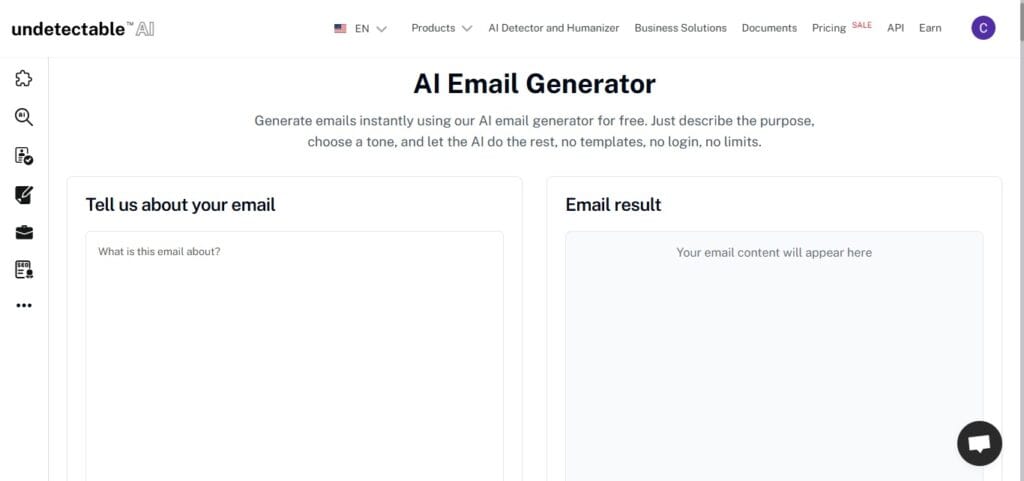
The AI Email Generator can help you write the kind of email that you have in mind.
All you have to do is provide the tool with context. In essence, let the tool know who the email is being sent to, what you are trying to say, and what tone you want to communicate.
Undetectable AI Email Generator is very helpful, especially if you are trying to speed up communication without sounding too casual or uninterested.
Active Listening Techniques for Teamwork
Communication does not only involve talking but also listening, and not all people are good listeners. The majority of individuals who are good at verbal communication occasionally fail to listen.
This is not due to them being rude. It is more about people being too busy to actively pay attention.
Active listening is one of the aspects that plays a role in improving communication skills in the workplace. It demonstrates the level of understanding and assimilation of what a person is saying.
When your colleague feels that they are listened to, this creates trust and teamwork. It also helps resolve conflicts faster.
Listening is not only about hearing what a person is saying, but it also has to do with paying close attention to their tone.
You can actively listen by:
- Paying Attention: When an individual is being spoken to, the polite thing is to do away with distractions. It is not the time to be tapping away on your phone or computer. You must do something that demonstrates that you are fully concentrating.
- Making Eye Contact: A good listener makes eye contact. Eye contact shows that you are present. You just look at the person speaking with calmness in your eyes. Eye contact is not to be threatening. You must look at the speaker as though you are attentive to what is being said and not as though you are telling him/her to shut up.
- Not Interrupting: Do not interrupt the speaker. You have to listen to the other person and wait till it is your turn to respond. Take a mental note and go on listening even though you have something vital to say.
- Summarizing What You Have Heard: Giving a summary of what you have heard is a good way to show that you listen.
- Asking Follow-up Questions: As a good listener, one asks a follow-up question. You may inquire about the development of things later, just to let your colleague know that you were indeed listening.
- Not Trying to Solve Problems: Sometimes, all you need to do is provide a listening ear. Some people simply wish to vent out their emotions without assistance. You need to know when to simply listen and when to offer solutions.
To improve your listening skills, you can tape yourself when conversing. In this manner, you will be able to see how you look and how frequently you interrupt, even with your body language.
Handling Difficult Conversations Professionally
Hard talks are not pleasant, and it does not matter what you are talking about. It is not easy to say what nobody wants to hear, be able to give feedback, or resolve a conflict.
While this type of conversation is awkward, it is not the best decision to avoid them. You must know how to handle tough discussions.
You can start by:
- Paying attention to the problem, not to the individual. It makes the discussion more impersonal.
- Not sticking to personal judgments but to facts.
- Knowing when and where to have these conversations
- Remaining respectful and calm
- Focusing on solutions
- Trying not to be combative
- Not jumping into conclusion
- Not pushing the blame
After having a hard conversation, you can also ask follow-up questions. You could either send a brief message that summarizes the discussion or have a one-on-one check-in. It shows maturity and your willingness to move forward.
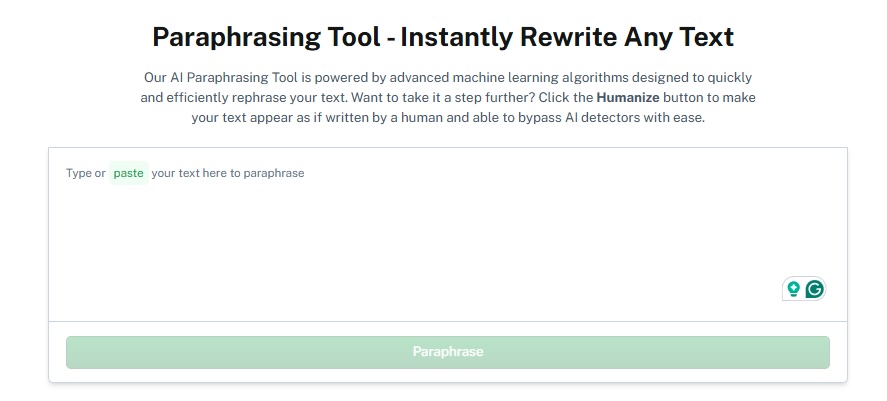
During difficult conversations, it is possible for you to be emotional. So you need to be prepared, and you can do this with the Undetectable AI Paraphrasing Tool.
This AI tool can help paraphrase your talking points. You can use it to make your answers more professional and calmer, especially messages that were drafted when you were angry.
How Undetectable AI Can Assist in Workplace Communication
Technology is improving communication in workplaces. There are many AI tools that now help you communicate better in and outside of work. Undetectable AI has tools that can assist in workplace communication.
Some of these tools include:
- Undetectable AI Chatbot
- Undetectable AI Sentence Rewriter
The Undetectable AI’s AI Chatbot helps you practice communication. You can use this tool to simulate workplace conversations and rehearse how to conduct challenging dialogues with a client or a colleague.

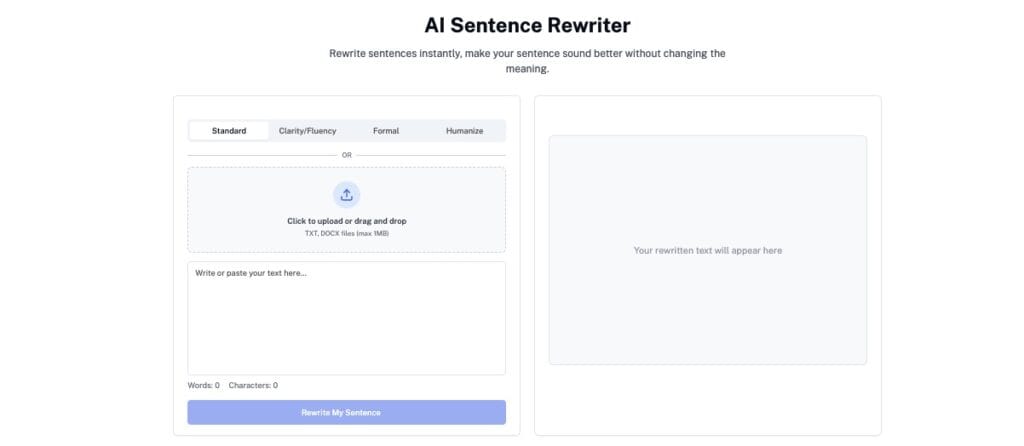
There are instances where you know what to say, but you are not certain how to convey the message. That is where tools such as the Undetectable AI Sentence Rewriter come in.
This tool can be used to rephrase the sentences and pass a professional message. All you need to do is paste your sentence and get alternative options for saying the same thing with this tool.
Try the widget below to access our AI Detector and Humanizer!
Final Thoughts
You do not become a fine communicator overnight. It takes constant practice. There is always room to grow. A person with communication skills will tell you that they are learning how to become better every day.
By practicing daily conversations, learning how to write emails, listening actively, and handling difficult discussions, you can improve your communication skills in the workplace. You don’t have to be perfect, just intentional enough to think before you speak and listen before you respond.
Improve your communication with clear, natural writing by refining your messages using Undetectable AI.