
This post is for those who lack patience. Who love manga or anime, but sometimes struggle with the pacing.
It’s for those who hate traffic. Those who keep their morning routines simple, don’t take three hours to get out the door, and like their Starbucks order black, no extras.
And it’s for people who loathe introductions like this. The multi-paragraph warm-ups with endless synonyms and multiple lines of context of things you already know.
Elaborate explanations of “duh” concepts only to realize that the article hasn’t actually started yet.
You’re nodding, aren’t you? That’s our point. That feeling of impatience, that nagging thought of “just get to the point already,” is exactly what we’re talking about in this post.
What you felt reading that?
That’s the opposite of cutting to the chase. And in today’s world, where our attention spans are shorter than a TikTok video, and we frequently juggle dozens of browser tabs while answering messages on the fly, nobody has time for the scenic route anymore.
Key Takeaways
Before we dive in (see, we’re practicing what we preach), here’s what you need to know:
- “Cut to the chase” means getting straight to the point without unnecessary details
- The phrase comes from silent films, where directors would skip boring dialogue scenes and jump to action sequences
- Using this phrase effectively can save time, reduce confusion, and make you a better communicator
- There’s a difference between being direct and being rude
- Knowing when to cut to the chase matters just as much as knowing how
What Does Cut to the Chase Mean?
We’ve all been there.
Someone starts telling you something, and you can feel your life force slowly draining away as they meander through irrelevant backstory. Your brain is screaming, “What’s the actual point here?” but social norms require you to smile and nod.
That’s what “cut to the chase” means. It’s permission to skip the fluff and get real.


Never Worry About AI Detecting Your Texts Again. Undetectable AI Can Help You:
- Make your AI assisted writing appear human-like.
- Bypass all major AI detection tools with just one click.
- Use AI safely and confidently in school and work.
Definition of Cut to the Chase
Cut to the chase means to get to the point immediately, without wasting time on preliminaries or unnecessary details. It’s about prioritizing the most important information and delivering it first.
The phrase originated in the early days of Hollywood. Silent film directors would literally tell their editors to “cut to the chase” when a scene dragged on too long.
Chase scenes were exciting and kept audiences engaged, so skipping ahead to the action made sense. The term stuck around because, turns out, people have always appreciated efficiency.
Today, we use it in everyday conversation when someone needs to stop rambling and share what actually matters. It’s become a verbal shortcut for “I respect your time, so here’s what you need to know.”
Everyday Examples of Cut to the Chase

Let’s look at how this phrase shows up in real life.
In work meetings:
- Without cutting to the chase: “So, I was thinking about our Q4 strategy, and you know, I’ve been reading a lot about market trends lately, and there’s this interesting article I saw about consumer behavior, and it got me thinking about how we approach our messaging, and I had this conversation with Sarah from marketing last week…”
- Cutting to the chase: “We need to shift our Q4 messaging to focus on value over features. Here’s why.”
In emails:
- Without cutting to the chase: “Hi team, I hope this email finds you well. I wanted to reach out regarding a matter that came up during our last discussion. As you may recall, we talked about several initiatives, and I’ve been giving this considerable thought over the past few days…”
- Cutting to the chase: “Hi team, quick question: Can we move Friday’s deadline to Monday? Our vendor delayed delivery.”
In everyday conversations:
Your friend: “Okay so you know how I’ve been seeing this person, and we’ve been hanging out for like three months now, and things have been going really well, like we have such good chemistry, and we text all the time, and last weekend we went to that new restaurant downtown, the one with the amazing pasta, and anyway…”
You: “Cut to the chase. What happened?”
Your friend: “They asked me to be exclusive.”
See the difference? The second version gets you to the actual news without the documentary-length preamble.
People expect the same efficiency and clarity from writing as they do from everything else.
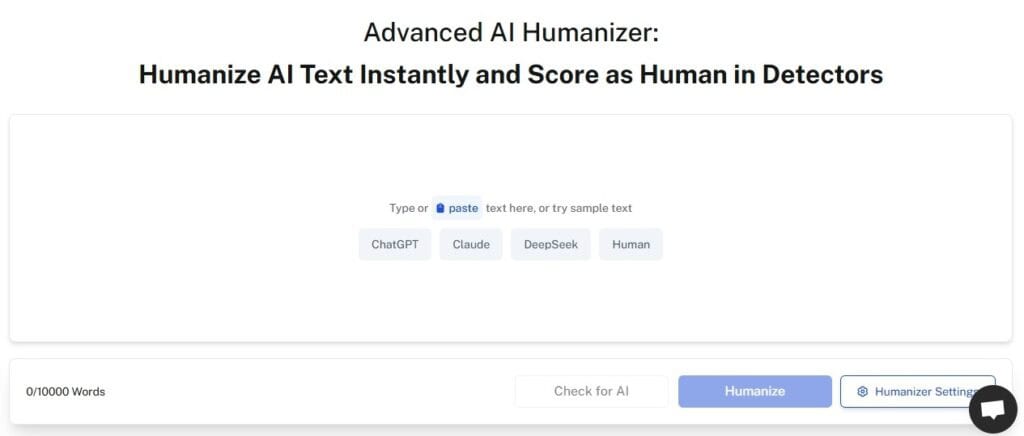
If you’ve used the help of AI to cut to the chase, using tools like Undetectable AI’s AI Humanizer can help you form natural, conversational examples that actually sound like something a real person would say, not a corporate robot.
How to Apply Cut to the Chase
Knowing when and how to cut to the chase is a skill. It’s not about being blunt or rude but rather respecting time and clarity.
Here’s how to do it effectively:
- Start with the conclusion. Instead of building up to your point, lead with it. Journalists call this the inverted pyramid. The most important information goes first.
- Ask yourself: What does this person actually need to know? Not what’s the entire backstory, not every detail that led to this moment. What’s the essential information?
- Use simple language. Big words and complex sentences add unnecessary bulk. Say what you mean in the clearest way possible.
- Test your message. Can someone understand your point in the first sentence or two? If not, restructure.
- Practice in low-stakes situations first. Try it with friends or in casual settings before bringing this approach to high-pressure work scenarios.
One practical exercise: Write your email or message as you normally would. Then delete everything except the last paragraph.
Does it still make sense? Often, we bury our actual point at the end and warm up with unnecessary context.
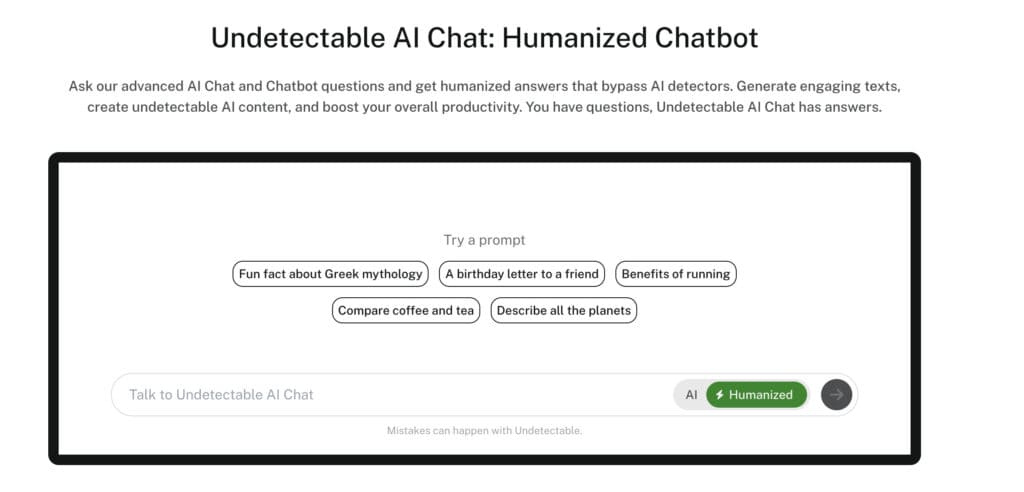
Undetectable AI’s AI Chat can help you practice identifying moments where cutting to the chase would improve communication.
Try this: Think about your last three work emails or text conversations. Where could you have been more direct?
Advantages of Cutting to the Chase
Why bother learning this skill? Because it leads to many positive outcomes.
- Time savings are obvious. A five-minute conversation becomes two minutes. A 500-word email becomes 150 words. Multiply that across every interaction in your day, and you’ve just reclaimed hours of your life.
- Clarity improves dramatically. When you remove the fluff, your message becomes crystal clear. There’s no room for misinterpretation when you’re direct about what you mean.
- People respect it. Everyone is busy. Everyone is overwhelmed. When you demonstrate that you value their time by being concise, they notice and appreciate it.
- Decisions happen faster. In business settings especially, cutting to the chase accelerates everything. Projects move forward. Approvals come through. Problems get solved.
- You appear more confident. Rambling often comes from uncertainty or anxiety. When you cut to the chase, you project confidence and authority.
- Stress decreases. No one has to decode what you’re trying to say or sit through lengthy explanations. The mental load drops significantly.
Tips and Common Mistakes with Cut to the Chase
Let’s talk about how to cut to the chase and where people typically make mistakes.
Common Mistakes:
- Being rude instead of direct. There’s a difference. “Get to the point already” is rude. “I have limited time, could you share the key issue?” is direct.
- Removing all context. Sometimes you need context. The goal isn’t to communicate in caveman grunts. It’s to be efficient, not cryptic.
- Using it as an excuse to be lazy. Cutting to the chase requires thought. You need to figure out what’s actually important. Don’t confuse brevity with dumping bits of information without structure.
- Overusing the phrase itself. If you’re constantly telling people to “cut to the chase,” you might be the problem. Maybe you’re not listening actively, or you’re being impatient.
- Forgetting emotional intelligence. Some situations require warmth and connection before getting down to business. Reading the room matters.
Tips for Getting It Right:
- Know your audience. Your boss probably wants you to cut to the chase. Your grandmother telling you about her day probably doesn’t appreciate being rushed.
- Use transitions. You can be brief while still being smooth. “Here’s the bottom line” or “The key issue is” helps people follow your thinking.
- Save details for follow-up. Lead with the point, then offer to elaborate if needed. “We’re over budget. I can walk through the breakdown if you want details.”
- Match the medium to the message. Texts and Slack messages should almost always be concise. Phone calls allow for more natural conversation flow.
Check your work. Tools like Undetectable AI’s AI Plagiarism Checker ensure that when you’re using examples or references in your communication, they’re original and properly attributed. This is especially important in professional settings where being direct shouldn’t mean being sloppy.
Practice the “So what?” test. After each sentence, ask yourself, “So what?” If you can’t answer why that information matters to your point, cut it.
How It Improves Communication
When you master cutting to the chase, communication transforms. Here’s how.
Reduces Misunderstandings
Confusion lives in the gaps between what you say and what people hear. The more words you use, the more opportunities for misinterpretation.
When you’re direct, there’s less to misunderstand. “The project deadline is Friday” is harder to misinterpret than a paragraph about project timelines, team capacity, and general thoughts about deadlines.
Think about the game Telephone. The message gets distorted as it passes from person to person. But if the original message is clear and concise, it stays intact longer.
Encourages Efficiency
Efficiency becomes contagious. When you model concise communication, others often follow suit.
Meetings that should take 30 minutes actually do, instead of ballooning to an hour. Email threads don’t spiral into 47 replies of people saying the same thing in different ways.
You create a culture where people respect each other’s time. That’s powerful in any environment, whether it’s a workplace, a friend group, or a family unit.
Keeps Discussions Focused
Ever been in a meeting that went completely off the rails?
Someone went on a tangent, then someone else responded to that tangent, and suddenly you’re 20 minutes deep into a discussion about something that has nothing to do with why you’re all there?
Cutting to the chase prevents that. It establishes boundaries around what’s relevant right now. Tangents may still happen, but you have a clear point to return to.
It’s a valuable tool in group settings where multiple people want to contribute. A focused discussion actually allows more voices to be heard because you’re not wasting time on one person’s rambling monologue.
Check your content using our AI Detector and Humanizer below!
See? That Wasn’t Hard
Learning to cut to the chase isn’t about stripping all personality from your communication or turning into a robot who only speaks in bullet points. It’s about respecting the finite resource we all share: time.
The best communicators know how to balance warmth with efficiency. They understand that being direct doesn’t mean being cold. They’ve figured out that you can cut to the chase while still being human, while still showing that you care about the person you’re talking to.
In conversations, practice leading with your point. It can feel weird at first, as we’re trained to build up to things, to provide context, to ease into topics. But once you get comfortable with directness, you’ll notice how much clearer everything becomes.
Your point deserves to be heard. Make sure it actually gets there.
Write with clarity and a human touch—Undetectable AI helps you keep your message natural, direct, and credible.