
Have you ever been in a conversation with someone who kept repeatedly saying, “I dreamt of this, that…”?
Did you then stop and wonder whether you should be saying dreamed or dreamt. Or did you think that they are both the same thing and could be used interchangeably?
In this blog, we are going to be discussing whether it is it dreamed or dreamt. Where you should be using dreamt and dreamed, and how the differences between the two came into being?
Let’s find out.
Key Takeaways
- Dreamt is often used in British English, while dreamed is more commonly used in American English
- Dreamt helps writers provide their readers with a poetic feel when discussing dreams.
- Dreamed is more commonly used in blogs, newspapers, and conversational articles.
- Writers often use dreamed when the duration is being discussed when talking about a dream. Dreamt is often used to highlight an event in a dream.
- Sticking to one past tense form of dream maintains credibility, helps build trust in the audience, and minimizes confusion.
What Is the Difference Between Dreamed or Dreamt?
Is it dreamt or dreamed? Well, both are acceptable past tense of the word, dream. Dreamed is used in most English-speaking countries, the US being the most prominent among them.
Dreamt, on the other hand, is most commonly used in Britain.
Dreamed seems to be the more commonly used term than dreamt when talking about sleeping. Dreamt, however, is often used when there is a literary tendency attached to sleeping.


Never Worry About AI Detecting Your Texts Again. Undetectable AI Can Help You:
- Make your AI assisted writing appear human-like.
- Bypass all major AI detection tools with just one click.
- Use AI safely and confidently in school and work.
Meaning and Background
To understand the meaning and background, let’s first learn more about the verb “to dream”.
If we look at the dictionary definition of “to dream”, it is to experience visions of your emotions, feelings, and fears as you sleep. Some people can also dream while they are wide awake.
It is a stream of consciousness that could detach its subject from their external tasks to something they might be intensely focused on.
Furthermore, dreamed follows the pattern of regular past tense verbs ending with “-ed”, while dreamt is irregular.
This could be one of many reasons as to why dreamed is more commonly used than dreamt. Both, however, are still in use at the present day.
Common Examples of Dreamed vs Dreamt
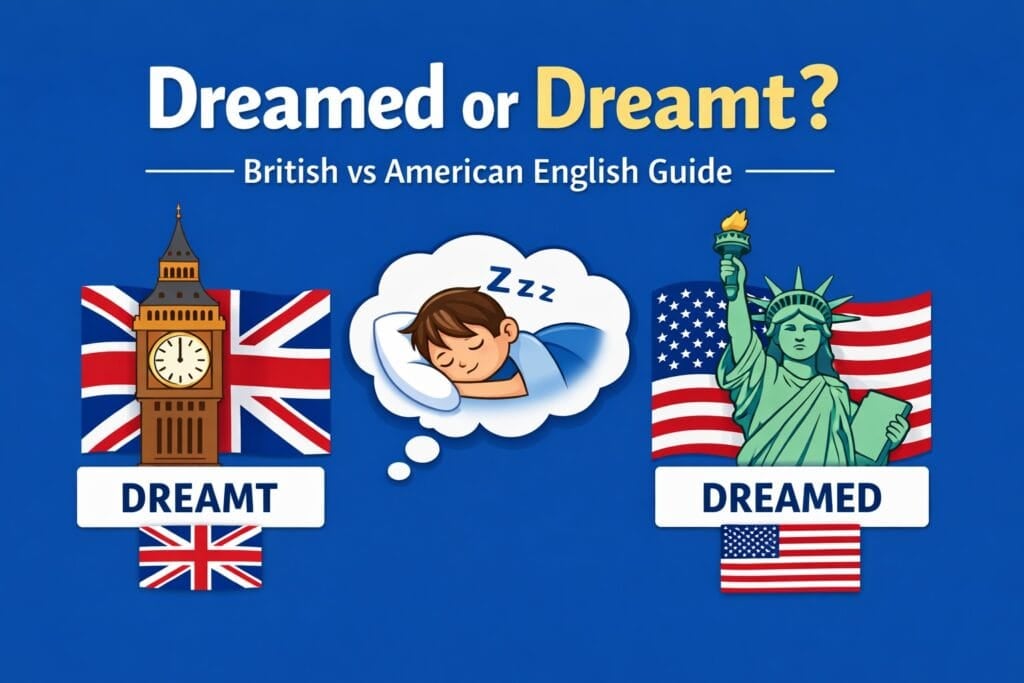
Based on our explanation and the difference between both the terms, here are some of the dreamt vs dreamed examples.
Dreamt
- I dreamt I was walking on water.
- I dreamt I had wings.
- I dreamt of a mountain crashing down into the ocean.
Dreamed
- I dreamed that I had been running for a long time.
- She dreamed of us moving in together.
- My kid told me he dreamed of a scheme to get rich quickly.
Keep in mind, your tense usage while using dreamt or dreamed should be correct to truly connect with your audience on a deeper level.
To do this, you may use Undetectable AI’s Grammar Checker to make sure your content is grammatically correct!
Dreamed vs Dreamt in Literature and Media
Samuel Taylor Coleridge, in this poem, “Lewti, or The Circassian Love-Chaunt,” writes,
“And dreamt that I had died for care;
All pale and wasted I would seem”
Moreover, John Keats, in his “Ode to a Nightingale” writes,
“Past the near meadows, over the still stream,
Up the hill-side; and now ’tis buried deep
In the next valley-glades:
Was it a vision, or a waking dream?
Fled is that music:—Do I wake or sleep?”
So, it is that feeling of becoming so overwhelmed by an experience that you get so absorbed in it and forget what might be happening around you.
Apart from the preference for dreamed over dreamt, some writers often favored dreamed when talking about durations.
For example, Isabel Burton, in her work, “The Romance of Isabel, Lady Burton (1897)”, the narrator shuffles dreamed and dreamt when talking about duration and what is taking place in the dream, respectively.
The narrator talks about how long the dream is:
“…during which time I dreamed a long, vivid dream… I dreamed for hours, and then I awoke.”
The narrator narrates what is taking place in the dream:
“…I dreamt I saw him sailing away and he spoke to me…”
So, notice how when the speaker speaks about the duration of a dream, dreamed is used, whereas when there is an event in a dream, dreamt is employed to make the event seem more significant and poetic.
Previously, we discussed how dreamt is often used when there is a literary sense attached to it.
This is also evident above, where the narrator uses dreamt when something of importance is taking place, whereas the narrator uses dreamed when the dream’s duration is the point of discussion.
Style Guides and Regional Preferences
In American English, dreamed is mostly used across newspapers, blogs, and academic writing.
The Chicago Manual of Style and APA style also list dreamed as the commonly used past tense of dream.
Contemporary American literary writers also prefer using dreamed over dreamt as the past tense form of dream.
In British English, dreamt is traditionally used in literature as well as formal writing.
Style guides such as New Hart’s Rules prefer dreamt. However, contemporary British writers may still employ dreamed as the past tense form of dream.
American vs British English
As we discussed above, choosing between dreamed or dreamt is not just about personal preference. Several style guides, regional conventions, and editorial standards dictate these recommendations.
Moreover, knowing which one to use can help your writing stand out and connect with your readers.
For example, if you are writing a novel for a British audience, using dreamt when writing about the significance of a dream can help your reader understand the weight and value of what the dream expresses, since dreamt is the more poetic of the two.
If you are writing for an American and global audience other than the British, consider using dreamed in your writings. If you are specifically writing for a British audience, using dreamt would probably be a more informed choice.
With that said, if you need to humanize your content for the American or the British audience, you could always rely on Undetectable AI’s Advanced AI Humanizer. It humanizes AI Text Instantly and Scores as Human in Detectors.
When to use
Mostly, it depends on the content you are writing and your audience, of course.
Dreamed
When writing content for newspapers, blogs, and academic papers, consider using dreamed as it is more commonly used and is also more straightforward.
Furthermore, if a research paper requires you to write in the Chicago Manual of Style or the APA style, it is imperative that you use dreamed to comply with the writing manual.
If you do not comply, it could lead to your research paper getting negative marking and ultimately tain your reputation as a writer.
Dreamt
If you are writing a novel, poem, or drama, and want to make your reader feel the significance of an event in a dream, consider using dreamt to make your writing feel more poetic and literary.
Common Mistakes to Avoid
- Avoid using dreamt and dreamed interchangeably. Maintain consistency and uniformity within your content
- Do not use dreamt in blogs, newspapers, and articles written for a US audience.
- When writing a literary piece, consider using dreamt when describing a significant event in a dream.
Tips
- Before writing any piece of content, make sure it follows a certain writing manual. For example, when writing in The Chicago Manual of Style, you would have to use dreamed over dreamt.
- Use dreamed in everyday conversations.
- Using dreamed is seldom considered incorrect in most forms and styles of writings.
On a side note, if you think your content could be detected as AI by AI detectors, paste your text into Undetectable AI Detector’s box to check if the tool flags it as AI-generated content.
This helps keep your content original and natural, ultimately building trust in your audience.
Dreamed or Dreamt, which is correct? Well, a good ranking article has uniformity and consistency in it. So, whichever form you choose, make sure it is consistent in your writing.
Switching between the two forms might confuse your readers and make them think that you yourself are not sure of which form to use, which can lead to your audience losing trust in your writings.
Start using our AI Detector and Humanizer in the widget below!
Frequently Asked Questions
Is it ever dreamed or ever dreamt?
Both ever dreamed or ever dreamt are correct. Ever dreamed is commonly used in American English, while the latter is often used in British English.
Is “I dreamt of you” correct?
I dreamt of you is correct as it is a common way of saying I dreamed of you in British English. Keep in mind that the speaker could also be using dreamt to make the dream seem more poetic.
Final Thoughts
Both dreamed and dreamt are correct past forms of the word dream. Using what and where depends on the context, regional differences, and conventions.
Writers should focus on maintaining uniformity in their content and keep in mind the audience they are writing for, and of course, the piece of work they are writing.
It is also imperative that one understands the background of dreamed and dreamt that has been discussed in this article to informedly employ the two in their content.
Sometimes, writers would use dreamt to describe an important event that might have unfolded in a dream, and dreamed while talking about the duration of a dream.
Ensure your writing stays consistent and natural by using Undetectable AI to refine and humanize every draft.