
You are typing an email to a client in the UK and you suddenly pause at the keyboard: is it fulfil or fulfill?
You must have come across both spelling variants before now, and frankly, either of the spelling forms may be correct depending on the reader.
This slight difference in letters confuses writers, not because they are wrong, but because both spellings are right in different parts of the world.
The Atlantic Ocean does not simply divide continents, it also divides spelling conventions, and using the wrong one can cause you to be regarded as careless in front of your audience.
This article will help you understand the differences between the two words and how to use them.
Key Takeaways
- “Fulfill” is American English; “fulfil” is British English.
- Both spellings mean exactly the same thing with no semantic difference.
- The spelling difference comes from Noah Webster’s 19th-century American spelling reforms.
- Use “fulfill” for US audiences, “fulfil” for UK, Australian, and most Commonwealth readers.
- Past tense becomes “fulfilled” and gerund becomes “fulfilling” in both variants.
What’s the Difference Between Fulfil vs Fulfill
English spelling can be confusing at times, particularly with regard to words that have diverse spellings in different regions.
An example of such a word is: fulfil and fulfill. Do they substitute each other or is there a particular context in which one is better than the other?
Let us explore the distinction between them.


Never Worry About AI Detecting Your Texts Again. Undetectable AI Can Help You:
- Make your AI assisted writing appear human-like.
- Bypass all major AI detection tools with just one click.
- Use AI safely and confidently in school and work.
Core Meaning
Both spellings share identical meanings and usage patterns. Below are some of the use cases of the word “fulfil.”
| Use Case | Meaning | Example |
| To complete a requirement or obligation | Fulfill/fulfil is used to describe meeting formal requirements that have been set out. It is common in legal, business, and academic contexts and implies completing a specific list of duties or criteria. | “The contractor fulfilled all terms of the agreement.” |
| To achieve a desired outcome | This focuses on personal intentions, goals, or ambitions rather than external requirements. It’s often used in inspirational writing, autobiographies, and discussions about life goals. | “She fulfilled her dream of becoming a surgeon.” |
| To satisfy a need or expectation | It is used when expectations about quality, service, or results are met or even exceeded. It implies that there is a correspondence between what was expected and what actually happened. | “The restaurant fulfilled every expectation we had.” |
| To perform a duty or function | This describes something doing what it was designed or intended to do. It is common in technical blogs, product descriptions, and in organizations where the role definition is essential | “The software fulfils its intended purpose.” |
Why the Spellings Are Different
The fulfill or fulfil UK debate has its roots in the attempt of Noah Webster at the beginning of the 19th century to make the spelling of the American language less complicated.
Webster thought that British spelling reeked of letter overuse and French conventions that complicated English as a language.
His 1828 “American Dictionary of the English Language” introduced systematic changes, where he dropped the U from “colour” to make “color,” changed “-re” endings to “-er” and standardized consonant doubling where he believed it improved consistency or reflected pronunciation, such as changing “fulfil” to “fulfill.”
In the base form, the British English retained the single L, because that’s how they have been spelling it for centuries.
The Oxford English Dictionary and other UK authorities insisted on traditional spellings and regarded the reforms of Webster as an unpleasant Americanization of other English words ending in single Ls.
To them, “fulfil” preserved the word’s historical spelling patterns and its connection to other English words ending in single Ls.
When Fulfill Is the Better Choice
When writing for an American audience, the preferred spelling is “fulfill.”
For example:
- US-based Publications and Businesses: If you’re writing for The New York Times, Harvard Business Review, or any American company, “fulfill” is expected. Using “fulfil” will immediately mark you as unfamiliar with US conventions.
- Academic Papers For American Institutions: Dissertations, research papers, and essays submitted to US universities should follow American spelling. Style guides like the Chicago Manual of Style and APA both specify “fulfill.”
- Marketing Materials Targeting US Consumers: The product information, marketing content and websites targeted to the US audiences should be written following the American spelling rules. The use of British spellings would make the content less relatable to American readers.
- International Contexts With American English: American English is the global communication standard of many multinational corporations. When the use of American English is stated in your company’s style guide, then you should use the word fulfill, even when addressing non-US authorities.
In US contexts, the question is it fulfill or fulfil becomes simple. Make sure to always use “fulfill.” American English has fully standardized this spelling, and deviating from it will stand out as incorrect to American readers.
When Fulfil Is Preferred
Use “fulfil” when writing for British, Australian, New Zealand, or most other Commonwealth audiences.
Here are some specific use cases:
- UK Publications and Organizations: The Guardian, BBC, and British companies expect “fulfil.” Using “fulfill” marks you as American or unfamiliar with British standards.
- Content for British Consumers: Marketing content, websites, and product information aimed at the UK audiences should be written according to the British spelling rules.
- Canadian Contexts: The Canadian English can be very confusing and complicated, since it is an amalgamation of American and British standards. When it comes to fulfil/fulfill, the Canadians tend to spell the word fulfil (British) but because they accept the American standard, fulfill is also used.
When a person asks, is it fulfil or fulfill British English, one would certainly say fulfil, with one L. British English has retained the spelling “fulfil”, keeping its pre-Websterian tradition.
This spelling variance is one of the most obvious variations between American and British English.
However, there are certain words that have changed through time, as British English took up American spelling.
Our AI Chat explores the history behind these spelling differences, helping you understand the reasons why some regions use “fulfil” while others prefer “fulfill.”
With this tool, you will be able to write to your international audience confidently.

Our AI Humanizer is also useful when you are writing articles that require the use of technical or formal wording, yet must sound natural to your specific audience.
The tool allows changing your tone and phrasing to fit the expectations of the area without altering the spelling form.

Fulfil vs Fulfill in Real Sentences
Here’s how both spellings work in actual sentence usage:
American English Examples (Fulfill)
Here are examples of how the word is used in American English
| Use Case | Examples |
| Business context | “The vendor must fulfill all contractual obligations by December 31st.” |
| Personal achievement | “Moving to Portland helped me fulfill my dream of living in a city with great coffee culture.” |
| Requirements | “Students must fulfill the language requirement before graduating.” |
| Roles and duties | “The manager fulfilled her responsibilities with professionalism.” |
| Orders and Requests | “Amazon can fulfill most orders within two business days.” |
British English Examples (Fulfil)
Here are examples of how the word is used in British English
| Use Case | Examples |
| Business Context | “The supplier failed to fulfil the terms agreed upon in our contract.” |
| Personal achievement | “She fulfilled her lifelong ambition to climb Ben Nevis.” |
| Requirements | “Applicants must fulfil all criteria listed in the job specification.” |
| Roles and duties | “The committee fulfilled its mandate to review safeguarding procedures.” |
| Orders and requests | “We fulfil orders within 48 hours for UK customers.” |
Fulfill and fulfil may be spelt differently, but the gerund form is used in the past tense identically. The variation in the spelling is only seen in the present tense and the noun.
For example, in American English, it is fulfill (verb) and fulfilment (noun) whereas in British English, it is fulfil (verb) and fulfilment (noun).
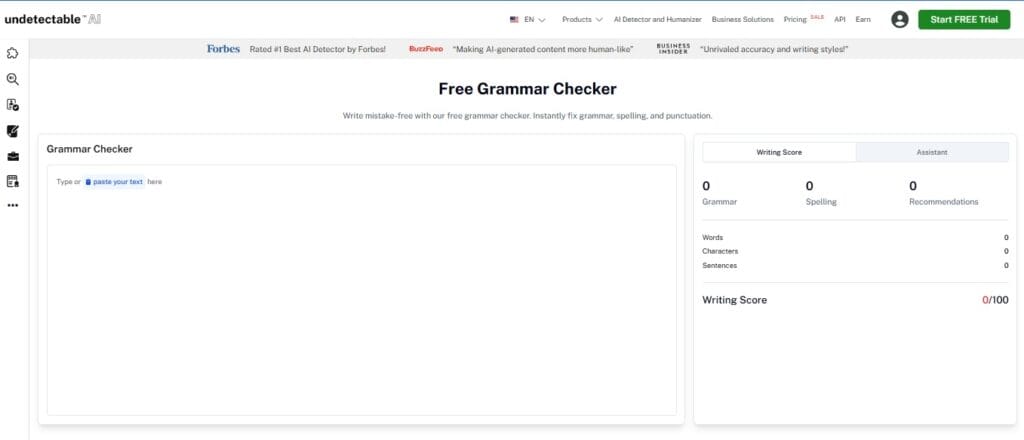
When writing longer documents where spelling consistency matters, our Grammar Checker becomes essential. The tool helps you identify instances where you have mixed American and British spellings in your writing.
It also corrects either version that you have picked and flags common verb-form mistakes.
Common Errors Writers Should Avoid
Below are common errors writers should avoid when using the fulfil/fulfill word in a sentence:
- Mixing Spellings Within the Same Document: This is the most common error. Authors employ the use of “fulfill” in the introduction since this is what tools like Grammarly would have them use, but later they resort to using “fulfil” when they are considering the audience in Britain. Attempt to choose a single spelling and stick to it.
- Using the Wrong Variant for Your Audience: Using “fulfill” when writing for The Guardian or “fulfil” in a document for a US client shows you haven’t considered your reader. This matters more than most people think, as spelling conventions are part of how audiences engage with a particular piece of content.
- Incorrect Past Tense Formations: Some writers assume British English uses “fulfiled” (single L) to match “fulfil.” This is wrong as both American and British English double the L in the past tense: “fulfilled.” The same rule applies to “fulfilling.”
- Overcorrecting Based on Autocorrect: When US English is enabled in your computer software, fulfil will be identified as a mistake. When it is configured to UK English, it will flag fulfill. Do not take these corrections blindly. Become familiar with what version you want to use on your audience, and turn off the autocorrect when needed.
- Forgetting About Compounds and Phrases: Terms such as self-fulfilling prophecy retain the spelling pattern of your base choice. When writing “fulfill,” write “self-fulfilling.” In the event of “fulfil”, write “self-fulfilling.” This is because in both forms the gerund is always fulfilling, with two Ls.
How to Choose the Right Spelling
Here is a decision framework to follow while choosing the right spelling:
- Identify Your Primary Audience: Do you write to Americans, Australians, British, Canadians or readers around the world? This is what dictates your spelling. When 80% of your readers are Americans, spell with American spelling.
- Check Organizational Style Guides: Style guides of the organization are available in many companies and publications, providing an explicit description of which variant of the English language to use. Stick with that standard irrespective of your choice or the venue of the audience. The idea of consistency in an organization is more important than geographic optimization.
- Consider The Type Of Publication Journal: American or British English is frequently indicated in academic journals. Business publications are usually subject to the conventions of their home country. Before deciding on which variant to use, check the submission guidelines.
- Default to Your Education or Location: In the event you are equally familiar with both forms and do not need a particular audience, then employ your school spelling or the one that is similar to your current location. British writers residing in the US may even use British spelling in personal writing.
- Use Tools To Enforce Your Choice: Set your word processor’s language settings to either US English or UK English. This makes autocorrect help you instead of fighting you. Grammar checkers can then flag inconsistencies automatically.
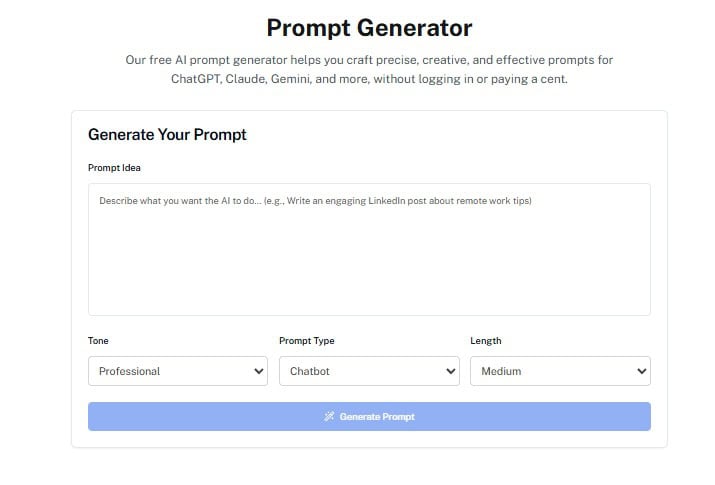
Our AI Prompt Generator generates personalized exercises to practice spelling options. You can create prompts, such as: “write three business emails in British English,” or “create product descriptions for a US audience, use American spelling.”
The tool presents you with scenarios where consistent spelling is required and helps you learn to use a particular one.
It is also able to develop comparative activities where you will have to write the same text in both American and British English, thus developing fluency in both systems.
That practice will ensure that you avoid the embarrassing in-the-middle-of-the-document discovery that you have been using the wrong variant for your audience.
Give our AI Detector and Humanizer a spin in the widget below!
Final Thoughts
The fulfill or fulfil choice depends on knowing your audience and being consistent.
It doesn’t matter whether the work is generated by AI or you write the piece yourself; to make sure that the spelling is consistent, you need to look beyond spellcheck.
Our Grammar Checker will not only identify these regional spelling differences, but will also provide uniform spelling across the entire text of your document.
Our AI Humanizer will also correct the tone to the expectations of your audience and make your writing sound natural and readable no matter what spelling version you decide to use.
Keep your spelling consistent and your tone natural with Undetectable AI before you publish.