
If you go around asking people what makes a good communicator, you’ll hear “someone who speaks well” or “a person who’s easy to talk to.”
While these traits are definitely a good chunk of what makes good workplace communication, there’s so much more to it.
Most workplace communication problems come from the lack of skills that were never deliberately developed.
The professionals who stand out in any organization are almost always the ones who can explain what they know and align people around it.
They know how to run a meeting, how to handle a conflict, how to write a proposal, how to respond when someone delivers news they didn’t want to hear.
And every single one of these skills can be learned.
In this article, you’ll find plenty of advice on how to improve communication skills, but only you can decide to actually put it into practice.
Key Takeaways
- Being naturally talkative has very little to do with being a good communicator. Workplace communication skills are learned and developed rather than something you’re born with.
- Good communication includes how you write, how you listen, how you carry yourself in a room, and how emotionally aware you are of the people around you
- The people who communicate best have simply paid steady attention to it over a long period of time.
- You can practice all the tips on how to improve communication skills with Undetectable AI tools in low-stakes environments and in real-time.
What are Communication Skills
At its core, communication is one of the most important soft skills. It is the exchange of information between people. Simple enough.
At a workplace, the exchange takes place across dozens of formats every single day, e.g., a one-on-one with your manager, a team Slack message, a presentation in front of the entire team, a quick hallway conversation, etc.
Communication skills, then, are the tools you use to make those exchanges go well.


Never Worry About AI Detecting Your Texts Again. Undetectable AI Can Help You:
- Make your AI assisted writing appear human-like.
- Bypass all major AI detection tools with just one click.
- Use AI safely and confidently in school and work.
They fall into the following categories:
- Verbal communication, which includes how you speak, the words you choose, and how clearly you get your point across
- Written communication is more central to work culture in remote and hybrid models. A 2023 report by Grammarly found that business professionals spend an average of 19 hours a week writing at work.
- Non-verbal communication, which consists of active listening, your body language, eye contact, tone of voice, and the pause before you answer a hard question
- Emotional intelligence, i.e., the ability to read the room and communicate with awareness of how others may be feeling.
In other words, communication skills are a collection of habits and practices that together determine how well you can move through the human side of work.
Practicing Effective Communication Daily
There’s a common assumption that communication is something you either have or you don’t. Some people are naturally good talkers, naturally good listeners, naturally able to walk into a room and make everyone feel at ease.
While your personality does play a role, we can’t treat communication as a fixed trait. Good communication is a skill, and like every skill, it gets better with practice.
Think about it the same way you’d think about fitness. Nobody runs a marathon on the first try, do they?
The people who seem effortlessly good at something have almost always put in an unglamorous amount of repetition that you didn’t see.
In the same way, your colleagues who always seem calm and clear under pressure, who never fumble their words in a meeting, have learnt to do it with practice.
And in the following section, you will learn what exact steps you need to practice every single day to get better at communication.
Enhancing Clarity in Your Messages
- Use simple, precise language
There’s a certain, often unsaid, pressure in professional settings to sound sophisticated.
To use the kind of language that shows you belong in the room, that you’ve thought carefully about the subject. And so, many of us try to use bigger, more formal words.
Most of the time, smaller words would do the job better. Using simple language, you respect the other person’s time and attention enough to get to the point without making them work for it.
A useful test is to ask yourself, after you’ve said something: could a reasonably smart person who knows nothing about this topic follow what I just said?
Nielsen Norman Group conducted a study among science and tech experts, where they found that plain language improves comprehension and retention. Experts, it turns out, appreciate simple language just as much as everyone else.
- Avoid overcomplicated terms
Every industry has its own vocabulary, and to some degree, it’s very useful for people who work in the same world to communicate efficiently.
But we often get so used to using those terms we end up using them even when the audience isn’t familiar. Naturally, anyone outside the industry will spend the rest of the conversation trying to figure out what you meant by that one word rather than engaging with your actual point.
Strong communicators would rather say the specific, honest, and simple words than hide behind terminology.
Of course, I don’t mean you should ditch technical language altogether. If you’re in a room full of engineers discussing infrastructure, you don’t need to translate every term into plain English.
Just be mindful of your surroundings. And if you’re not certain everyone in the conversation shares your definition of a term, either define it well or replace it with simple words.
- Structure sentences clearly
Verbal communication is harder to follow than written communication since there’s no re-reading it. Therefore, the clearest communicators tend to share a few habits.
- They lead with the main point rather than building up to it.
- They don’t front-load sentences with excessive context before getting to what they actually want to say.
- They stop after they have communicated their point. They won’t pad the end of a thought with qualifiers and asides that dilute the original point.
Always structure your communication around the most important headline rather than spending your time on giving background, context, and caveats.
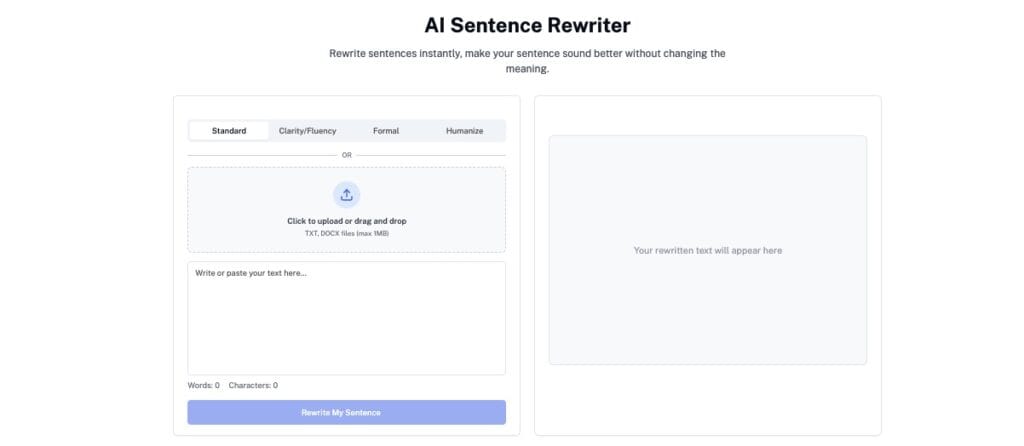
Initially, you can get some help from Undetectable AI’s Sentence Rewriter to keep your sentences clear and straight to the point.
Also, a well-placed pause after a key point gives the other person time to absorb what was just said. And it’s far more effective than immediately moving on to the next thought as if you’re racing to finish before someone interrupts.
Improving Writing Skills for Communication

The first thing worth understanding is that good workplace writing is not the same as being a gifted writer. You are not expected to have a distinctive voice with which you construct beautiful sentences.
All you should do is be appropriate to the context and clear enough for the reader to get what they need from your words.
Here are some helpful tips on how to improve professional communication skills in writing:
- Always take thirty seconds to think of what you need your recipient to know/do, and then write in service of it.
- Make sure your writing, in all professional settings, is as short as possible.
- Build the habit of reading your own messages back before sending them to ensure you don’t come across as cold or dismissive to anyone.
- Re-read anything consequential out loud, ideally 10 minutes after you’ve written it, for any errors you can fix. People who revise their writing at least once produce significantly more persuasive and credible work than those who send the first draft.
- Match your writing style to the medium. For instance, you shouldn’t be sending formal, elaborate messages in a Slack channel where everyone else communicates in short bursts.
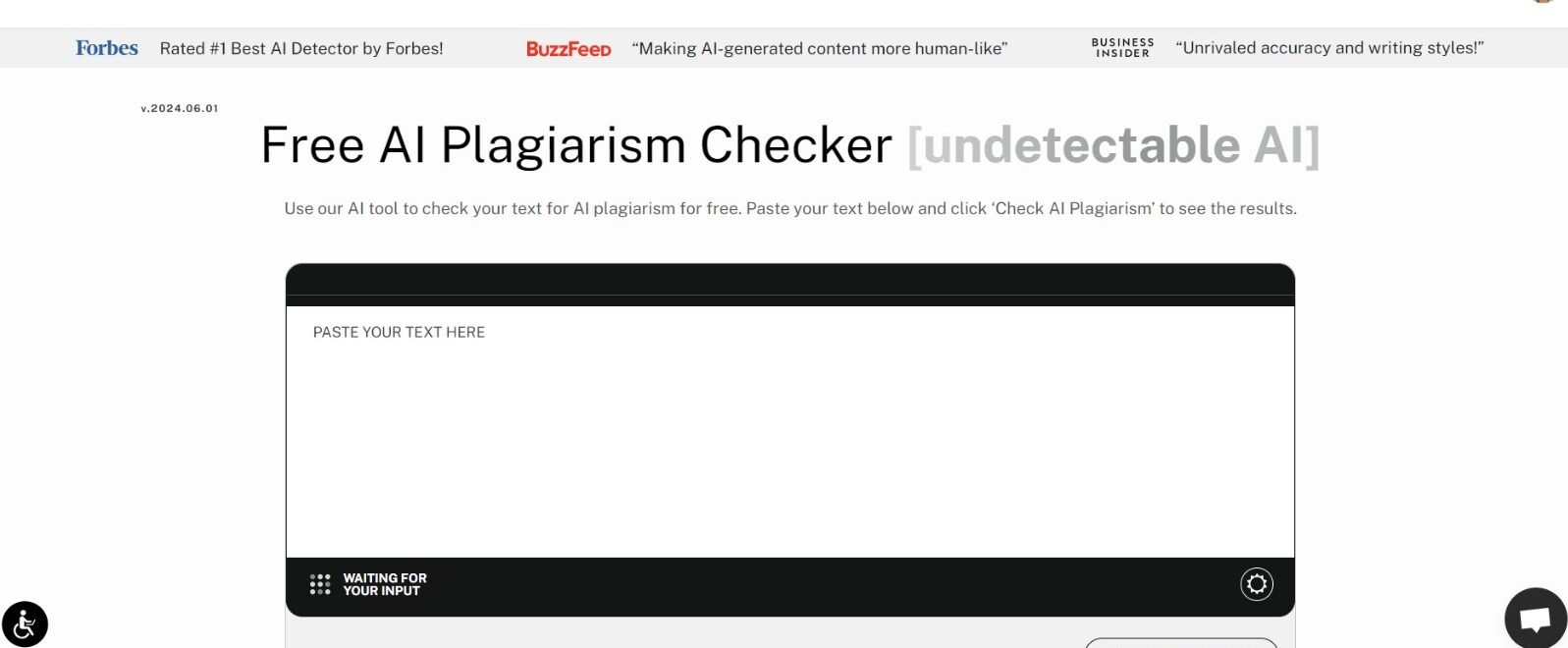
- Run every written document through Undetectable AI’s AI Plagiarism Checker to avoid incidental plagiarism.
Active Listening Techniques to Master
Most of us will readily admit they could write better emails or be clearer when they speak. But ask someone if they’re a good listener, and the answer is almost always yes.
It’s an interesting blind spot. Studies say that we retain only about 50% of what we hear in a 10-minute conversation immediately after, and 25% of it after 48 hours.
Here’s how to improve your communication skills just by listening better:
- Be genuinely present in conversations, putting your devices down and clearing all the mental tabs
- Resist the urge to formulate your response while the other person is still talking. It’s very hard, I know, but you can either listen to a person talking or prepare to draft a reply in your head. Your cognitive capacity can’t do both together.
- Ask clarifying questions! According to research, asking follow-up questions in conversations makes you significantly more likable and more competent.
- Paraphrase what you just heard from someone in your own words to confirm if you’ve really understood it correctly.
Also, the person speaking watches you, consciously or not, for signals that their words are reaching you. Your body language must show it, through eye contact, a slight lean forward, a nod at the right moment, etc.
People also tend to communicate more openly and more accurately when they feel genuinely listened to.
A significant portion of workplace conversation now happens digitally. Active listening in writing means reading a message fully before responding to it.
It means noticing the tone of the text and not making people repeat themselves because you asked a question that was already answered two paragraphs up.
The principles are the same, be it’s a face-to-face conversation or a digital one.
How Undetectable AI Can Assist in Communication Skills
For a long time, improving communication required you to take a course or get feedback from someone you trusted.
We’re fortunate to have AI help for writing, learning, and pretty much everything. It’s available on demand and doesn’t require scheduling anything with anyone.
Undetectable AI has helpful sentence and paragraph rewriting features that can take a piece of writing and help you see it differently.
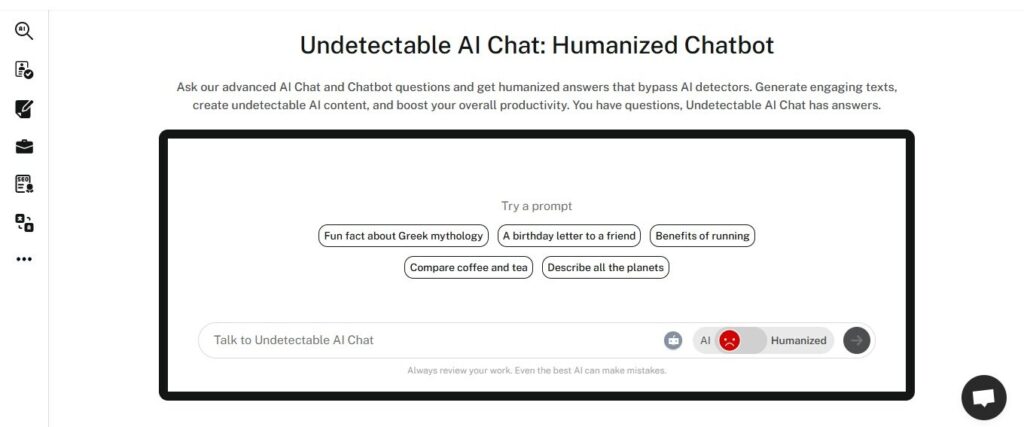
It also offers you an AI Chatbot to simulate real-time communication. Here’s how to improve communication skills at the workplace using Undetectable AI chatbot:
- Paste in a draft email and ask if your tone is good enough
- Set up workplace scenarios where you assign AI a role, and run through the conversation as many times as you need to
- Ask it for a simpler version of a paragraph you suspect is overwritten
- Request three different versions to phrase the same request and compare them
Check your content using our AI Detector and Humanizer below!
Final Thoughts
If there’s one thread running through everything I’ve talked about in this guide, it’s that communication is not a problem you solve once and move on from.
The people who communicate best at work got there through accumulated, ongoing effort. So, stop googling how to improve communication skills for a breakthrough moment every time you mess up a conversation.
Take every conversation you have from today onwards as an opportunity to practice being clearer and more present. And keep doing so despite the conversations that go sideways despite your best preparation.
Use Undetectable AI as your communication partner through it all. Refine your writing in real time and simulate the conversation you’re dreading before you have to have it for real.
Give Undetectable AI a try today!