
It is not uncommon for the English language to present you with two versions of the same word that are spelled differently but mean exactly the same thing.
And then you are left wondering which one is actually correct. Case in point, is it toward or towards?
I’ve had my fair share of moments of doubt at the worst possible moments, mid-email to someone whose opinion of my attention to detail I’d rather not damage. It took a lot of practice to come to a point where I always get these spellings right.
Toward and towards are both grammatically accurate, but the differences in their usage depend on geography. It is one of the differences in British vs American spelling conventions.
In this article, you’ll learn how and when to use toward or towards, the full range of contexts in which the words are used, and many real sentence examples in both American and British English.
Punti di forza
- Toward or towards are the variations of the same word that mean the same, too.
- The entire distinction between the use of both spellings comes from the way written English diverged across the Atlantic over centuries. American English uses verso while British English favors towards (with an -s).
- The same pattern of spelling is followed with many other words, such as forwards and forward, afterwards and afterward, backwards and backward, etc.
- Undetectable AI can help you with real-time feedback and contextual examples of the use of toward or towards, so that you always get the spelling right.
What Do Toward and Towards Mean
Toward and towards mean exactly the same thing in every context you could place them in.
You could use both of the words as prepositions, sometimes as adverbs. Meaning-wise, they convey a sense of direction, orientation, or inclination.
Ad esempio:

Non preoccupatevi più che l'intelligenza artificiale rilevi i vostri messaggi. Undetectable AI Può aiutarvi:
- Fate apparire la vostra scrittura assistita dall'intelligenza artificiale simile all'uomo.
- Bypass tutti i principali strumenti di rilevamento dell'intelligenza artificiale con un solo clic.
- Utilizzo AI in modo sicuro e con fiducia a scuola e al lavoro.
- Moving verso the exit and moving towards the exit describe the identical action
- Similarly, a sense of responsibility verso your community and a sense of responsibility towards your community express the same sentiment
The words are interchangeable, and that’s really all there is to it.
The difference in spellings comes from the evolution of the English language on either side of the Atlantic. The -s on words like towards, in seguito, oltre a, all'indietro was part of the language from Old English.
Both forms of all these words, including the -s and without it, existed in early English and were used interchangeably for a long time.
Later, the -s form, towards, settled more into the British, Australian, and other Commonwealth varieties of English. But American English kept the word toward without an -s.
Toward vs Towards in English Usage
The choice between toward and towards comes down to which variety of English you write in.
However, you must stay consistent with one form for it to be grammatically accurate. We can not switch between toward or towards whenever we want. It’s either of them throughout a piece of text.
Toward = American English preference
American English does not add the -s when spelling toward. It is the standard form across the United States.
The Chicago Manual of Style and the AP Stylebook, which are go-to references for American journalism, mention verso as the standard form of the word.
Merriam-Webster is the primary dictionary authority for American English. It lists verso as the main entry for the word and treats towards as a variant.
In the Corpus of Contemporary American English (COCA), the usage of verso is a lot more frequent than towards. COCA accounts for the usage of words in fiction, academic writing, newspapers, and spoken transcripts.
Towards = British English preference
Verso is the established standard form of the word in the UK, Australia, Ireland, New Zealand, and most other Commonwealth countries. The Oxford English Dictionary lists towards as the primary form in contrast with Merriam-Webster.
In the British National Corpus, the use of towards in fiction and non-fiction is overwhelmingly more common than toward.
The same pattern is seen with many other words, such as afterwards, backwards, forwards, upwards, and downwards, all of which retain the -s as standard in British usage.
Australian and Canadian English follow the British preference when it comes to towards or toward. Otherwise, Canadian English shows more American influence in most contexts.
Like I said earlier, even though both spellings are correct, we can not pick and choose which one to use. The usage has to be consistent.
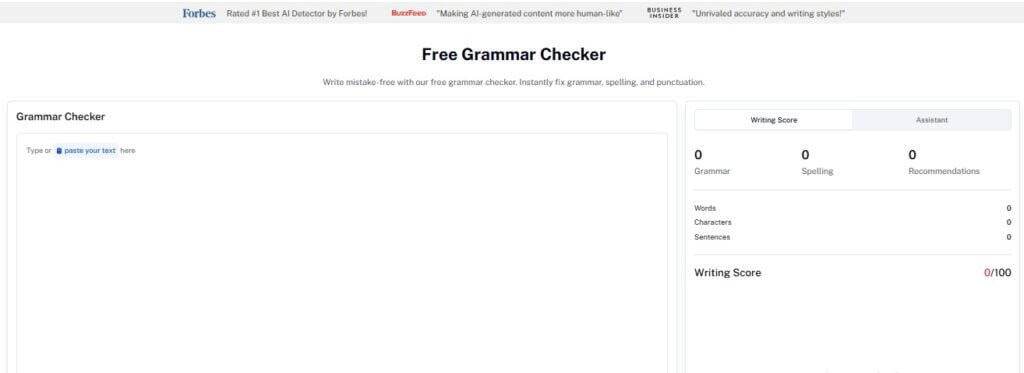
It’s always wise to use Undetectable AI’s Controllo grammaticale to confirm accurate and consistent usage of similarly-spelled words.
Situazioni comuni in cui vengono utilizzate queste parole
You can use toward, or towards (depending upon your selected form of English) in many different situations.
- Any sentence describing physical movement from one point to another calls for the word, e.g., walking toward the door, a car drifting towards the edge of the road.
- The word is also used to describe how one person or group feels about another, as in their emotional orientation, for example, the public’s hostility toward the policy.
- It can also be used to describe the progress of a task in the direction of an outcome, e.g., progress toward the deadline, negotiations moving towards a resolution, etc.
- We use toward or towards to talk about the approximation of time, too, to indicate that something happened near or approaching a particular time, e.g., a deal closing toward the final hours of the quarter.
- Sometimes, writers use the word to describe a sense of duty or responsibility one party holds in relation to another, e.g., employers’ legal obligation toward their staff, parent’s responsibility towards their children.
- Most commonly, toward and towards are used in academic contexts when discussing the trends or shifts of a particular industry.
Examples of Toward or Towards in Sentences
Now, let’s look at some example sentences that will show you when to use toward or towards based on the different forms of English you use.
Inglese americano:
- Ha camminato verso the centre of the room and waited for everyone to settle down.
- John’s behavior verso his colleagues has always been professional.
- Harvard’s latest research points verso a direct link between ultra-processed food consumption and early cognitive decline.
- Verso the middle of the project, the team realized the original timeline wasn’t realistic.
- NASA is working verso a crewed Mars mission, with the Artemis program serving as the first major step.
- Amazon has shown a clear bias verso third-party sellers that use its own fulfillment network.
Inglese britannico:
- Ha camminato towards the centre of the room and waited for everyone to settle down.
- John’s behaviour towards his colleagues has always been professional.
- Harvard’s latest research points towards a direct link between ultra-processed food consumption and early cognitive decline.
- Verso the middle of the project, the team realised the original timeline wasn’t realistic.
- NASA is working verso a crewed Mars mission, with the Artemis program serving as the first major step.
- Amazon has shown a clear bias verso third-party sellers that use its own fulfillment network.
Look closely at the two sets of example sentences, and you will see that there are many other spelling variations between American and British English versions, such as:
- Programma vs programme
- behavior vs behaviour
- Realized vs realised
- fulfillment vs fulfilment
You only get these spelling right after you’ve had a good amount of exposure to both forms of English.
If you’re new to the language, I highly recommend using the Undetectable A’s Strumento di parafrasi to see alternative phrasings of the same sentences with different spellings.
The more you see them in sentences, the better your pattern recognition will become.
AI Tools for Toward vs Towards
For a native English speaker, choosing between toward and towards is almost instinctive. They’ve seen it so much through years of reading and writing in their particular variety of the language.
But those of us learning English as a second language, or non-native people working in environments where English is the standard language of communication, it is very common to confuse the two spellings.
Traditional grammar resources can tell you that verso is American and towards is British. But AI tools will tell you that and all give you a dozen contextual examples tailored to your industry or writing style in a matter of seconds.

È possibile utilizzare un Chatbot AI as an on-demand language tutor without any costs or the pressure of a real-time conversation.
Also, in professional environments, try using our Generatore di e-mail AI to prevent inconsistent spelling conventions. All you would do is input the key points you need to communicate for the tool to produce a draft with accurate and consistent spellings.
Testate il nostro AI Detector e Humanizer con il widget qui sotto!
Pensieri finali
Toward or towards are the versions of the same word, and the only thing that determines which one you need to use in your writing is the variety of English you’re working in. American English uses verso, British English uses towards.
However, internalizing this difference in your everyday language use to the point where it stops requiring conscious thought comes after a lot of repetitive practice.
You could use Undetectable AI to work through the differences in the usage of both on your own terms.
Always use the Grammar Checker to double-check your writing before it reaches your reader to prevent any repercussions from grammar and spelling errors.
Prova AI non rilevabile oggi!