
‘Cause you’re hot, then you’re cold
You’re yes, then you’re no
You’re in, then you’re out
You’re up, then you’re down
You’re wrong when it’s right
It’s black and it’s white
We fight, we break up
The chorus of Katy Perry’s song “Hot N Cold” is a perfect example of juxtaposition, which is a fancy term for putting two very different things side by side to make a point.
Writers and creatives use it all the time, whether characters, settings, or ideas, to make you think and create a little contrast.
Juxtaposition is one of those literary devices that sounds complicated, but you’ve been experiencing it your whole life.
Every time you’ve watched a movie where someone’s crying at a wedding, laughing at a funeral, or eating expensive sushi while their life falls apart, you’ve witnessed juxtaposition.
Once you start noticing it, you’ll realize it’s everywhere.
Key Takeaways
- Juxtaposition places two contrasting elements side by side to highlight their differences
- Writers use it to create deeper meaning, build tension, and make themes resonate deeper
- Common types include light/dark, rich/poor, innocence/corruption, and order/chaos
- It shows up in characters, settings, themes, and even individual sentences
- Spotting juxtaposition involves looking for deliberate contrasts that create tension or highlight differences
What Is Juxtaposition?
Juxtaposition is a technique that involves putting two opposite or very different things next to each other.
The goal? To make you notice the difference. To make you feel it.
Think about it like a photo. If you showed someone a picture of a mansion, they might think “nice house.”


Never Worry About AI Detecting Your Texts Again. Undetectable AI Can Help You:
- Make your AI assisted writing appear human-like.
- Bypass all major AI detection tools with just one click.
- Use AI safely and confidently in school and work.
But if you showed them a mansion with a homeless encampment right in front of it?
They might start thinking about wealth inequality, social systems, who gets what, and why. The contrast provokes thought.
Juxtaposition Definition
Juxtaposition is the placement of two contrasting ideas, images, characters, or settings in close proximity to emphasize their differences and create meaning through comparison.
The word itself comes from Latin. “Juxta” means near or beside. “Position” means position.
So literally, it means putting things beside each other. But not just any things. Things that are different enough to create friction when they touch.
Juxtaposition works when the contrast is intentional. If your story has a happy scene followed by a sad scene just because that’s how events unfolded chronologically, that’s not juxtaposition.
That’s just plot.
But if you deliberately place a wedding scene right next to a funeral scene to comment on life and death and how they’re intertwined? Now you’re making your point.
Juxtaposition Examples
Let’s get into some real examples so this concept stops being abstract.
In “A Tale of Two Cities,” Dickens opens with one of the most famous juxtapositions in literature: “It was the best of times, it was the worst of times.”
Same moment in history. Two completely opposite experiences depending on who you were. That’s juxtaposition doing exactly what it’s supposed to do.
Or take “Romeo and Juliet.” The entire play juxtaposes love and hate.
The lovers come from families that despise each other. Every romantic moment exists against a backdrop of violence. Shakespeare isn’t being random here.
He’s showing you that love and hate are two sides of the same intense emotion, and sometimes they occupy the same space.
Here’s a more modern one. In “The Hunger Games,” Katniss lives in District 12, where people are starving and struggling to survive.
Then she goes to the Capitol, where people are so wealthy that opulent parties and extravagant indulgence are the norm.
Collins puts these two worlds in the same story, sometimes in the same chapter. You can’t miss the point. The contrast is the point.
Even in smaller moments, juxtaposition packs a punch.
Hemingway was famous for writing sentences like: “The sun was bright and the day was beautiful, and he wanted to die.” Happiness in the world, despair in the person. That friction creates meaning.
Why Writers Use Juxtaposition
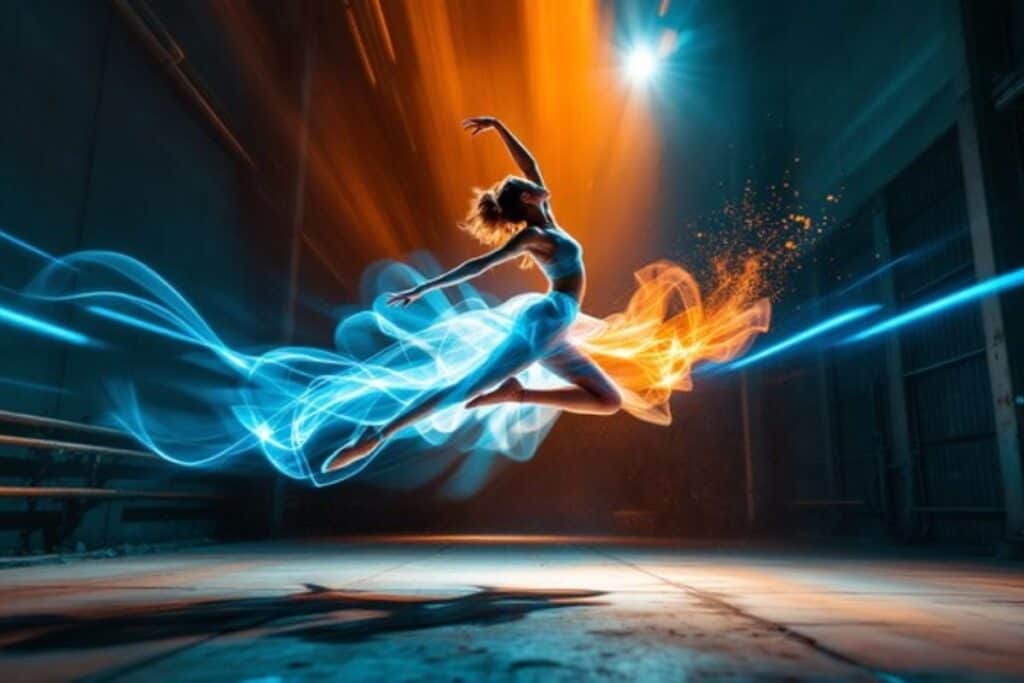
Writers aren’t just throwing contrasts into their work for fun.
Well, maybe a little for fun. But mostly they’re doing it because juxtaposition is a powerful tool.
First, it grabs attention. Your brain is wired to notice differences.
When something doesn’t match its surroundings, you pay attention. A scream in a library. A laugh at a funeral. A child’s toy in a war zone.
These contrasts make you pause and look more closely.
Second, it creates deeper meaning without explaining everything. Instead of writing an essay about wealth inequality, a writer can show you a billionaire’s son and a homeless teen in the same subway car.
You get it instantly. Show, don’t tell becomes show through contrast.
Third, juxtaposition builds emotional impact.
When Pixar puts a montage of a happy life right before showing you the death of a family member, the contrast between joy and loss destroys you.
The happiness makes the loss hit harder. The loss makes you appreciate the happiness more. They amplify each other.
Fourth, it highlights themes without being preachy.
If your theme is about the duality of human nature, you could write a paragraph explaining that people are complex and contain multitudes.
Or you could show a character who’s gentle with animals but cruel to people. The juxtaposition does the work.
Finally, juxtaposition creates tension and keeps readers engaged.
When two opposing forces exist in the same space, readers wonder which one will prevail.
Will the innocent character survive in the corrupt world? Will the order eventually descend into chaos?
That uncertainty keeps people turning pages.
Common Types of Juxtaposition in Literature
Certain contrasts happen repeatedly because they’re fundamental to the human experience.
Writers return to these themes because they work.
- Light and dark are probably the most common. Think Harry Potter. The entire series juxtaposes light magic and dark magic, good and evil, hope and despair. In “The Lord of the Rings,” the Shire’s warmth and light contrast with Mordor’s darkness and fire. This isn’t just about literal lighting. It’s about moral clarity, knowledge versus ignorance, life versus death.
- Rich and poor create instant social commentary. Fitzgerald built “The Great Gatsby” on this contrast. Gatsby’s mansion parties versus the Valley of Ashes. East Egg versus West Egg. The wealthy live their best lives while others struggle in ash heaps between the city and the suburbs. You can’t read that book without thinking about class, access, and the American Dream.
- Innocence and corruption frequently appear in coming-of-age stories. “To Kill a Mockingbird” juxtaposes Scout’s childhood innocence with the corrupt racism of the adult world around her. She starts the story naive and ends it having witnessed terrible injustice. That contrast is the entire journey.
- Order and chaos drive a lot of dystopian fiction. “1984” portrays a world where the government has imposed a rigid order on everything, but human nature and rebellion create chaos beneath the surface. “Lord of the Flies” does the opposite. Boys are trying to maintain civilized order, but are gradually descending into primitive chaos. The tension between these forces is the story.
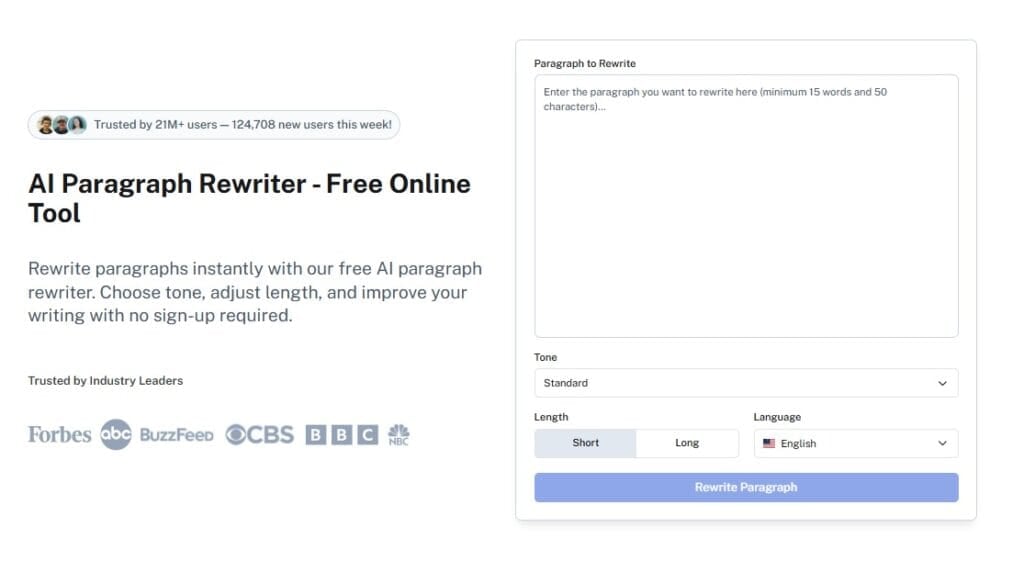
When you’re trying to identify common types, tools like Undetectable AI’s AI Paragraph Generator can help you see patterns by generating examples of each type.
It’s like having a reference library of how different writers have tackled the same contrasts.
Juxtaposition in Character, Setting, and Theme
Juxtaposition doesn’t just happen in one way. It shows up at every level of storytelling.
In characters, you see it when personalities clash or when a single character is full of contradictions.
Severus Snape is cruel yet loving. He’s a bully yet a hero.
That internal juxtaposition makes him one of the most intriguing characters in the Harry Potter series. Or think about character pairings.
Sherlock Holmes and Dr. Watson. One is cold and logical, the other warm and emotional. Their differences illuminate each other’s qualities.
You also see juxtaposition in how characters speak versus how they act. A character who preaches honesty but lies constantly.
Someone who claims to hate violence but solves every problem with their fists. These contradictions create complexity and make characters feel real because real people are walking contradictions.
In setting, juxtaposition creates atmosphere and meaning. A playground next to a prison. A church in a red-light district.
A garden in a wasteland. These contrasting settings evoke a sense of tension between competing forces.
McCarthy does this brilliantly in “The Road.” The entire post-apocalyptic landscape juxtaposes what the world used to be (implied through memory and ruins) with what it has become (ashes and death).
Every abandoned house, every empty road, every remnant of civilization contrasts with the current horror.
In theme, juxtaposition helps writers explore complex ideas without giving you a lecture.
If your theme involves the tension between freedom and security, you might juxtapose scenes of characters making their own choices with scenes of characters being protected but controlled.
The contrast lets readers draw their own conclusions.
Atwood’s “The Handmaid’s Tale” juxtaposes past and present constantly. Offred remembers her old life (freedom, choice, identity) while living her current life (oppression, control, erasure).
The contrast between who she was and who she’s forced to be is where the entire theme lives.
How Juxtaposition Shapes Meaning and Tone
Here’s the thing about juxtaposition. It doesn’t just make your writing more interesting.
It actually changes what your writing means.
Take a sentence like “She smiled.” Neutral, right? Now try “She smiled while the building burned.” Suddenly, that smile means something different. Is she relieved? In shock? A villain?
The juxtaposition creates ambiguity and depth where there wasn’t any before.
Tone shifts dramatically based on what you juxtapose. If you place something horrific next to something mundane, you can create dark humor.
“He murdered his neighbor, then went home and made a sandwich.” That contrast is unsettling and darkly funny at the same time. Writers like Vonnegut built entire careers on this kind of tonal juxtaposition.
Or you can create tragedy by juxtaposing hope and loss. “They finally saved enough money for the house. The next day, he lost his job.”
The hope makes the loss more painful. The loss makes the hope more poignant. Neither element would have the same impact alone.
Juxtaposition also controls pacing and rhythm. Quick shifts between contrasting scenes or ideas create energy and urgency. Slower transitions between contrasts build anticipation.
The meaning of your story often lives in the space between the contrasting elements. It’s not in the rich character or the poor character.
It’s in the gap between them.
What does that gap mean? What created it? What maintains it? Readers fill that space with interpretation, which makes them active participants in creating meaning.
How to Identify Juxtaposition While Reading
Once you know what to look for, you’ll see juxtaposition everywhere. It’s like when someone points out a symbol in a movie, and then you can’t unsee it.
Start by asking questions while you read.
Are there two characters with opposite traits in the same scene? Is the setting somehow at odds with what’s happening there?
Does the tone of the narration contrast with the events being described?
Look for transitions between scenes or chapters. If one scene shows extreme wealth and the next shows extreme poverty, that’s deliberate.
The author wants you to feel that contrast.
Pay attention to descriptions that seem contradictory. “Deafening silence.” “Burning cold.” “Cruel kindness.” These oxymorons are mini-juxtapositions packed into two words.
Notice when characters say one thing but do another. When their words contradict their actions, that’s juxtaposition at work.
For students and anyone analyzing literature, it can be challenging to determine whether a contrast is natural and meaningful or forced and awkward.
That’s where tools like Undetectable AI’s AI Detector come in handy.
It can flag lines that sound overly constructed or artificial, which helps you distinguish between organic literary juxtaposition and writing that’s trying too hard and sounds like AI.

If you read a sentence that goes “The happy sad man walked through the dark light forest thinking bright dim thoughts,” that’s not juxtaposition.
The AI Detector helps you spot when contrasts are landing versus when they’re just word salad.
And if you’re writing your own analysis or creative work, and your juxtaposition sounds clunky?
Undetectable AI’s AI Humanizer can rewrite those examples so the contrast reads naturally and clearly.
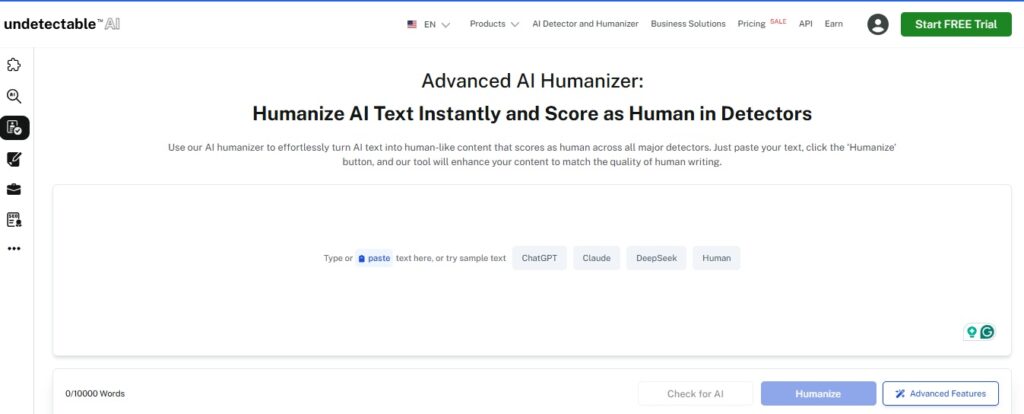
It takes that forced-sounding academic language and makes it flow like actual human writing. Because the best juxtaposition doesn’t announce itself with a bullhorn, it just works.
Take the next step with our AI Detector and Humanizer in the widget below!
The Space Between Is the Point
Juxtaposition is one of those techniques that separates good writing from great writing.
It’s not fancy or complicated.
It’s simply the smart placement of contrasting elements to create meaning, evoke emotion, and have an impact.
Every time you notice two opposite things sharing space in a story, you’re seeing an author’s deliberate choice.
They could have separated those elements, but chose not to.
The rich and the poor in the same city. Love and hate in the same heart. Hope and despair in the same moment.
These contrasts are where stories live. They’re where truth lives, because real life is full of contradictions, and good literature reflects that.
Want to level up your writing and make sure your contrasts land with impact?
Check out Undetectable AI’s suite of tools.
The AI Paragraph Generator helps you experiment with different types of juxtaposition.
The AI Detector makes sure your writing sounds natural, not forced.
And the AI Humanizer polishes everything so your literary analysis or creative work reads as if it came from an actual human brain, not a robot trying to sound smart.