Language can be fun, and many see it as a playground. For literature giants and modern-day songwriters, it’s where they go to swing from syntax and slide through syllables.
When you twist terms, bend meanings, and juggle jokes, you’re putting on a performance.
A play on words can turn tired text into something that tickles, teaches, or teases. But not everyone thinks the literary device is something to rave about.
Many dismiss it as child’s play, thinking it belongs only in children’s rhymes, riddles, and references.
It makes language memorable, thus effective with people of all ages. Think about the last headline that made you stop scrolling or the tagline that’s been stuck in your head for years.
Chances are, it employed some form of linguistic acrobatics.
The power of play on words lies in its ability to create double meanings, unexpected connections, and moments of recognition that make readers feel smart for catching the joke.
Key Takeaways
Play on words manipulates language through sound, meaning, or structure to create humor, emphasis, or memorable phrases.
Common types include puns, double entendres, malapropisms, spoonerisms, and portmanteaus.
Effective wordplay should enhance your message, not obscure it or feel forced.
Context matters, as wordplay works differently in comedy writing versus business communication.
Tools like Undetectable AI can help generate and refine wordplay while keeping content natural and readable.
What Is Play on Words?
Play on words is the deliberate manipulation of language to create multiple meanings, unexpected connections, or humorous effects.
It’s when you bend the rules of language, not to break them, but to make them come alive. This technique exploits the flexible nature of words, including their sounds, meanings, spellings, and cultural associations.
At its core, wordplay creates a moment of cognitive friction. Your brain processes one meaning, then recognizes another layer.
Never Worry About AI Detecting Your Texts Again. Undetectable AI Can Help You:
Make your AI assisted writing appear human-like.
Bypass all major AI detection tools with just one click.
That split-second of realization is what makes wordplay satisfying. It’s the linguistic equivalent of a magic trick, where the writer shows you one thing while simultaneously revealing something else entirely.
Play on Words Definition
A play on words is any rhetorical device that manipulates language for effect, typically by exploiting multiple meanings of words, similar sounds, or unexpected word combinations.
The term encompasses a broad range of techniques, from simple puns to complex literary devices.
The key element is intentionality.
You’re not accidentally creating double meanings or stumbling into homophones, but deliberately choosing words that work on more than one level.
This requires a deep understanding of language, including how words sound, what they mean, how they’re spelled, and what associations they carry in culture.
Wordplay appears everywhere: in advertising slogans, newspaper headlines, comedy routines, poetry, casual conversation, and social media posts.
It’s one of the most versatile tools in a writer’s arsenal, as it works across various formats and contexts.
A well-crafted play on words can make complex ideas accessible, boring content engaging, or simple messages memorable.
Common Examples of Play on Words
You encounter wordplay constantly, even if you don’t always notice it. Here are some everyday examples:
In Advertising:
“Have a break, have a Kit Kat” (playing on the word “break”)
“The best part of waking up is Folgers in your cup” (sound pattern creates memorability)
“Maybe she’s born with it. Maybe it’s Maybelline” (repetition of “maybe”)
In Headlines:
“Local Bakery Burns Down: Business Toast” (toast as both bread and slang for “ruined”)
“Stolen Painting Found by Tree” (ambiguous placement)
“Pediatrician Wins Biggest Baby Contest” (who’s the baby?)
In Literature: Shakespeare was notorious for wordplay. In “Romeo and Juliet,” Mercutio says while dying, “Ask for me tomorrow, and you shall find me a grave man.” The word “grave” means both serious and dead.
In Conversation: Someone asks, “How’s your day going?” You respond, “Well, I’m still here, so that’s a plus. Or a minus, depending on your perspective.” You’re playing with the dual meaning of being present versus being wanted.
Why Writers and Speakers Use Wordplay
Wordplay serves multiple purposes beyond just getting laughs. Understanding these purposes helps you wield it effectively.
Memorability: The human brain latches onto patterns, surprises, and puzzles. Wordplay creates all three. When language does something unexpected, we remember it. This is why advertising slogans rely so heavily on linguistic tricks. “Finger lickin’ good” sticks in your head because of the alliteration and the slightly unusual syntax.
Engagement: Wordplay makes readers active participants. They have to catch the double meaning, recognize the reference, or spot the twist. This mental engagement creates a sense of satisfaction and connection with the content as you consume the information, all while solving tiny puzzles.
Efficiency: A good play on words can convey multiple ideas simultaneously. Instead of explaining two concepts separately, you can bundle them into a single phrase to make your writing tighter and your points sharper.
Tone Setting: Wordplay signals that your content isn’t taking itself too seriously. It creates a conversational, playful tone that can make difficult subjects more approachable. A dense technical manual probably shouldn’t include much wordplay. A blog post about grammar rules? Absolutely.
Persuasion: When people enjoy your wordplay, they develop positive associations with your message. The pleasure of the linguistic trick transfers to the content itself, creating subtle persuasion through entertainment.
When you’re aiming for that level of precision, every syllable counts toward the final impact.
You can use our Undetectable AI’s Word Counter to check the length of your puns and play on words for maximum impact.
By monitoring your character and word count, you ensure your linguistic tricks remain “short and sweet,” preventing the cleverness from being buried under unnecessary fluff.
Types of Play on Words
Wordplay comes in many forms. Each technique produces its own effect, and these distinctions help guide you to the best choice for your context.
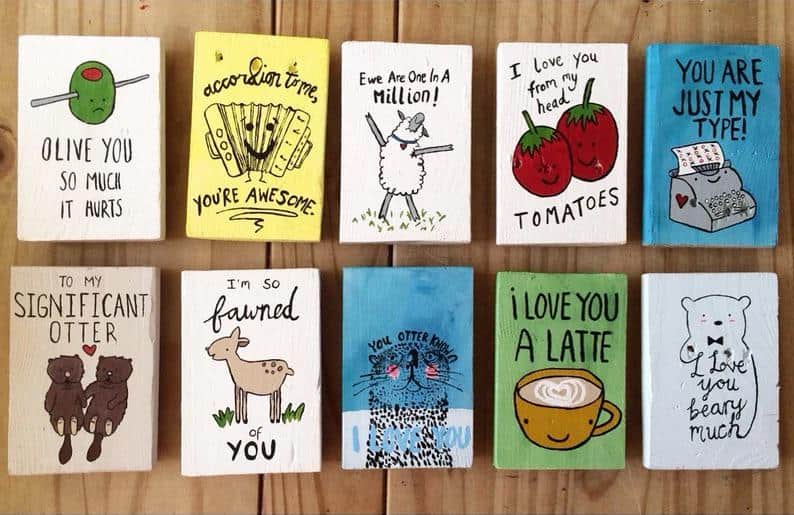
Puns: The most common form of wordplay. Puns exploit words that sound alike or have multiple meanings. “I used to be a banker, but I lost interest.” The word “interest” alludes to both boredom and the financial concept.
Double Entendres: Phrases with two interpretations, usually one innocent and one suggestive. These are staples of innuendo-heavy comedy. “That’s what she said.” Humor relies entirely on double entendres.
Malapropisms: These happen when you accidentally (or humorously) swap a word for another that sounds similar, creating a funny mismatch. For example: “Texas has a lot of electrical votes” instead of “electoral votes.” The term comes from Mrs. Malaprop, a character in Sheridan’s play The Rivals, who was famous for misusing words this way.
Spoonerisms: Swapping the initial sounds of two words. “You have hissed all my mystery lectures” instead of “missed all my history lectures.” Reverend William Archibald Spooner was famous for these accidental swaps, which became a comedic device.
Portmanteaus: Blending two words into one new word. “Brunch” combines breakfast and lunch. “Smog” is a combination of smoke and fog. Modern examples include “staycation,” “cryptocurrency,” and “mansplaining.”
Oxymorons: Combining contradictory terms. “Deafening silence,” “jumbo shrimp,” “act naturally.” These create emphasis through their inherent contradiction.
Paraprosdokians: Sentences where the ending forces you to reinterpret the beginning. “I want to die peacefully in my sleep, like my grandfather, not screaming and yelling like the passengers in his car.” The twist at the end changes everything.
Play on Words vs. Puns
People often use “pun” and “play on words” interchangeably, but puns are actually a subset of wordplay. All puns are plays on words, but not all plays on words are puns.
A pun specifically relies on homophones (words that sound the same) or homonyms (words with multiple meanings). “Time flies like an arrow. Fruit flies like a banana.” That’s a pun because “flies” functions differently in each sentence.
Play on words is the umbrella term. It includes puns but also covers all the other techniques like malapropisms, spoonerisms, portmanteaus, and more. When you’re creating wordplay, you might use several techniques simultaneously.
The distinction matters for precision. If you’re analyzing writing or giving feedback, saying “that’s a clever play on words” is more accurate than “that’s a pun” if the example doesn’t specifically involve homophones or homonyms.
Using Undetectable AI’s Paragraph Rewriter to Generate Wordplay Examples
Creating wordplay from scratch can be challenging. You need to spot opportunities, test variations, and refine phrasing.
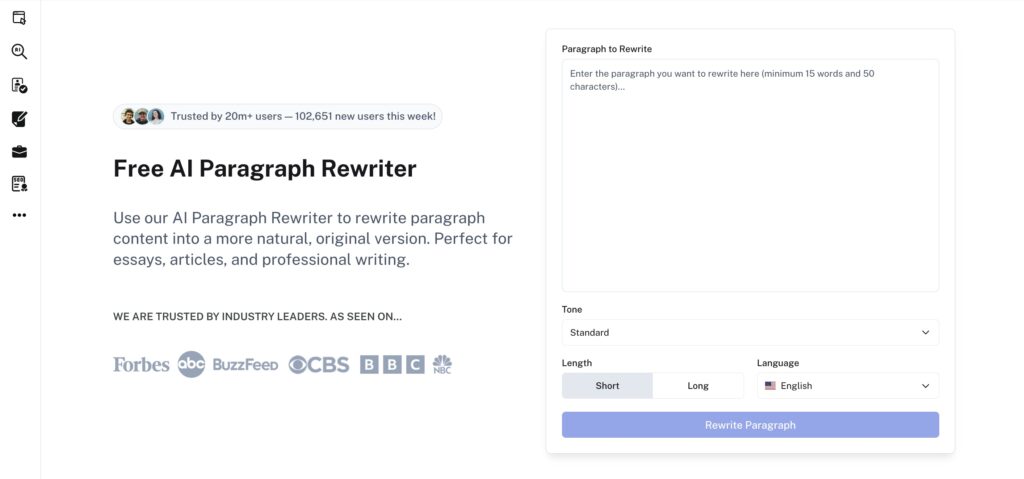
Undetectable AI’s Paragraph Rewriter can help generate multiple versions of wordplay while maintaining clarity. Let’s say you’re writing a headline about a coffee shop’s new hours.
Your first draft: “Coffee Shop Extends Hours.”
Run this through the Paragraph Rewriter, and you might get variations like:
“Coffee Shop Brews Up Longer Hours”
“Local Café Espresso-ly Wants More Time With You”
“Coffee Shop Doesn’t Want to Call It Quits”
Each version plays with language differently. “Brews up” connects coffee to the concept of creating or building. “Espresso-ly” is a pun on “especially.” “Call it quits” works as both ending the day and giving up.
The tool provides options. Maybe “espresso-ly” feels forced for your audience. Maybe “brews up” is too casual for a formal announcement. Having multiple versions lets you test what works while ensuring the core message stays clear.
This approach works across contexts.
Writing product descriptions? Generate variations that play with your product’s features. Crafting social media posts? Test different wordplay angles to see what resonates.
The key is using AI as a brainstorming partner, not a replacement for judgment.
Common Mistakes When Using Wordplay
Wordplay can backfire spectacularly when done poorly.
Here are the traps to avoid.
Forcing It: The worst wordplay feels mandatory rather than organic. If you have to twist your sentence into unnatural shapes to accommodate a pun, skip it.
Obscuring Meaning: Wordplay should enhance communication, not replace it. If your clever phrasing makes your actual point unclear, you’ve failed.
Overusing It: Too much wordplay becomes exhausting. It’s like eating dessert for every meal. Initially delightful, eventually nauseating.
Missing Your Audience: Wordplay relies on shared knowledge. Cultural references, technical terminology, or language-specific sounds don’t translate universally.
Ignoring Tone: A funeral announcement is not the place for puns. A comedy script would be a better fit. Context determines appropriateness.
Sacrificing Clarity for Cleverness: If readers have to choose between understanding your point and appreciating your wordplay, they’ll get frustrated.
Using Outdated References: Wordplay that relies on pop culture references has a shelf life. What lands today might confuse readers in five years.
How to Use Wordplay Effectively
Good wordplay follows principles.
Here’s how to use it strategically.
Start With Your Core Message: Know what you’re trying to say before you start experimenting with how to say it.
Look for Natural Opportunities: The best wordplay emerges from your subject matter. If you’re writing about watches, you have built-in opportunities: time, hands, face, tick, second, etc.
Test Clarity: After crafting wordplay, ask yourself: if someone doesn’t catch the joke, do they still understand the message?
Get Feedback: What seems clever to you might seem confusing to others. Test your wordplay on a few people who represent your audience. If they don’t get it or don’t enjoy it, trust them. Your attachment to your own cleverness can blind you to problems.
Use It Strategically: Deploy wordplay where it has the most impact: headlines, openings, transitions, and conclusions.
Vary Your Techniques: Don’t rely on one type of wordplay exclusively.
Lastly, even when you generate wordplay through AI tools or craft it manually, it needs to sound natural.
AI-generated content, including wordplay, can sometimes feel slightly off. The rhythm might be wrong, the cultural references dated, or the phrasing technically correct but not quite how a human would say it.
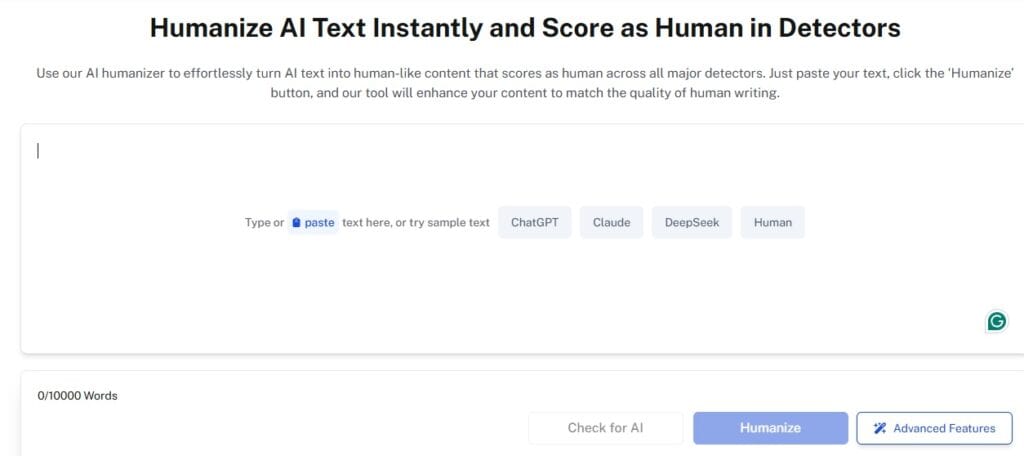
Undetectable AI’s AI Humanizer refines content to sound more natural and conversational.
The goal is to create wordplay that doesn’t announce itself. Readers should enjoy the linguistic trick without feeling like they’re being performed at.
Natural wordplay integrates seamlessly into your writing, enhancing it without dominating.
The AI Humanizer helps achieve that balance by ensuring your wordplay sounds like something an actual human would say, not a computer trying to be funny.
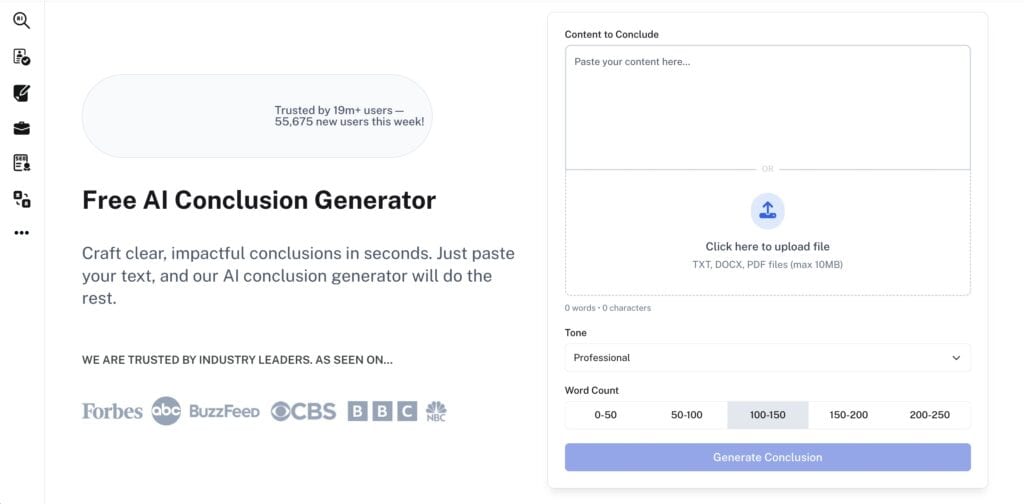
You can also use Conclusion Generator to leave your readers with a clever final thought or a memorable play on words at the end of your piece.
Our tool helps you synthesize your main points into a punchy wrap-up, making certain your closing pun or twist sounds naturally authored and professionally polished.
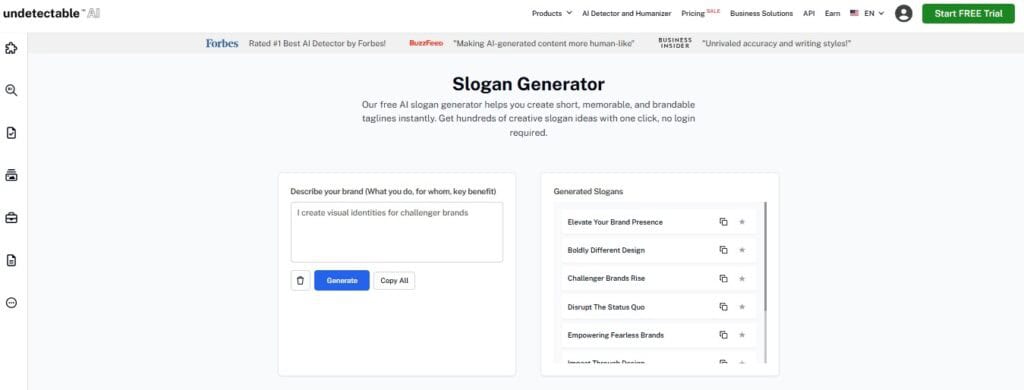
If you are struggling to find those natural linguistic connections, reference Undetectable AI’s Slogan Generator.
It allows you to experiment with different wordplay angles, from punchy oxymorons to clever portmanteaus, ensuring your brand’s mission is captured in a way that is both professional and memorable.
This is an essential step for any creator looking to turn a dry service into a vibrant brand voice.
Get started with our AI Detector and Humanizer in the widget below!
Pun Fully Intended
Play on words is a powerful tool when used correctly. It makes writing memorable, engaging, and fun. It demonstrates linguistic skill and creates a connection with readers who appreciate cleverness.
But it’s a spice, not the main dish.
The best wordplay is invisible in the sense that it doesn’t disrupt the flow of reading. It adds a layer of enjoyment without requiring readers to stop and decode what you mean.
It should feel like a natural extension of your message, not an interruption.
As you develop your wordplay skills, focus on clarity first. A clear message with no wordplay beats a confused message with brilliant puns every single time.
Once you’ve nailed your core communication, then look for opportunities to add linguistic flair.
Eventually, wordplay becomes instinctive rather than labored.
Tools like Undetectable AI’s Paragraph Rewriter and AI Humanizer can accelerate your learning.
They generate options you might not have considered and refine phrasing to sound more natural. But tools are supplements to skill, not replacements for understanding the principles.
Wordplay matters because language matters. How you say something shapes how people receive it, remember it, and respond to it.
When you master play on words, you gain an edge in any context where language counts.
So go play. Test boundaries. Make mistakes.
Find what works for your voice and your audience. Language is flexible, resilient, and endlessly inventive.
The more you bend it, the more you discover what it can do.