Ever felt like Joey from Friends trying to navigate a single encyclopedia? Talking about artificial intelligence can feel exactly like that.
Everyone is buzzing about the latest types of ai, using complex new vocabulary, and showing off cutting-edge tech that can feel impossible to keep up with.
From generative tools that handle your content creation to research bots answering every obscure question, the landscape is moving fast.
You might see self-driving cars navigating the streets or algorithm-driven virtual assistants managing your home.
It’s enough to leave anyone feeling a little confused. If you are looking to brush up on your knowledge of the different forms of artificial intelligence in use today, you are in the right place. This guide will break down the various capabilities of AI and what they mean for our digital future.
Let’s dive in!
Key Takeaways
- Narrow AI is the most common form of AI currently in use, specializing in single tasks like recommendations or voice commands.
- Artificial General Intelligence (AGI) remains a hypothetical goal where machines would possess human-level intellect across all domains.
- The distinction between reactive and limited memory AI is based on the system’s ability to store and learn from past data.
- Ethical concerns surrounding Superintelligence focus on the unpredictable impact of machines surpassing human capabilities.
- Undetectable AI leverages narrow AI models to help creators produce polished, high-quality content that maintains a truly human feel.
The 7 Types of AI: From Reality to Science Fiction
Understanding artificial intelligence requires breaking it down by capability. While some of these exist in your pocket right now, others are still the stuff of movies.
1. Narrow AI (Artificial Narrow Intelligence – ANI)
Narrow AI is the only type of AI we have fully realized today. It is “narrow” because it is programmed to perform one specific task exceptionally well—think of Siri, Netflix’s recommendation engine, or customer service chatbots.
Unlike humans, ANI cannot reason or adapt beyond its specific parameters; it lacks a true memory and operates solely on preconfigured rules.


Never Worry About AI Detecting Your Texts Again. Undetectable AI Can Help You:
- Make your AI assisted writing appear human-like.
- Bypass all major AI detection tools with just one click.
- Use AI safely and confidently in school and work.
2. Artificial General Intelligence (AGI)
AGI is a hypothetical form of AI that would possess intelligence indistinguishable from a human. A machine with AGI could learn, understand, and perform a vast range of complex tasks independently across different fields.
While it would process data much faster than a human brain, reaching this level requires massive breakthroughs in robotics and neural network design.
3. Artificial Superintelligence (ASI)
Taking the hypothetical a step further, ASI refers to a machine that surpasses human capabilities at every level.
This type of AI would be capable of solving global crises like poverty or climate change, but it also raises fears regarding ensuring transparency and control.
4. Reactive Machines
These are the oldest and most basic forms of AI. Reactive machines respond to real-time data but have no memory to learn from the past.
A famous example is IBM’s Deep Blue, which defeated grandmaster Garry Kasparov in chess by reacting to his moves in real-time without “thinking” about previous games.
5. Limited Memory AI
This is a step up from reactive machines. Limited memory AI can store small amounts of data from past experiences to improve future performance.
This is the technology behind self-driving cars, which learn from past routes and real-time traffic to optimize their journey.
6. Theory of Mind AI
This conceptual AI is inspired by psychology. It would be capable of understanding the complexities of human emotions, beliefs, and intentions. If developed, these machines could serve as social robots or even emotional counselors.
7. Self-Aware AI
The ultimate goal for some researchers is an AI that is self-conscious and aware of its own existence. This super AI would not only perform tasks but would understand morality and think critically about its own purpose.
Why Narrow AI Dominates the Modern Landscape

If you look around, nearly every “AI” tool you use is actually Narrow AI. This is because it is highly scalable and practical for specific industry needs.
While it cannot “think” for itself, it is incredibly efficient at eradicating repetitive administrative tasks.
Narrow AI is currently transforming fields like healthcare and finance because it is affordable and accessible.

For example, the AI Detector from Undetectable AI is a specialized tool that uses narrow AI models to analyze text and determine its origin with high precision.
Benefits of Using Narrow AI Today
Narrow AI is everywhere, quietly making life simpler and work more efficient. It takes on repetitive and time-consuming tasks, freeing humans to focus on creative or more complex assignments.
This lightens the administrative burden and gets things done faster across various sectors:
- Operational Efficiency: AI reduces manual work and operational costs by automating routine processes like data entry and scheduling.
- Enhanced Healthcare: In medical settings, narrow AI processes vast datasets to enable faster, more accurate diagnoses and personalized treatment plans.
- Predictive Insights: AI identifies patterns in data to anticipate market trends, seasonal sales fluctuations, and even early signs of illness.
- 24/7 Availability: AI-powered chatbots and virtual assistants provide round-the-clock customer support, ensuring immediate responses to queries at any time.
- Improved Accuracy: Machines catch small details humans might miss, such as spotting fraud bank transactions or minute defects in manufacturing lines.
- Personalized Experiences: Recommendation engines on platforms like Netflix or Amazon use historical data to tailor product or show suggestions specifically to user preferences.
Challenges and Limitations of Narrow AI
While narrow AI certainly has its benefits, there are significant hurdles to overcome in 2026.
The technology is far from perfect, and its implementation requires a careful, human-led strategy:
- Lack of Flexibility: Each narrow AI system is a “specialized titan” built for one task; it cannot adapt to anything outside its specific programming.
- Data Quality and Bias: AI models learn from the data provided to them; if that data contains historical biases or stereotypes, the AI will magnify those prejudices in its output.
- Fragmented Systems: Integrating new AI tools with outdated or siloed legacy systems remains a major operational challenge for many organizations.
- Trust and Transparency: Many professionals still struggle to trust AI outputs because the decision-making process is often not intelligible or “explainable” to humans.
- Job Displacement Concerns: Automation can lead to the redundancy of roles involving routine tasks, particularly affecting low-skilled workers in sectors like manufacturing and customer service.
- Privacy and Compliance Risks: Training AI requires massive amounts of sensitive data, raising the risk of leaks, breaches, and violations of regulations like GDPR or HIPAA.
The Technologies Powering the AI Revolution
Beneath the surface of these types of ai, three core technologies do the heavy lifting:
- Machine Learning (ML): This allows systems to learn from data and improve over time without being explicitly programmed for every scenario.
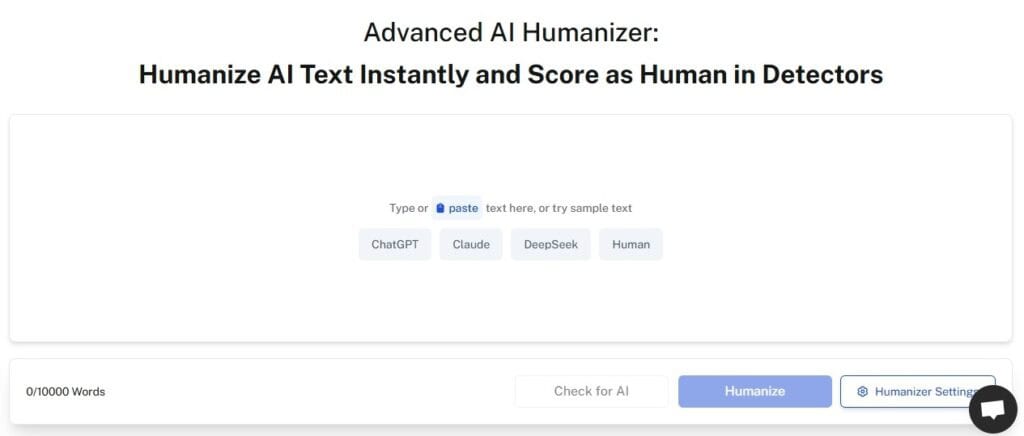
- Natural Language Processing (NLP): This enables machines to interpret and generate human language. Tools like the AI Humanizer use advanced NLP to refine text so it reads naturally.
- Computer Vision: This gives AI the ability to “see” and interpret visual data. Our AI Image Detector leverages this to help users distinguish between authentic photos and AI-generated visuals.

Feel free to test our AI Humanizer using the widget below!
Frequently Asked Questions
What is the most common type of AI today?
Narrow AI (ANI) is the most common form. It is used in everything from search engines and social media algorithms to virtual assistants like Alexa.
Will AI ever become self-aware?
Self-aware AI remains purely theoretical and is a subject of intense debate among scientists. Many believe it may be impossible, while others see it as the ultimate goal of AI research.
Is generative AI a separate type of AI?
Generative AI is a subset of Narrow AI. It is highly specialized in creating content—such as text, images, or music—based on the data it was trained on.
Conclusion
Artificial intelligence is no longer just a futuristic concept; it is actively shaping our present. From the types of ai that suggest your next favorite show to those helping you refine your professional writing, these tools are making daily tasks smoother and more efficient.
As we look toward a decade defined by smarter, more integrated technology, the focus remains on using these powerful tools responsibly.
Whether you are a student, a creator, or a business owner, understanding the capabilities of the AI you use every day is the first step toward mastering it.
The real breakthrough in 2026 isn’t just about automation—it’s about how we use these systems to become more creative and precise in our own work. Instead of letting a machine take the wheel, the most successful creators are the ones who learn to guide it with a human hand.
Ready to see how advanced technology can elevate your work?
Use Undetectable AI today to ensure your content is high-quality, authentic, and perfectly tailored for your audience.