
You have probably typed this word out, paused, and then deleted it.
Is there a ‘z’ in there? Or an ‘s’? Should it end in ‘ise’ or ‘ize’? If you have ever stopped mid-sentence over recognise or recognize, you are in very good company.
Here is the thing: Both spellings are correct. The location where it’s being used is what separates them, not grammar.
This article breaks everything you need to know so the next time you type it, you will not think twice.
Давайте зануримося.
Основні висновки
- Recognize or recognise mean exactly the same thing, the only difference is the spelling
- Recognise is standard in British English, recognize is standard in American English
- The split goes back to the 1800s, when Noah Webster deliberately reformed American spelling
- Mixing both spellings in one document is the most common mistake writers make
- Knowing your audience before you start is the simplest way to get it right every time
What Does Recognise or Recognize Mean
The recognise or recognize meaning is identical. You are not choosing between two different words, you are choosing between two different spellings of the same word.
The word itself covers a lot of ground. You recognise a face in a crowd. A government formally recognizes another country. Your boss recognizes your work at the end of a tough quarter.
A doctor is trained to recognize early warning signs before a patient even notices something is wrong.
Більше ніколи не турбуйтеся про те, що ШІ виявить ваші тексти. Undetectable AI Може допомогти тобі:
- Зробіть так, щоб ваше письмо з допомогою штучного інтелекту з'являлося на екрані схожий на людину.
- Обхід всі основні інструменти виявлення ШІ лише одним кліком.
- Використання ШІ безпечно і впевнено у школі та на роботі.
У "The Кембриджський словник puts it simply: “to know someone or something because you have encountered them before”. That definition holds whether you spell it with an ‘s’ or a ‘z.’
Meaning Remains the Same Across English Variants
This carries through the whole word family too: Recognised and recognized, Recognising and recognizing, Recognisable and recognizable.
When you pick your spelling, it follows you through every variation of the word.
Think of it like colour and color, or centre and center. The Atlantic Ocean sits between the two spellings, not between two meanings.
Although readers may not be confused by any of the spellings. They will definitely notice the inconsistencies in the variants. Keeping your spelling uniform across the variants of the word in your writing shows that you paid attention to details.
British vs American English Spelling
Open a newspaper in London. Then open one in New York. You will see the same words, conveying the same meaning, but spelled differently.
That is the story in its simplest form, yet the history and reasoning behind these differences are far more fascinating than most people realize.
Recognise = British English
Is it recognise or recognize uk spelling? Readers in the UK, Australia, New Zealand, Canada, and most Commonwealth countries will expect recognise.
It shows up in The Guardian, on the BBC, in government documents, across every formal and informal publication that follows British conventions.
У "The Oxford English Dictionary treats it as the standard form, and anyone writing for a British audience should do the same.
Here is the part most people do not know. The ‘z’ spelling is actually the older one. Recognize came into English from Greek, carrying the ‘z’ straight from the original root.
British English gradually shifted toward ‘ise’ endings through the 1800s and 1900s. American English never made that shift. So the spelling that looks more American is, in linguistic terms, closer to the original.
Recognize = American English
Меріам-Вебстер lists recognize as the only standard American form. Recognise does not get a look in. A lot of that traces back to Noah Webster. In the early 1800s, he sat down and rewrote American spelling from scratch, deliberately pulling it away from British conventions.
Webster saw spelling reform as part of building a country. Colour became color. Honour became honor. Organise became organize
Americans have spelled it that way ever since, and british english recognize or recognise has followed those two separate paths to this day. When you look at recognise or recognize spelling today, you will see how much the English language has evolved in different parts of the world.
So, is it recognize or recognise? Both. You just need to know your reader first.
Examples of Recognise and Recognize in Sentences
Seeing the word in action makes everything click faster than any explanation. Here are both spellings doing what they do across a few different situations.
Recognise in British English:
- “The council held a special evening to recognise volunteers who had given years of their time.”
- “I walked past the building three times before I could recognise it, the renovation had changed everything.”
- "Він recognises the signs early. That is what makes him good at his job.”
- “The UK was among the first to recognise the new government.”
Recognize in American English:
- “You start to recognize the pattern after a while. It takes a few reads but it is there.”
- “Washington moved fast to recognize the incoming administration.”
- “My daughter recognized the song before I did, which says a lot about my taste in music.”
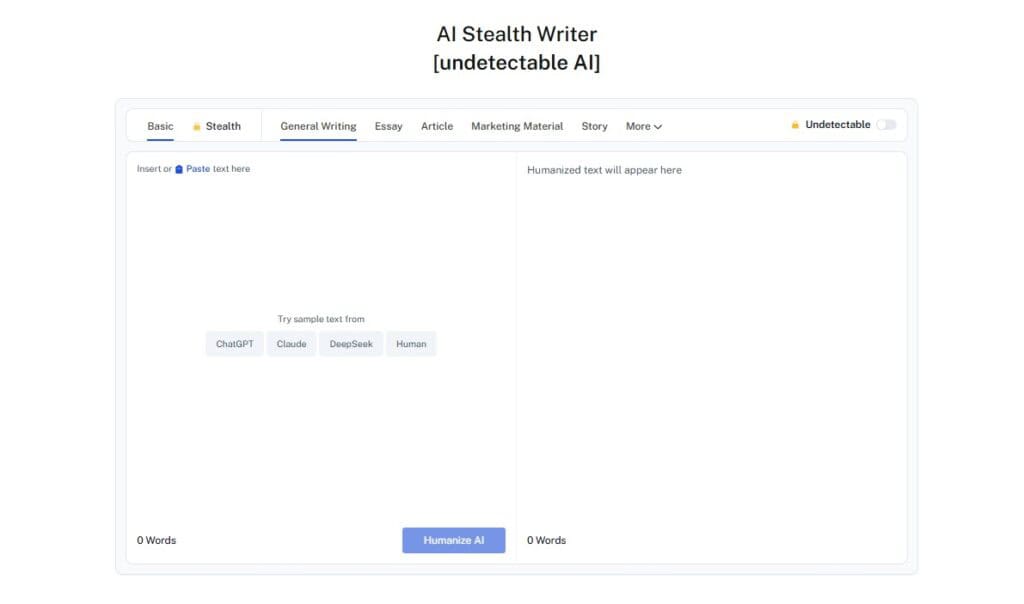
Ви можете скористатися нашими AI Stealth Writer to produce content if you want recognise or recognize to land correctly for your specific audience every time.
The tool handles that without you having to think about it. Feed it your context, and it writes regional spelling into the output from the start.
Типові помилки, яких припускаються письменники
Below are common mistakes writers make when using recognise or recognize.
Not Sticking with one Spelling Throughout the Content
Pick a spelling. Any of the two spellings. The real test is whether you can stick with it for 1,500 words without it quietly falling apart on you. Most writers cannot, because writing is not a linear process.
You open five tabs, you pull a quote from a British source, you paste in a sentence you drafted on your phone yesterday.
By the time you reach the conclusion, recognise and recognize are both sitting in the same document and the piece looks like it was written by two different people. That is the most common problem. And it is almost never intentional.
The Word Family Issue Trips Writers up Just as Often
You decide on recognise, which is the right call for your British audience, and you carry it through the body copy carefully. Then you write a subheading and type recognizable without thinking twice.
Now you have a consistency problem that has nothing to do with not knowing the spelling and everything to do with the word showing up in a different form when your guard was down.
Autocorrect and Spell Checkers
Say your laptop is set to American English and you are writing for a UK publication, it will change recognise to recognize and not say a word about it. No red underline.
No flag. Just a silent replacement that sits there until someone else catches it in an edit. The fix is simple, check your language settings before you start, not after you have already written 800 words.
Ignoring Style Guide
Every publication has a посібник зі стилю, and it exists for exactly this reason. The style guide explains the spellings, punctuation and tone expected in the content. Ignoring it and hoping your spelling instincts are correct is a gamble that rarely pays off.
Assuming One Spelling is More Correct Than the Other
While this seems like nothing, it has caused problems for a lot of writers. These kinds of inconsistencies can affect the credibility of your work.
Never assume that one spelling is more correct than the other. Both Recognise and Recognize are correct, the only difference is their spelling which is determined by the region or audience you are writing for.
Using AI to Improve Regional Spelling Accuracy
Switching between British and American spelling depending on the client is manageable when you are doing it once. Do it across ten briefs a month, and small things start slipping through.
AI-drafted content drifts. That is just the reality of it. You run a prompt, get your output, and somewhere in there the spelling has shifted or the phrasing has gone slightly flat.
Наш ШІ-гуманізатор goes through the content and pulls everything back into line, spelling, tone, and phrasing.
This way the finished piece reads like a human wrote it for one specific audience, not like a document that went through three different tools before it landed on your screen.

One document you can manage manually. A full content calendar is a different problem.
Наш Реплікатор стилю написання learns from your existing content, picks up your spelling conventions, your tone, the way you structure sentences, and carries all of that forward into everything you write after.
If your brand uses recognise and always has, it will keep using recognise without you having to check every single time.

For anyone managing writing across multiple clients or platforms, Undetectable Інструменти штучного інтелекту are worth a look. Students or professional writers, as well as anyone in education, can use them.
Tips for Choosing the Correct Spelling
None of these are complicated, but they are easy to skip when you are in the middle of a draft and focused on everything else.
- Know your Audience Before you Type a Single Word: This choice makes every other decision in your writing far simpler. British audience, use recognise. American audience, use recognize. Global audience with no clear regional lean, pick one and commit to it. The choice itself matters less than making it before you start, not halfway through.
- Set your Spell Checker before you open a New Document: Not after, before. Go into your language settings, switch to the correct variant, and then start writing. It takes ten seconds and it stops autocorrect from making quiet changes you will not catch until someone else does.
- Carry your Choice Through the Full Word Family: For recognise use recognised, recognising, recognisable, unrecognisable. For recognize use recognized, recognizing, recognizable, unrecognizable. Your spelling choice applies to every form of the word, not just the base version. Missing this is how consistency problems sneak into your writing.
- Check the Style Guide: За даними Garner’s Modern English Usage, internal consistency within a document matters more than which variant you land on. Most publications have a house style that tells you exactly which one to use. The Guardian uses recognise. The New York Times uses recognize. If you are writing for either, there is no decision to make, follow the style guide.
- Do a find-and-replace Check before you Submit: Search for both spellings. If both show up, clean it up before it leaves your hands. Fixing this yourself usually takes just a couple of minutes. But much longer if you were to explain to an editor.
Почніть користуватися нашим детектором та гуманізатором ШІ у віджеті нижче!
Заключні думки
Two spellings. One word. No wrong answer, as long as you know your reader. Recognise for British English. Recognize for American English.
The challenge here is choosing a spelling and maintaining it throughout your article and the word variants.
Decide on the spelling at the very beginning of your draft and make sure it is still the same one when you finish. That is how to maintain consistency.
Ви можете скористатися нашими ШІ, який неможливо виявити tools like AI Humanizer and Writing Style Replicator if you want that consistency to happen without thinking about it. Take them for a spin on your next piece.