
When it comes to carat vs karat, they sound exactly the same to the ear and seem to be an alternative spelling. But they’re far from similar in definition.
You’ll come across these words mostly in a Jewelry store and if you’re not careful, you could get confused.
The real deal here is that when comparing gold karat vs diamond carat, you’re actually comparing two separate measurement systems that happen to sound identical.
This guide will break down karat vs carat vs caret so you’ll use them accurately when next you have to.
Let’s dive in.
Key Takeaways
- The unit of measurement of a gemstone in terms of weight is called a carat. It’s 200 milligrams per carat.
- A karat is a measure of gold’s purity as a ratio of 24.
- A higher carat means the gemstones are heavier. Likewise, a higher karat means the gold content is quite pure and high.
- Carat and karat both originated from the carob seeds that were used by ancient Mediterranean traders. These seeds served as counterweights to accurately measure their goods.
- Caret is an editing symbol (^) that’s used to mark text insertions where needed.
What Is the Difference Between Carat or Karat?
You might think you’re just one out of a few confusing carat vs karat. Yet, this confusion remains common since the words sound identical in conversation.
But this is the real distinction:
Key Distinctions
The simplest way for you to remember the difference between carat and karat is to know the item you’re describing.


Never Worry About AI Detecting Your Texts Again. Undetectable AI Can Help You:
- Make your AI assisted writing appear human-like.
- Bypass all major AI detection tools with just one click.
- Use AI safely and confidently in school and work.
You must keep in mind that;
- Carat describes the weight of gemstones, while
- Karat stays firmly in gold territory and measures purity.
With this in mind, a comparison between 10 carat vs 14 karat gold won’t work because you’d be confusing weight with purity. The table further explains the primary differences.
| Term | Applies To | Measures | Example | Abbreviation |
| Carat | Diamonds and gemstones | Weight | A 2-carat diamond weighs 400 milligrams | Ct |
| Karat | Gold | Purity | 18 karat gold contains 75% pure gold | K or Kt |
Understanding the Term
You have to understand each term as a word associated with a specific function when discussing jewelry. As a rule of thumb, carat is only used for weighing gemstones, most popularly diamonds.
Now, in measurements you can understand, a carat is 200 milligrams, or 0.2 grams if you want it converted to grams.
Nonetheless, a gem having a high carat measurement doesn’t mean it’s expensive. Other factors come into play.
In light of this, it’s easy for new jewelry enthusiasts to confuse visual size with value during a carat vs karat diamond assessment.
Meanwhile, karat indicates gold purity on a scale of 24. This is the reason why pure gold is 24 karat. This means that 24 out of 24 parts are gold. So, you won’t find gold higher than 24k, else you’re being scammed.
This 24-part system for gold emerged from Roman tradition. The Roman solidus coin can be divided into 24 units and medieval goldsmiths adopted this fractional approach to birth the karat system.
Furthermore, gold is too soft by itself to use daily. This created the need for jewelers to mix harder metals like copper or silver to hold up.
Keep in mind that when you are looking at 14 karat gold, there are 14 parts gold mixed with it, and 10 parts other metals to create strength.
You’re more likely to acquire less expensive karat gold that is more suitable for everyday use.
The Origin of Carat and Karat
The link between these two seemingly disparate words comes from the carob tree. Traders throughout the Middle East and Mediterranean needed something to balance their scales and they discovered that carob seeds were remarkably uniform in weight.
The carat became the unit of measurement for small amounts of expensive merchandise.
The Greek word “keration” described these carob seeds, eventually evolving into the Arabic “qirat” and later the Italian “carato.” Merchants weighing diamonds and gold dust against carob seeds created a practical system that spread along trade routes from India to Europe.
Over time, English speakers had two different spellings which were applied to different situations. Carat was the spelling they stuck with for gemstone weight. On the other hand, the Karat was accepted to describe gold purity.
Modern standardization came surprisingly late. The metric carat was fixed at exactly 200 milligrams in an agreement reached in 1907 at the General Conference on Weights and Measures. Before then, there were controversies because standards of carat weight differed slightly from trading center to center.
How Are Carat and Karat Different?
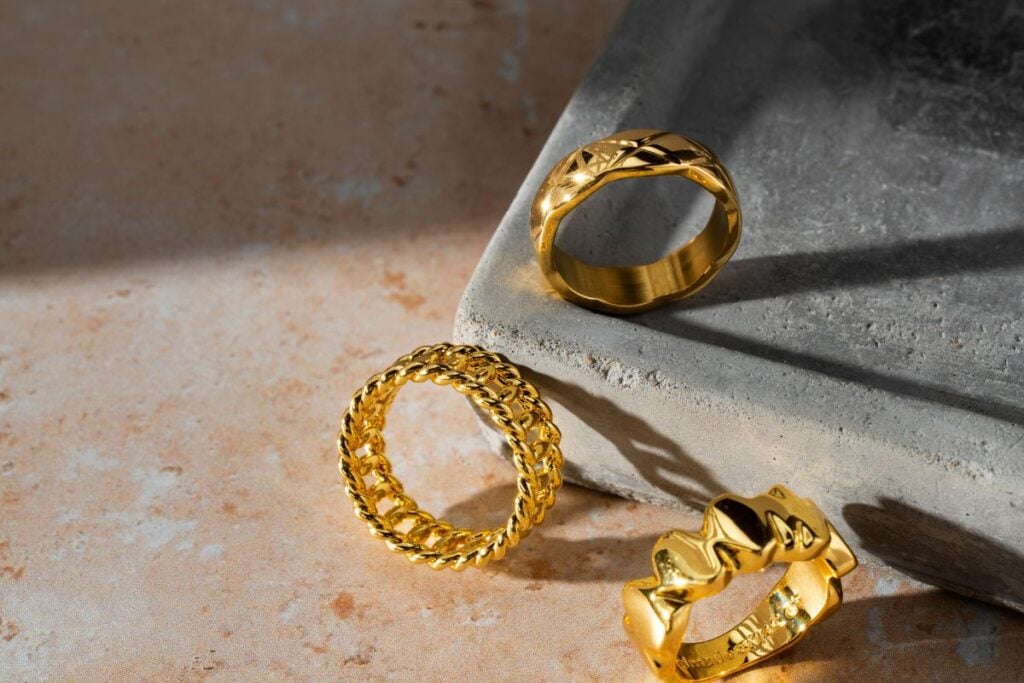
Precision defines the value of fine jewelry. Carat vs karat serves as the two primary pillars of valuation for rings and necklaces.
They’re different in these aspects:
| Carat (ct) | Karat (K) |
| Weight of gemstones | Purity of gold |
| No upper limit on the weight | 1 to 24 karat |
| 1 unit = 200 milligrams | 24 units = 100% Pure Gold |
| Heavier stones command higher prices | Higher gold content increases cost |
| The durability depends on the gemstone | Lower karat gold is more durable |
You might be using carat and karat in your writing incorrectly, and this can affect your content’s flow.
Our AI Humanizer can help you improve your writing and make your usage of these terms clear and easy to understand for your readers.

When Should You Use Carat?
Anytime you’re discussing gemstones and any other precious stone, carat is the correct choice.
You can use carat in the following scenarios:
- Diamond engagement rings where the center stone weight matters for sizing and pricing.
- For gemstones that need to be evaluated for purchase or appraisal.
- The total carat weight (TCW) which adds up all stones in a piece of jewelry.
- In institutions like GIA (Gemological Institute of America) and AGS (American Gem Society) where you need to get gemstone certifications.
- Use carat when comparing stone sizes across different jewelry pieces.
- In auction listings where the carat weight affects bidding and final sale prices.
- Inherited jewelry appraisals that determine the value of inherited pieces.
When Should You Use Karat?
Karat is a term related to the purity of gold and so can only be used in places where gold is involved.
So, you’ll use karat when referring to:
- Gold jewelry purchases where purity affects both price and appearance.
- Wedding bands and everyday rings that need durability from lower karat alloys.
- Gold coins and bullion typically sold at 22K or 24K purity.
- Hallmark stamps inside rings and on clasps indicating gold content.
- White gold and rose gold which use specific alloy combinations at various karat levels.
- Comparing gold options like 10K vs 14K vs 18K for different budgets.
- Vintage gold pieces that may feature older karat standards.
- Gold plating descriptions where the base layer’s karat purity matters.
- International gold purchases since karat remain the global standard.
Mistakes to Avoid with Carat vs Karat
It’s normal for you to stumble over these terms from time to time, but you can sidestep these pitfalls with the guide below:
- When referring to the weight of gold, using carat will completely confuse your reader because gold is measured based on its purity in karat.
- You’re free to write “14 carat gold” in your casual conversations but in professional settings, your usage of these words will be incorrect.
- Assuming ‘higher always means better’ overlooks the fact that 24K gold scratches easily while lower karat options handle daily wear gracefully.
- Mixing terms in the same sentence creates genuine confusion, so keep your carats with diamonds and your karats with gold.
- Trusting verbal descriptions alone can lead to misunderstandings. You have to always request written documentation showing the correct term.
- Skipping the abbreviations means missing helpful context clues, since “ct” signals gemstone weight while “K” or “kt” points to gold purity.
Our Paragraph Rewriter can help you polish your writing and easily avoid common mistakes that writers make when using either carat or karat.
How to Write Carat vs Karat in Sentences
Context clues can help you pick the correct spelling when you know what items to apply them to. However, with these examples, you can practice using carat or karat:
Carat in sentences
- She fell in love with a 1.5 carat oval diamond set in a delicate gold ring
- The jeweler explained that the total carat weight won’t amount to much
- She couldn’t find a high quality 3 carat emerald after months of searching through specialty dealers
- His grandmother’s ring featured a modest half-carat diamond with great clarity.
- The auction catalog listed a rare 5-carat sapphire from Sri Lanka.
Karat in sentences
- Since wedding rings are meant to last long, they should be made out of 14 karat gold. I found out they last longer than pure gold.
- I never knew 24 karat gold feels surprisingly soft when you apply pressure to it.
- I noticed the man buying an 18 karat gold wristwatch.
- Compared to a 10 karat gold, an 18 karat gold is brighter.
- The artisan preferred working with 22 karat gold for its traditional Mediterranean jewelry set.
Tips for Choosing the Right Term
If you’re ever in doubt about using the right term in your writing, then you can use some of these tips to get a hang of things:
- You’ll have to use the right abbreviations of carat (ct) and karat (k) when writing professionally. For instance, a 14K gold necklace and a 3ct diamond.
- Look at what follows the number since phrases like “24K” always reference gold and “1.5 ct” always means gemstone weight.
- Think about the item first and let the jewelry piece guide your spelling choice naturally.
- Check for the gemstone connection because diamonds, rubies, and sapphires never use karat.
- Read jewelry listings regularly to absorb correct usage patterns from professional descriptions.
- When uncertain, separate the concepts by writing about the gold and the gemstone in different sentences.
You don’t need to stress about memorizing grammar rules to get carat and karat right. If things get confusing, Undetectable AI tools can point you in the right direction.
You can also run your text through our Plagiarism Checker to check if your content is original when using carat and karat in your writing.
Discover our AI Detector and Humanizer in the widget below!
FAQS
How are Carat and Karat different?
Carat and karat are different because they measure different objects. Worldwide, Carat is used for weighing gemstones. In contrast, karat is used for gold and to specify its purity level.
How Much Does One Carat Weigh?
One carat is 200 milligrams. This measurement is the approved standard, making it the accepted benchmark used in reputable jewelry stores across the world.
What Does 24-Karat Gold Mean?
24K gold means that it’s pure gold, with no other metal present. This makes it the highest purity of gold available. The purity of gold is based on a 24 parts system.
What is a Caret?
A caret is that small wedge-like mark (^) that the editors put to indicate where a word should be placed in a sentence.
Can Carat and Karat be Used Interchangeably?
This depends on the situation, but the answer is no if you want to be technically correct. At this point, half the internet mixes them up and doesn’t realize it. Still, amongst friends, you can use them interchangeably since no one is keeping score of your errors.
Why are Karat vs Carat vs Caret Easily Confused?
It’s simply because these three words have similar sounds. It’s therefore easy to confuse them for one another. Even their spellings are similar enough to confuse you. You’ll have to consider what you are talking about before using anyone.
Final Thoughts
Carat vs karat are quite similar in sound but have just a difference of one letter in spelling. This difference is also evident in their function, with carat being used for gemstones and karat being used for gold.
So, the next time you use these terms, just know none of the spellings are wrong. All that matters is you’re using the right term for the right object and in the right context.
In any case where you might be confused, you can use Undetectable AI tools to help you out.