
Did you know the way you ask a question in a survey can influence how truthfully your audience answers it?
Yes, that’s true.
Kantar ran an experiment where people were asked “Do you recycle?” alongside a relatable meme. 27% admitted they never recycle.
In a boring, standard survey, only 1% admitted the same.
The reason people hold back could be anything…
They might want to look good. They might have privacy fears. Or they might have sensed some judgment.
Whatever it is…
The good news is that you can frame your research to encourage truthfulness and get high-quality data.
This blog is a beginner’s guide to data collection methods. We’ll cover qualitative and quantitative data collection methods, ethical practices, and how AI is changing the game in 2026.
Let’s get into it.
Key Takeaways
- Data collection methods in research fall into two types: primary (you gather it yourself) and secondary (you use what already exists)
- Qualitative data collection methods (like interviews and observations) tell you the why behind human behavior
- Quantitative data collection methods (like surveys with rating scales, web analytics, and biometrics) give you the numbers to prove it
- Choosing the wrong method wastes time and produces misleading results.
- AI plays an active role in improving data quality
- Rule of thumb: Define your research question first. Pick your method of data collection second. Always.
What are Data Collection Methods?
It is the process of gathering raw facts and figures to answer a specific question or make a smart move.
In simple words, it’s how you get the info you need to solve a problem or make a big decision.
There are two main ways to look at how we get this data:


Never Worry About AI Detecting Your Texts Again. Undetectable AI Can Help You:
- Make your AI assisted writing appear human-like.
- Bypass all major AI detection tools with just one click.
- Use AI safely and confidently in school and work.
- Where it comes from (Primary vs. Secondary)
- What kind of info it is (Qualitative vs. Quantitative)
1 – Primary vs. Secondary Methods of Data Collection
This is all about whether you’re getting the info yourself for the first time or using something that’s already out there.
| Feature | Primary Methods | Secondary Methods |
| What is it? | Firsthand collection specifically for your own research | Using existing data that someone else already gathered |
| Examples | Surveys, 1-on-1 interviews, direct observations, experiments, and focus groups | Government reports, academic journals, old company records, news, and public databases |
| The Vibe | Fresh, tailored, and specific but takes time and money | Cost-effective and time-saving because the work is done |
2 – Qualitative Data Collection Method vs. Quantitative Data Collection Method
This is about the flavor of the data. Do you want stories and feelings, or do you want hard numbers?
| Type | Qualitative Data Collection Methods (Why?) | Quantitative Data Collection Methods(How Many?) |
| Goal | To understand people’s feelings, opinions, and behaviors | To get hard numbers, stats, and scales |
| Focus | Words, descriptions, and deep dives” | Math, percentages, and trends |
| Examples | Long user interviews, open-ended focus groups, or reading customer reviews | Sales figures, website traffic stats, or “Yes/No” survey results |
Surveys and Questionnaires for Data Gathering
Let’s understand the difference between surveys and questionnaires because many people confuse between the two.
- A questionnaire is the set of written questions
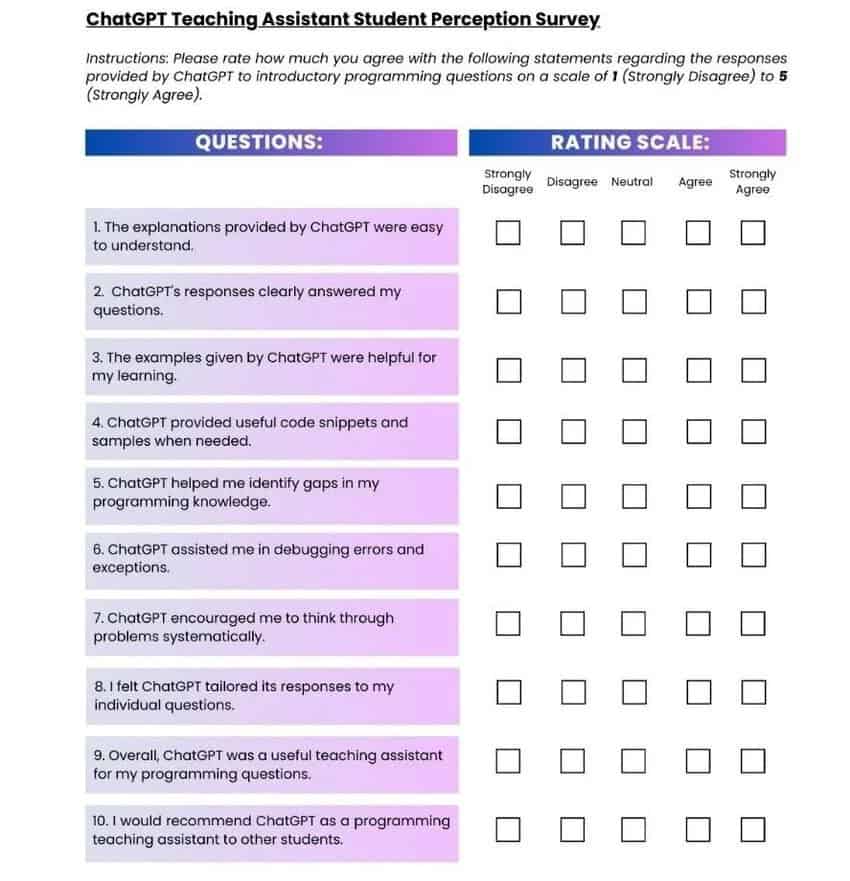
- A survey is the entire process from sending those questions out to analyzing the final results

Both of these help you in:
- Getting answers from a large audience quickly and affordably.
- Collecting both numbers (Quantitative) and opinions (Qualitative).
- Modern platforms like Qualtrics or SurveyMonkey use skip logic. It means if a user says “No” to a product, the survey skips the follow-up questions about that product.
Here are some core rules to get the best data through surveys and questionnaires:
Rule # 1 — Use the Funnel Approach
Start with broad, easy questions to warm up the respondent before moving to specifics. Example:
- If you’re researching a new app, start with “How often do you use your phone for work?” before asking, “What specific feature of our app is confusing?”
Rule # 2 – Keep It Under 3 Minutes
Keep it short! Attention spans have dropped. If a survey takes longer than 3 minutes, people will drop off.
Rule # 3 – Optimize It For Mobile
Ensure your survey is screen-agnostic. Making it easy to read on a phone can increase your reach by 30% to 40%.
Rule # 4 – Avoid Leading Questions
Don’t push people toward an answer. Instead of asking, “How much did you love our product?” ask, “How was your experience with the product?”
Rule # 5 – Follow the 3 Cs
- Clarity: Use simple language that everyone understands.
- Consistency: Keep your scales and formatting the same throughout.
- Credibility: Minimize bias so people actually trust your results.
Observations and Field Research Techniques
Observation is the most straightforward method of data collection. Instead of asking people what they do, you simply watch and record how they behave or interact with products and services.
And while dealing with massive amounts of information, like thousands of customer chat transcripts or huge government databases, manually looking at everything is impossible.
This is where the Undetectable AI’s Bulk Scan tool can help you.
- It can scan through voice recordings, chat logs, and written feedback simultaneously.
The AI extracts the insights without a human needing to read every single line. This is a game-changer for secondary data collection methods in research in 2026.
Common Types of Observation
| Type | How it Works | Data Style |
| Structured | You look for specific, pre-defined behaviors. | Quantitative (Numbers) |
| Unstructured | You watch everything in a natural setting. | Qualitative (Stories) |
| Participant | The researcher actually joins the group/community. | Ethnographic/Deep |
| Non-participant | The researcher stays on the sidelines and watches. | Objective/Detached |
| Covert vs. Overt | Does the group know they are being watched? (Ethical choice) | Mixed |
Field Research vs. Lab Research
- Field Research: Happens in the real world. Example:
- Watching how customers move through a physical retail store or how people use an app while sitting on a noisy bus. It’s messy but realistic. This is one of the purest qualitative data collection methods available.
- Lab Research: Happens in a controlled environment. This is where researchers can collect highly accurate biometric data. This is a quantitative data collection method. Example:
- Heart rate,
- Blood pressure,
- Brain activity
While Lab research is incredibly precise, it requires technical expertise and expensive equipment. Field research, on the other hand, gives you a better look at how things work in everyday life.
Choosing the Right Data Collection Approach
- Match methods to research goals
In 2026, choosing the right data collection methods in research isn’t just about cost and speed, it’s about AI-readiness.
Before picking a method of data collection, clarify your target:
- Do you need Quantitative data (sales, ratings) or Qualitative insights (opinions, feelings)?
- Are you trying to discover something new (Exploratory) or prove a theory you already have (Confirmatory)?
2026 Quick Match Guide
| Research Goal | Best Method of Data Collection |
| Broad Public Opinion | Survey / Questionnaire |
| Deep Human Motivation | In-depth Interviews |
| Natural Behavior | Field Observation |
| Group Dynamics | Focus Group (6–12 people) |
| Measuring Trends | Web Analytics / Experiments |
| Finding Hidden Patterns | Secondary Data Analysis |
| Biological Responses | Biometric / Sensor Data |
To ensure your data works for you in 2026, keep these three things in mind:
- Use the same labels for data across all your surveys and forms.
- Ensure your data fits into clear categories (e.g., Dates, Prices, IDs) so downstream tools can read it.
- Use AI Bulk Scanning to tag your data as soon as it’s collected. This makes it searchable and useful for future projects.
- Consider time and resources
When you are choosing your data collection method, the perfect method doesn’t exist, only the one that fits your current time, budget, and goals.
In 2026, many high-stakes projects in healthcare or social sciences use a mixed-methods approach.
This means combining both numbers (Quantitative) and stories (Qualitative) because a single method rarely gives you the full picture.
Use this quick guide:
| If your priority is… | Use this Method | Why? |
| Tight Budget + Large Reach | Online Surveys | Low cost per response and can be sent to thousands instantly. |
| Deep Human Insight | Interviews or Focus Groups | Allows you to ask “Why?” and see body language or tone. |
| Speed & Real-Time Data | Web Analytics | Uses existing transaction data to show what’s happening now. |
| High Accuracy (Physical) | Sensors / Biometrics | Most precise for health/psychology, though the equipment is expensive. |
| Saving Time & Money | Secondary Research | The fastest and cheapest way since the data already exists in records. |
Don’t get stuck in analysis paralysis. If you have a massive dataset but no time, start with secondary data collection methods to see what’s already known.
Then, use a quick online survey to fill in the specific gaps for your current project.
- Ensure data accuracy
Even the most brilliant research plan will fail if the data entering the system is noisy or incorrect.
To keep your research from falling apart, follow these four steps:
- Run a Pilot Test: Never launch a massive survey or experiment without testing it on a small sample first. This helps you spot confusing questions or technical glitches.
- Use Triangulation: Don’t rely on just one source. Use multiple methods of data collection (like a survey plus an interview) to verify your findings. If both methods show the same result, your data is much more credible.
- Train Your Collectors: If you have a team helping you gather info, ensure they are all trained to ask questions and record data in the exact same way.
- Audit Your Secondary Data: Before using an existing dataset, check for completeness and accuracy.
- Document the Source. Who created it? When? What version is it?
- Watch for Skewed Results. If a dataset uses sampling weights (giving more importance to certain groups), make sure you apply them correctly so your final numbers aren’t misleading.
Before you start analysis, ask yourself:
- Is it Recent? (Is the data from 2026 or outdated?)
- Is it Consistent? (Are all the dates and labels formatted the same way?)
- Is it Verifiable? (Can I trace this back to a real person or a reliable record?)
Ethical Practices in Data Collection
Here are some of the ethical practices to use in data collection:
Rule 1: Informed Consent
Every participant must know exactly what they are signing up for. Transparency is mandated by laws like GDPR and CCPA/CPRA.
- Tell them what is being collected, why, who will see it, and clearly state their right to withdraw at any time.
Rule 2: Data Minimization
Only collect what you need. If your research is about shoe preferences, don’t ask for their home address.
This applies equally to qualitative data collection methods (don’t record full conversations if notes will do) and quantitative data collection methods (don’t collect 50 data fields when 10 will answer your question).
Rule 3: CCPA/CPRA (California & US)
New regulations went into effect on January 1, 2026.
- Stricter rules on cookies/pixels and new risk assessment requirements.
- In late 2025, Tractor Supply Co. paid a $1.35 million settlement simply for failing to properly notify job applicants of their privacy rights.
Rule 4: Children’s Data (COPPA 2025/2026)
The FTC updated the COPPA Rule in April 2025.
- Organizations have until April 22, 2026, to comply with expanded requirements that give parents significantly more control over children’s (under 13) data.
Rule 5: AI Profiling & Research (NEW)
As of March 2025, the European Data Protection Board requires researchers to document exactly how AI is used to screen participants or analyze data.
- Starting Q1 2026, cross-border studies must use unified consent mechanisms to ensure everyone is protected equally.
Summary Checklist for Ethical Data
- Encrypt data while it’s moving and while it’s stored
- Anonymize as much as possible
- Notify users clearly before the first click
- Audit your AI tools for bias and transparency
How AI Improves Data Collection Processes
According to a Gartner survey from late 2025, 62% of organizations have already been hit by deepfake attacks.
In a research context, this means your raw data could be AI-manipulated without you knowing it. And if your source data is fake, every data collection method in research you used becomes worthless.
You can use Undetectable AI’s Deepfake Detector as your verification layer.
It uses machine learning to spot facial inconsistencies, vocal glitches, or color abnormalities (as outlined by the U.S. GAO), so that researchers can confirm the media is real before analyzing it.
In addition to this…
The quality of your data depends on the quality of your questions. If your research question is vague, your data will be vague.
The Undetectable AI’s AI Question Solver is designed to fix this by analyzing complex research queries in seconds.
- You can upload a text prompt or even a screenshot/image of your draft research questions via OCR technology.
- The tool provides a detailed, step-by-step breakdown.
Before launching a survey, use the solver to spot phrasing that might confuse participants.
Explore how our AI Detector and Humanizer can enhance your content below!
Final Thoughts
Whether you’re a student running your first research project, a marketer trying to understand your audience, or a business leader making a million-dollar decision, the methods of data collection you choose will define the quality of everything that follows.
Start simple.
Pick one method of data collection that matches your goal. Pilot test it. Then scale.
Qualitative data collection methods will tell you the story.
Quantitative data collection methods will tell you the scale. And used together, they’ll give you the full picture.
In 2026, where data is everywhere but trustworthy data is rare. Knowing your data collection methods in research isn’t just a skill, it’s something that will define your whole research.
Turn your data insights into clear, trustworthy, and human sounding reports with Undetectable AI.