
The English language is packed with literary devices with different functions that come together to make it rich and endlessly expressive.
Invective is one of those devices you’ve likely encountered countless times, even if you didn’t realize it.
It is an emotional form of speech or writing that criticizes someone’s behavior, work, or ideas.
You’ll find invective in the pages of classic literature, where Shakespeare or Dickens used it to skewer characters.
It is also very commonly used in heated online forums, social media debates, and fandom battles using sharp words without restraint.
In this article, we’ll go into the details of invective meaning, its different types, how to use it well, and the contexts where it works best.
Key Takeaways
- Invective is a form of emotionally-charged language used deliberately to insult, attack, or ridicule someone or something.
- It has two broad types: high invective, which uses elegant and sophisticated language to deliver a harsh subtly, and low invective, which is raw, loud, and blunt to make the insult obvious.
- Invective should always target actions or behavior, rather than a person’s identity, to avoid crossing ethical boundaries.
- The best use cases of invective are in comedy, satire, novels, or casual banter that do not result in extreme real-world offense. It is not used in professional, formal environments.
- Subtle forms of high invective are hard for non-native speakers to identify, for which Undetectable AI can be of great help.
What Is Invective?
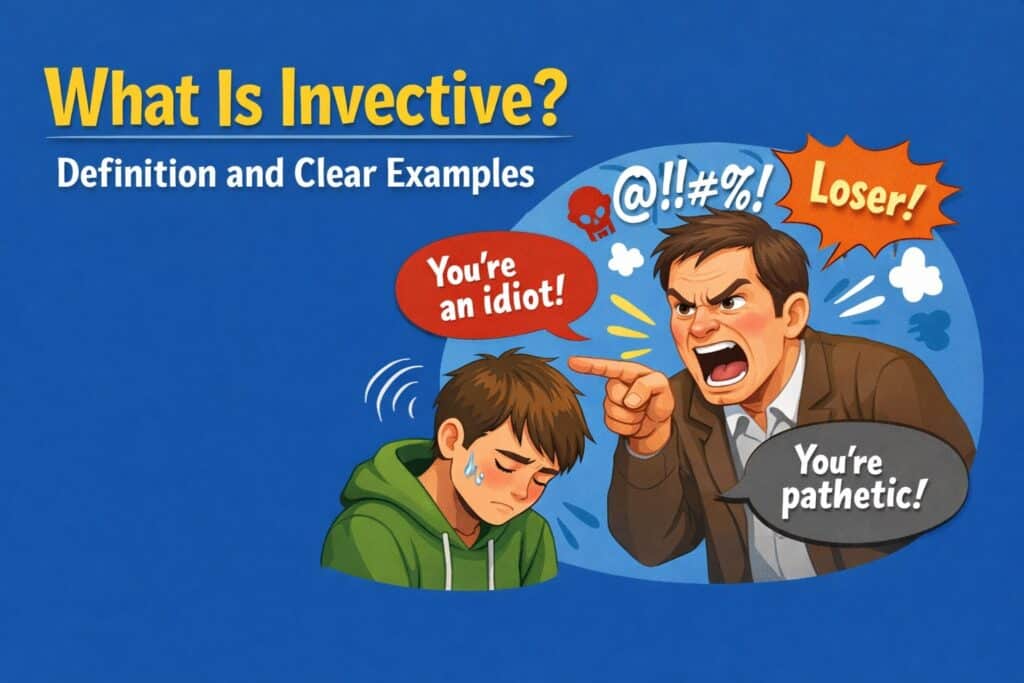
Invective is a language tool used in limited, specific circumstances to insult a target. It has multiple types and has long been part of classic English literature.
Invective Definition
Invective is deliberately harsh and emotionally charged language used to attack, denounce, or ridicule someone or something. It can be targeted at a person, an idea, an institution, an action, etc.
Historically, invective has been a favorite tool of writers who needed to punch upward at the powerful and morally dubious. The ancient Romans built entire careers on it!


Never Worry About AI Detecting Your Texts Again. Undetectable AI Can Help You:
- Make your AI assisted writing appear human-like.
- Bypass all major AI detection tools with just one click.
- Use AI safely and confidently in school and work.
Cicero, for example, was known for his speeches that read like a courtroom drama crossed with a roast. Medieval satirists used invective as social commentary. And by the time the Renaissance rolled in, it became a high art.
In modern writing, invective has its place in:
- Commentary
- Literary essays
- Novels
- Stand-up comedy
Invective Examples
There are way too many invective examples being used in classic English literature.
“Thou art a boil, a plague-sore, an embossed carbuncle in my corrupted blood” is a famous, scathing insult from William Shakespeare’s play King Lear.
King Lear says to his disloyal daughter Goneril that she is a painful, raised sore (like a plague-sore or carbuncle) growing within his own “corrupted blood.”
He means to say that she’s a disease he can’t get rid of but must acknowledge as his own flesh.
Charles Dickens in Bleak House writes, “The one great principle of the English law is to make business for itself.”
This is an invective directed at the institutions of law in the country. He attacks the entire legal system as a self-serving machine in a very factual tone.
How Invective Works in Language
Humans respond to intensity really well. It is very natural for us to pay attention to heat and conflict. We remember vivid language and invective leverage that natural tendency for several purposes.
Good invective is curated anger, best used for emotional venting. Intense emotions need strong language to be expressed.
If someone is furious or disgusted, they may use invective to explain exactly how upset they are and explain the target in humiliating detail.
Politicians and those in the media industry use invective to undermine someone’s credibility.
In fiction, it is a great tool for character development. Writers may introduce invective to naturally show us how bad a character or an institution really is.
It makes the reader feel the emotions rather than them just being described.
Key Features of Invective
Invective is instantly recognizable because of the following key features:
- Peaked emotion: The language comes super-charged with intensity of emotions, such as anger, disgust, contempt, moral outrage, you name it.
- An abusive, combustible tone: The sentences have sharpness in the phrasing. Invective is generally not in a diplomatic tone. Rather, it is very stingy, meant to knock the target off balance.
- Direct, unfiltered attacks: Invective names, point fingers, and call the target exactly what the speaker wants the audience to believe. The speaker risks offense because offense is the whole point.
- Figurative language: Many times, invective uses metaphors and similes to intensify the insult. Adding such literary devices makes the insult more vivid with texture and imagery.
- Some sense of purpose: Despite the heat, good invective is rarely random. There’s almost always an agenda, as in undermining someone’s credibility, rallying a crowd, exposing hypocrisy, or venting a character’s darkest frustrations.
Different Types of Invective
Literary uses of invective can broadly be categorized into two types based on how the insult is delivered:
- High invective: It was used in classical literature using elegant words and a formal tone. It’s the sort of attack you’d hear from someone who could destroy you while still sounding like they’re delivering a lecture at a university.
- Low invective: It is more of a street-level version of invective in its loud, raw, and unfiltered form. It uses crude everyday language for heated arguments.
In everyday speech, politics, or social media, we can divide invective into some more types:
- Vituperation is bitter and abusive language that throws insult after insult, often used in online arguments
- Obloquy is public shaming. The point of obloquy is not to hurt someone, but rather dismantle their credibility and reputation (though that might cause them hurt).
- Billingsgate originates from the name of a popular London fish market that was known for its bad language. It uses a vulgar, way too offensive tone, often inappropriate for public or formal settings.
- Sarcasm is a passive aggressive form of invective. It uses the opposite of what you mean with the purpose of mocking and ridiculing the target.
- Personal attacks get right to the point. They divert attention from an argument by attacking the character or credibility of an opponent.
How to Identify Invective in a Passage
Low invective is pretty easy to recognize in a passage because of how loud it is.
However, subtler forms often seen in high invective often sound like normal sentences until you catch the tone hidden between the lines.
Inappropriate use of invective can cost you big time! Use Billingsgate in an academic setting, and you might receive a stern reply email written at 9 a.m. by someone who hasn’t even had their coffee yet.
We are fortunate enough to have AI tools in hand that make our life easy when using literary devices.
Undetectable AI’s AI Chat is a great tool used to language that crosses from criticism into full-throttle invective. You can ask it to highlight the sections of your text where the tone turns harsh and aggressive.
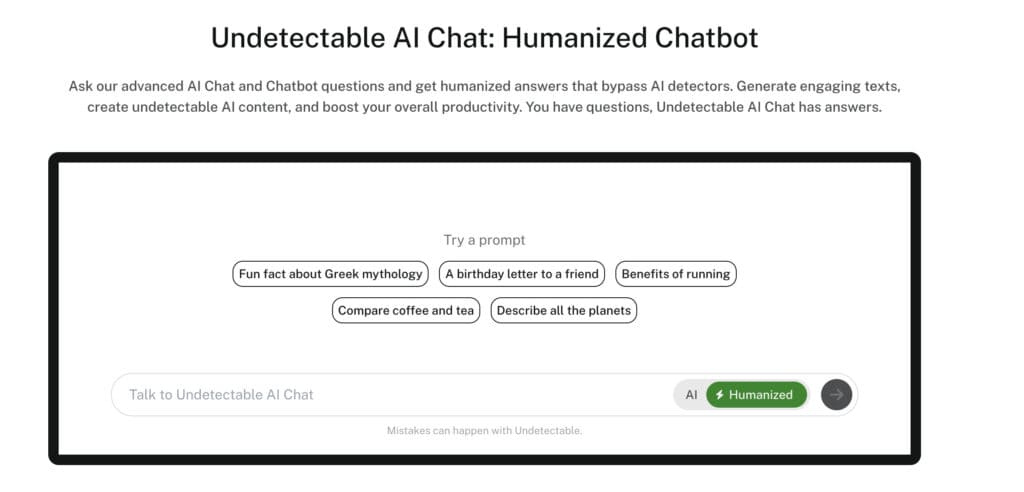
Once you’ve recognized it, go to Undetectable AI’s AI Humanizer and have it paraphrased into a neutral, controlled variation.
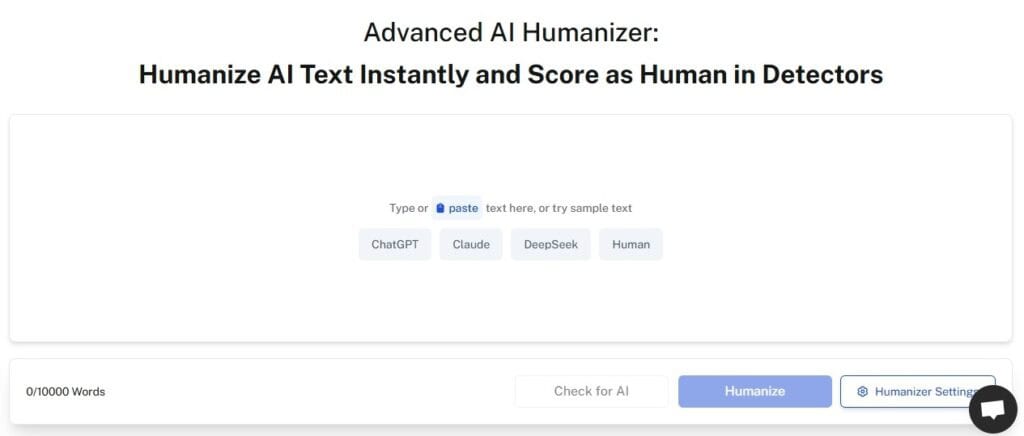
Looking at the “before” and “after” versions side by side will also help you understand what, exactly, made the original one hostile.
How to Use Invective in Writing
Using invective in writing is basically a controlled burn using just enough heat to make your point without accidentally burning down your own credibility.
To do it well, you follow a simple two-step process:
- Decide exactly what you want to insult. Invective works best when your target is clear, and you have a specific reason to attack them, e.g., someone’s behavior, a product’s quality, a business’s shady practices, a character’s moral compass
- Try to write your attack using a harsh tone and creative language.
Like all creative skills, it gets better with practice. The more you experiment with tone, rhythm, and imagery, the better you get at invective.
Now, look at these examples of invective in a sentence pointed at a politician who constantly dodges questions:
- Low Invective: You dodge questions like a cat dodges bath time, wildly, dramatically, and with zero shame!
- High Invective: Your ability to evade direct questions is so refined it borders on performance art, as though truth were an inconvenient detail meant for lesser speakers!
Tips for Using Invective Effectively and Responsibly
First things first, invective should be used in limited settings. You don’t pull it out in polite company.
And you definitely don’t use it in places where a single poorly chosen phrase can cost you your job, your reputation, or, at the very least, your next group invitation.
Most formal settings like work emails and academic essays, have absolutely no place for invective.
You can, and should, however, use it in creative writing, humor pieces, fictional character dialogue, satire, etc.
A well-written insult should make the reader laugh and admire your creativity. If your attacks are way too personal, they may reflect poorly on you rather than the target.
The key to writing better invective in a sentence is to be very strong at descriptive adjectives and sensory imagery.
Your words should describe texture, movement, shape, senses, anything that will make the reader feel it.
Also, make sure to keep your attacks aimed at the behavior or object, not the whole person.
The moment you insult someone’s identity, you risk crossing into territory that’s not only inappropriate but also ethically questionable.
Start testing content with our AI Detector and Humanizer in the widget below!
Final Verdict
Invective is one of those literary tools that adds enormous richness to the English language. Without these sharp, targeted attacks, literature would lose much of its classic flair.
That said, its use must be measured and appropriate. Overdoing it can land you in arguments, social backlash, or worse, professional trouble.
In professional and academic settings, it’s always smart to stay on the safe side using Undetectable AI to flag any unnecessarily harsh language that could cause accidental offense.
Outside formal contexts, though, it is great for times when you get creative at questioning the life choices of your close friends and have a laugh together!
Try out Undetectable AI today!