You set a goal for your team. You hold a meeting, everyone nods, and then… three months later, you’re not sure if you’re any closer to hitting it. Sound familiar?
The culprit is usually the same in every situation: the wrong metrics, tracked inconsistently, with no clear ownership.
Key performance indicators (KPIs) are the measurable values that demonstrate how effectively a company is achieving key business objectives. But knowing that definition and actually building a useful set of KPIs for your organization are two very different things.
Most teams either track too much, track the wrong things entirely, or set up metrics that look impressive on a dashboard but do not connect to anything that actually matters.
The good news is that this is a fixable problem. A great key performance indicator should create a holistic picture of how your organization is performing against its intended targets, organizational goals, business goals, or objectives.
Good plans use 5-7 KPIs to manage and track progress against goals. More than that, and you start losing focus. Fewer than that, and you risk missing blind spots.
In this article, we are walking through 20+ practical key performance indicator examples organized by department.
You will see what each metric measures, why it matters, and how to use it to improve performance across your organization.
Let’s dive in.
Key Takeaways
- KPIs are the measurable values that show how effectively your organization is achieving its key business objectives.
- A balanced set of KPIs includes both leading and lagging indicators to give you a complete picture of performance.
- Each department needs different KPI types based on its specific business goals and targets.
- KPI dashboards are essential tools for tracking and visualizing key performance indicators in real-time.
- Good plans typically use 5-7 KPIs to stay focused and avoid metric overload.
What are KPI Examples?
Before diving into specific examples, it helps to understand what separates a useful KPI from a vanity metric.
Key performance indicators need to be customized to your business situation and should be developed to help you achieve your goals.
When writing or developing a KPI, you need to consider how that key performance indicator relates to a specific business outcome or objective.


Never Worry About AI Detecting Your Texts Again. Undetectable AI Can Help You:
- Make your AI assisted writing appear human-like.
- Bypass all major AI detection tools with just one click.
- Use AI safely and confidently in school and work.
There are two broad categories you should know about: leading and lagging KPIs. A leading indicator is a forward-looking metric that predicts future performance.
It tells you where you are headed. A lagging indicator, on the other hand, reflects what has already happened. It tells you where you have been.
The most effective performance management strategies use both. A combination of leading and lagging KPIs will paint a clear picture of your organization’s strategic performance.
Here is a simple way to think about it: if your lagging KPI is net profit margin, a relevant leading indicator might be your sales pipeline volume or average deal size.
The lagging metric tells you how profitable you were last quarter. The leading indicator tells you whether next quarter is likely to look better or worse.
KPIs should also be flexible enough to adapt to changing business needs and environments. Regular review of your KPIs is essential for tracking progress and making timely adjustments.
An actionable KPI is one that provides insights that you can act upon, not just a number that sits in a report and gets ignored.
Types of KPIs and What They Measure
Here’s a quick look at the different types of KPIs and what they measure.
| KPI Type | What It Measures | Example |
|---|---|---|
| Leading indicator | Future performance | Sales pipeline volume |
| Lagging KPI | Past performance | Net profit margin |
| Strategic KPI | Long-term organizational goals | Market share growth |
| Operational KPI | Day-to-day efficiency | Average time to resolution |
| Employee KPI | Workforce performance | Employee turnover rate |
Financial KPI Examples That Matter Most
Financial KPIs are crucial for understanding margin, expense, revenue, and cash management.
They give you a clear view of your business health and help you make informed decisions about where to allocate resources. Every leadership team should have a core set of financial metrics on their radar, regardless of industry.
Net Profit Margin
Net profit margin is the percentage of revenue remaining after all expenses are paid. It is one of the most direct measures of profitability and overall financial health.
To calculate it, divide your net profit by total revenue and multiply by 100. A healthy net profit margin varies by industry, but tracking it over time tells you whether your cost structure is sustainable.
Gross Profit Margin
Gross profit margin measures the percentage of revenue that exceeds the direct cost of producing your goods or services. It is a useful indicator of how efficiently you are operating at the production level, before operating expenses come into play.
If your gross profit margin is shrinking, that is usually a signal to look at your cost of goods or your pricing strategy.
Revenue Growth Rate
Revenue growth rate is the percentage increase in revenue over a specific period. It is one of the clearest indicators of business growth and market traction.
Tracking it month-over-month and year-over-year gives you a sense of trajectory, not just a snapshot.
Operating Expenses
Keeping a close eye on operating expenses helps you understand where your money is going and identify opportunities for cost reduction.
This metric is particularly useful when paired with revenue growth. If your operating expenses are growing faster than your revenue, that is a red flag worth addressing early.
Cash Flow
Cash flow is the net amount of cash moving in and out of your business over a given period. Even profitable businesses can run into trouble if cash flow is poorly managed.
Monitoring it regularly helps you anticipate shortfalls before they become crises and plan for investments with confidence.
Return on Investment
Return on investment (ROI) measures the profitability of a specific initiative or campaign relative to its cost. It is especially common in marketing and finance contexts, where you need to justify spending and prioritize resources.
A positive ROI means you are generating more value than you are spending. A negative one means it is time to reassess.
Marketing and Sales KPI Examples You Can Track

Marketing KPIs help you evaluate the success of your marketing strategies and identify areas for improvement.
Sales KPIs are essential metrics for evaluating a company’s revenue generation process and are leading indicators for achieving financial goals.
The two categories are closely linked: what marketing generates, sales converts.
Conversion Rate
Conversion rate is the percentage of website visitors or leads that complete a desired action, such as filling out a form, signing up for a trial, or making a purchase. It is one of the most widely tracked marketing KPIs because it directly connects your traffic efforts to business outcomes.
A low conversion rate with high traffic usually points to a messaging or landing page problem that could be solved with A/B testing, not a volume problem.
Customer Acquisition Cost
Customer acquisition cost (CAC) is the total expense required to acquire a new customer, including advertising spend, staff time, and any tools or platforms used in the process.
Tracking CAC alongside customer lifetime value gives you a clear picture of whether your growth is actually sustainable.
If it costs you more to acquire a customer than they will ever spend with you, that is a problem no amount of volume will fix.
Customer Lifetime Value
Customer lifetime value (CLV) is the total revenue you can expect from a single customer over the course of your relationship with them.
It is one of the most important metrics for understanding the long-term health of your business.
A high customer lifetime value relative to your CAC means your acquisition strategy is working.
Improving customer loyalty, customer retention, and employee retention all feed into CLV indirectly. Loyal employees deliver better experiences, which keep customers coming back.
Net Promoter Score
Net promoter score (NPS) measures how likely your customers are to recommend your product or service to others.
It is calculated by asking customers a single question (“How likely are you to recommend us?”) on a scale of 0 to 10. Promoters (9-10) minus detractors (0-6) gives you your NPS. It is a fast, reliable measure of customer satisfaction and brand loyalty.
Tracking your net promoter score NPS over time tells you whether your customer experience is improving or eroding.
Customer Satisfaction Score
Customer satisfaction score (CSAT) is a direct measure of how satisfied customers are with a specific interaction, product, or service. Unlike NPS, which measures overall loyalty, CSAT is typically tied to a specific touchpoint.
These are among the most useful customer service KPIs because they highlight exactly where the experience is breaking down.
Marketing Qualified Leads and Sales Qualified Leads
Marketing qualified leads (MQLs) are prospects who have shown enough interest to be considered ready for sales outreach, based on criteria your marketing and sales teams define together.
Sales qualified leads (SQLs) are prospects that have been further vetted and are considered ready for a direct sales conversation.
Tracking both helps you understand the health of your pipeline and the quality of the handoff between marketing and sales.
Pipeline Velocity
Pipeline velocity measures how quickly leads move from initial contact to closed deal. It is one of the most useful leading indicators for sales teams because it helps you forecast revenue and identify bottlenecks in your sales process.
A slow pipeline velocity often signals friction somewhere in the process,like a qualification issue, a pricing conversation that is not happening early enough, or a follow-up cadence that needs tightening.
Pro Tip: If your sales and marketing teams are drowning in acronyms, Undetectable AI’s Acronym Generator can help you create memorable shortcuts for your KPI terms so everyone stays on the same page.
Operational KPI Examples to Improve Workflow
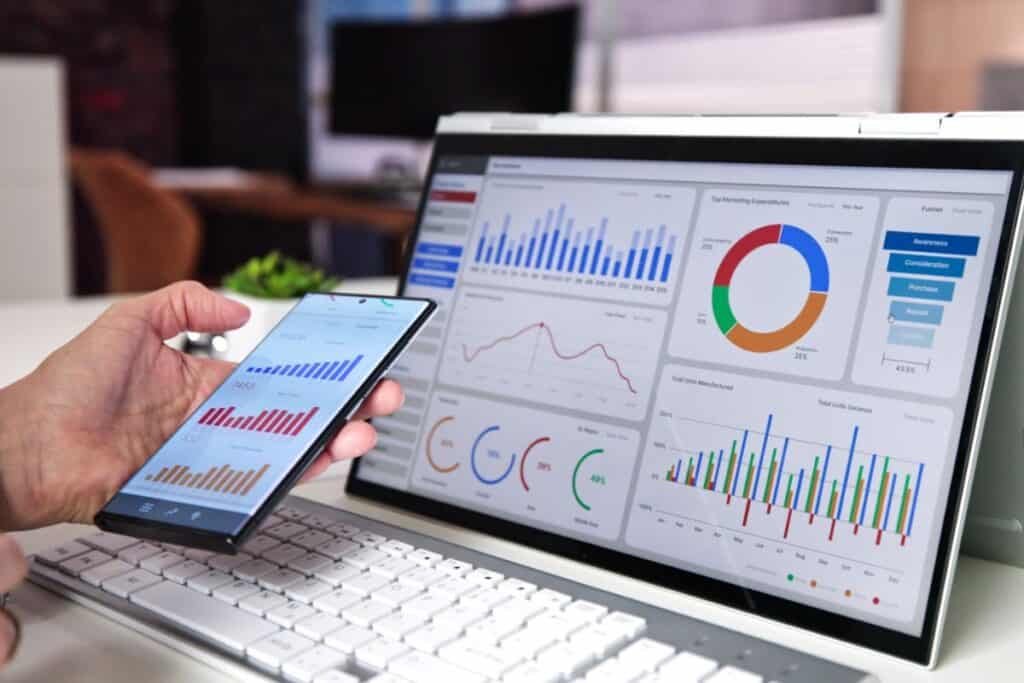
Operational KPIs focus on efficiency, effectiveness, and quality in business processes. They help you identify bottlenecks, reduce waste, and improve the consistency of your output.
Operational efficiency is not just cutting costs, but doing more with what you already have.
Capacity Utilization
Capacity utilization measures the extent to which your available productive capacity is being used. If you are running at 60% capacity, you have room to grow without significant new investment.
If you are consistently at 95%+, you are likely creating bottlenecks and risking quality issues. Monitoring this metric helps you make smarter decisions about hiring, equipment, and production process planning.
Resource Utilization
Resource utilization tracks how effectively you are using your available resources: labor, equipment, materials, and time. Low resource utilization can signal poor planning or misaligned priorities.
High utilization with declining output quality suggests you are overextending your team. The goal is a sustainable middle ground that supports both productivity and quality.
Average Time to Resolution
Average time to resolution measures how long it takes to resolve a customer issue or an internal problem from the moment it is raised. It is a key metric for customer service teams and operations teams alike.
Reducing average time to resolution improves customer satisfaction and frees up your team to handle more volume without adding headcount.
Inventory Management
For businesses that deal in physical goods, inventory management metrics track how efficiently you are moving stock.
This includes metrics like inventory turnover rate (how often you sell and replace inventory in a given period) and days of inventory on hand.
Poor inventory management ties up cash, increases storage costs, and can lead to stockouts that damage customer satisfaction.
Units Produced
Units produced is a straightforward operational metric that tracks output volume over a given period. It is particularly useful in manufacturing and production environments where throughput is a key driver of revenue.
Tracking units produced alongside quality metrics helps you understand whether you are scaling efficiently or just scaling fast.
Cost Efficiency and Operational Costs
Tracking operational costs as a percentage of revenue gives you a clear picture of how efficiently your business is running.
Cost efficiency metrics help you identify where you are spending more than you should relative to the value being generated.
This is especially important during periods of rapid growth, when operational costs can balloon if left unmonitored.
How Undetectable AI Can Assist in KPI Examples

Working with KPIs involves a lot of writing: drafting reports, explaining metrics to stakeholders, creating templates for your team, and making sure your documentation is clear and consistent.
That is where AI tools can help your business, helping you:
- Generate sample KPI templates to standardize how your team tracks and reports on metrics.
- Analyze past performance trends to surface patterns in your historical data that might not be obvious at a glance.
- Reword KPI statements clearly so that every team member understands what is being measured and why.
- Check for data consistency and originality to make sure your reports are accurate and your templates are not inadvertently duplicating someone else’s work.
Pro Tip: Use Undetectable AI’s Rewording Tool to make KPI descriptions clear and easy to understand for all team members, especially when you need to translate technical metrics into language that non-technical stakeholders can act on.
If you still run into confusing terminology, the Undetectable AI’s AI Question Solver provides quick answers to KPI-related questions or clarifications. All you need is a screenshot of your question.
Why Tracking KPI Examples Boosts Performance
Here’s the thing about KPIs: the act of tracking them changes behavior. When your team knows that employee engagement is being measured, they pay more attention to it.
When your sales team sees their pipeline velocity on a KPI dashboard every morning, they think differently about how they manage their time.
Employee engagement is critical to increasing productivity and lowering operational costs. Higher employee engagement is linked to higher customer ratings, lower employee turnover, and fewer safety incidents.
The cost of ignoring it is high. According to reports from Gallup, disengagement costs the U.S. economy an estimated $450 billion to $550 billion annually.
That is not a rounding error. This structural problem will show up in your financial metrics, whether you are tracking it or not.
How Does Tracking KPIs Help Employees?
A good set of employee performance metrics can improve performance management and create a high-performing team. Tracking employee productivity and creating organizational alignment go hand in hand.
When people know what success looks like and can see their progress toward it, they tend to perform better. Setting goals and executing on them daily is key to achieving employee performance metrics.
Employee turnover rate measures the percentage of employees who leave the company in a given period. A lower employee turnover rate is generally indicative of higher employee satisfaction and lower recruiting costs.
Employee satisfaction rates are a key performance indicator for human resources, and they are worth tracking alongside engagement scores to get a complete picture of your workforce health.
Improving employee satisfaction directly supports employee retention, which reduces the cost and disruption of constant rehiring.
Measuring Success With a KPI Dashboard
KPI dashboards make all of this visible. KPI dashboards are essential tools for tracking and visualizing key performance indicators in real-time.
They can visually depict the performance of an enterprise, a specific department, or a key business operation.
KPI management is most effective when done using dashboard reporting tools that provide insights into current performance. Historical data alone won’t cut it.
You need live trends you can act on today. Using KPI dashboards enhances your ability to manage performance metrics effectively and make data-driven decisions before problems escalate.
Common Mistakes When Using KPI Examples
Even organizations with the best intentions make predictable mistakes when setting up their KPIs. Knowing what to avoid can save you a lot of frustration down the road.
Trying to Track Too Much
The first and most common mistake is tracking too many metrics. You should only track the most valuable indicators that tie to your organization’s long-term strategic goals and direction.
When everything is a priority, nothing is. If your KPI dashboard is so crowded that no one looks at it, it is not doing its job.
Who’s in Charge?
The second mistake is failing to assign ownership. Every key performance indicator needs ownership. If no one is responsible for a metric, no one will act on it.
Assign a specific person or team to each KPI, and make sure they have the authority and resources to influence the outcome.
Avoid Lagging KPIs
The third mistake is relying entirely on lagging indicators. Lagging KPIs tell you what happened. They are useful for accountability and reporting, but they do not help you course-correct in time to make a difference.
A balanced set of KPIs gives you both a look-back and a look-forward as you measure the success of your plan and business health. Make sure your set includes enough leading indicators to give you early warning signals.
Always be SMART With Your Goals
The fourth mistake is setting KPIs that do not follow the SMART framework for goals.
Effective key performance indicators for marketing and sales departments (and really for any department) should be Specific, Measurable, Attainable, Realistic, and Time-bound. Vague goals produce vague results.
Follow Through on Reviews
Finally, do not skip the review cycle. Regular review of your KPIs is essential for tracking progress and making timely adjustments to strategies.
Business conditions change, and your KPIs should reflect that. A metric that was relevant six months ago might not be the right one today.
Pro Tip: Before sharing your KPI examples or templates with your team or stakeholders, run them through Undetectable AI’s AI Plagiarism Checker to make sure the content is original and unique.
Use our AI Detector and Humanizer right in the widget below!
Frequently Asked Questions About KPI Examples
What is a KPI, and can you give an example?
A KPI, or key performance indicator, is a measurable value that shows how effectively a company or team is achieving a specific objective.
For example, a sales team might track conversion rate as a KPI for their pipeline performance. A finance team might track net profit margin to measure overall profitability.
The key is that a good KPI is tied directly to a business goal, not just a number that is easy to collect.
How many KPIs should a business track?
Most performance experts recommend tracking 5-7 KPIs per team or department. Tracking too many dilutes focus and makes it harder to act on what you are seeing. Tracking too few risks missing important signals.
The goal is a focused set of metrics that give you a complete picture of performance without overwhelming your team with data.
What is the difference between a leading and a lagging KPI?
A leading indicator is a forward-looking metric that predicts future performance. For example, the number of sales-qualified leads in your pipeline is a leading indicator for next month’s revenue.
A lagging KPI reflects what has already happened, like your actual revenue for the month. Both types are useful. Leading indicators help you course-correct early, while lagging indicators confirm whether your strategy is working.
What are some good KPI examples for employees?
Common employee KPIs include employee engagement scores, employee turnover rate, employee satisfaction ratings, training completion rates, and individual productivity metrics.
The right employee KPIs depend on the role and department, but the most useful ones are tied to outcomes that matter to the business – not just activity metrics like hours logged or tasks completed.
What is a KPI dashboard, and do I need one?
A KPI dashboard is a visual tool that centralizes your key metrics in one place, updated in real-time or on a regular schedule. It gives your team a quick, clear view of how performance is tracking against your goals.
If you are managing more than a handful of KPIs across a team or department, a dashboard makes it significantly easier to spot trends, identify problems early, and keep everyone aligned.
Most modern business intelligence and reporting tools offer dashboard functionality.
What are some KPI examples for marketing teams?
Marketing teams typically track metrics like conversion rate, customer acquisition cost, marketing qualified leads, return on investment, organic search traffic, and net promoter score.
The most useful marketing KPIs are the ones that connect directly to revenue – not just traffic or impressions, but metrics that show whether your campaigns are actually driving business outcomes.
Final Thoughts
Tracking the right key performance indicators is one of the most practical things you can do to improve how your organization operates.
The examples in this article cover the most important categories (financial, marketing and sales, operational, and employee performance), but the specific KPIs you choose should always be tied to your organization’s objectives and strategic goals.
Start with a small, focused set. Make sure each metric has an owner. Build in a regular review cadence. And use KPI dashboards to keep everything visible so your team can act on what they are seeing, not just report on it after the fact.
KPIs provide actionable insights only when they are treated as living tools, not static reports.
The organizations that get the most out of their performance management systems are the ones that stay curious, stay flexible, and keep asking whether the numbers they are tracking are actually the ones that matter.
Turn your KPI insights into clear, actionable, and human sounding reports with Undetectable AI.