
We all have that friend who takes twenty minutes to tell a story that could be told in five minutes.
They could answer a simple question with a full breakdown of every conversation and minor inconveniences that become a drag.
In fact, you might be guilty of this without knowing.
This is verbosity. It appears in long-winded prose and emails filled with unnecessary words. Verbosity can negatively affect how your message is received when used poorly. So what is verbosity?
Stick around, and you’ll find out.
Key Takeaways
- Verbosity is the use of so many unnecessary words to convey a thought. This comes across as you lacking substance and inflating simple messages into elaborate ones.
- On a positive note, verbosity can shape your ideas when applied with purpose and to the appropriate context.
- This flaw turns problematic when it obscures meaning and strains engagement, often leading you to lose your audience.
- You can manage verbosity by using our Grammar checker to cut out redundant constructions that affect your prose.
What Is Verbosity?
You must get one thing straight when it comes to verbosity. A detailed explanation isn’t necessarily verbose, and a short sentence isn’t automatically concise.
The focus of verbosity hinges on excess and not length. Now, you are probably thinking, What does verbosity mean? And this is your answer
Defining Verbosity
Verbosity is the quality of a text where writers or speakers express their thoughts in an unnecessarily drawn-out way.


Never Worry About AI Detecting Your Texts Again. Undetectable AI Can Help You:
- Make your AI assisted writing appear human-like.
- Bypass all major AI detection tools with just one click.
- Use AI safely and confidently in school and work.
So, when we define Verbosity, we’re talking about communication that uses redundant and elaborate constructions in cases where simpler ones would suffice.
The word “verbosity” comes from the Latin word “verbosus”, which means “full of words.”
This Verbosity definition centers on excess words that people use to pad statements without adding substance.
In practice, it means your reader or listener has to work harder to extract your actual point.
As a result, it often inflates simple messages into elaborate ones, which makes you want to scream in your head, “Get straight to your point!”
Why Verbosity Occurs
Verbosity doesn’t happen by accident, except that the person has a weak grasp of language.
In cases where verbosity occurs, there are specific reasons and one of these underlying issues could be the reason why:
- New writers sometimes overload their work with background information because they do not fully trust their own voice yet. They restate ideas in small variations, hoping the repetition will make the point feel stronger.
- Others fall into verbosity because they link complexity with intelligence. Simple words feel too plain to them, so they swap them for heavier language and stretch sentences far past what the idea requires. The result often feels forced rather than thoughtful, which often backfires and makes them harder to understand.
- Students and content writers facing a minimum word count in their essays often pad their work with filler words and unnecessary elaboration. This artificial inflation has become one of the most obvious forms of verbosity.
- Certain fields, such as academic writing and legal documents, reward lengthier communication. These fields often favor elaborate phrasing, which can train people to define verbosity as normal rather than excessive.
- When people are in a heightened state of being or quite emotional, they tend to prefer verbose expression even when brevity would suffice.
Verbosity in Communication
You might think verbosity is the enemy of clear communication. That’s wrong because there are strategic moments when extra words actually serve a purpose when deployed.
- You can use verbosity when delivering negative feedback and disappointing information, as a bit of extra explanation can cushion the blow. You see this when you receive a rejection email that takes a roundabout approach in telling you you’ve been rejected. Rather than simply “Your proposal was rejected.”
- Also, in casual or relationship-building conversations, some verbosity creates friendliness. Meanwhile, short responses can feel cold and imply to them you’re not interested.
- When dealing with legal agreements or safety warnings, what appears to be verbosity is actually necessary to close potential loopholes or address possible confusion.
- Political speeches and marketing copy often use verbosity to deliberately drive home central themes and increase memorability, as with epistrophe.
- A writer can creatively use elaborate sentences to slow down a scene and build tension that serves the story’s pace.
- A professional is likely to give you lengthy answers that cover complex topics so you understand them better. You see them often, like a doctor explaining a diagnosis or a consultant outlining a strategy with detailed communication.
When Verbosity Becomes a Problem
We’ve established that verbosity has its strategic uses, but it also crosses into problem territory more often than not.
These are key situations where verbosity can be an issue:
- Your readers can lose interest in your work when every sentence takes twice as long to read. They begin to skim paragraphs or abandon the text entirely.
- Excessive wordiness buries your central message under layers of filler expressions that make it harder for even interested readers to find your point.
- Verbose communication costs time for you to produce and to consume. This is quite glaring when a meeting that could have taken fifteen minutes gets stretched to an hour by the speaker.
- Readers tend to scan online content rather than read each word. Due to this, having a blog with an unoptimized content layout could cost you traffic and engagement.
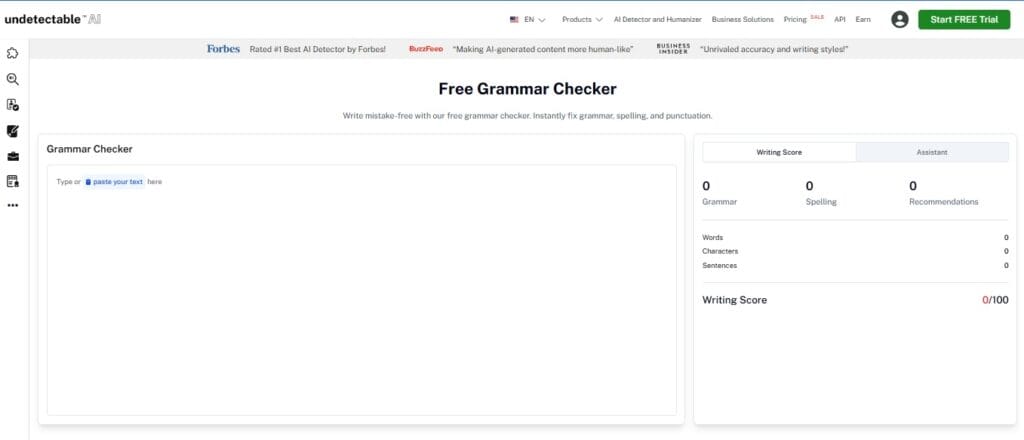
You can avoid these pitfalls with Undetectable Grammar Checker, which will help you refine your text and catch redundant phrases.
You’ll get suggestions that help you see where trimming would strengthen your message.
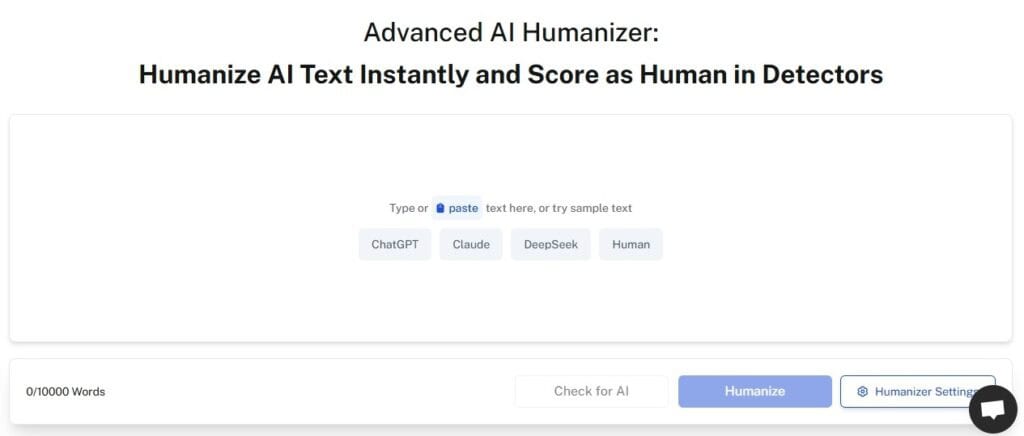
Meanwhile, our AI Humanizer ensures that your verbose content is natural and easy to follow. On the other hand, if you’re dealing with concise examples, our humanizer can help you flesh them out better.
Managing Verbosity Effectively
You can generally recognize verbosity, but the better skill is actually controlling whether you’re editing your own work or trying to break lifelong writing habits.
You can manage it with these steps:
- Revise your text after you’re done writing. During this process, you can specifically look for redundancies and verbose expressions like you’re line editing.
- Replace the verbose constructions you find with their concise alternatives. For instance, “Due to the fact that” becomes “because.”
- When you have a thousand-word limit, you can aim for 800 words to avoid padding your content to meet the maximum word count.
- Read your writing aloud to hear awkward constructions and unnecessary repetition that your eyes might skip.
- Use the active voice as it naturally reduces wordiness while creating clearer sentences. This is better compared to passive constructions that add words and obscure responsibility.
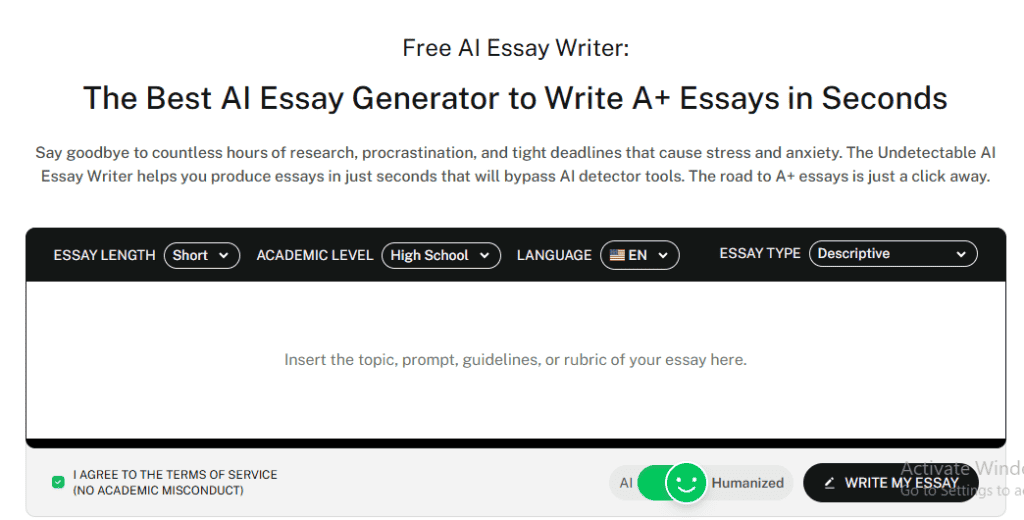
If you find yourself struggling to turn a sprawling draft into a structured argument, you can use our AI Essay Writer to generate a more focused and balanced version of your work.
This tool helps you move past the “word padding” phase by providing a solid foundation that prioritizes logical flow over sheer volume.
Pros and Cons of Verbosity
Verbosity can be useful when used properly in your writing and speeches. Unfortunately, some people use it terribly, resulting in a communication breakdown.
| Pros | Cons |
| It softens difficult messages and provides euphemistic support for criticism or bad news. | It may obscure main ideas by burying key points under layers of unnecessary text |
| You can build rapport in personal communication by being verbose to show investment in the other person. | It could waste time for readers who want to get straight to the point. |
| It provides a clearer context that prevents misunderstandings in technical topics. | Some readers could be fatigued and start skimming the text. |
| It allows for diplomatic hedging in sensitive political or interpersonal situations. | This comes off as deceptive to critical listeners. |
| It fills the required word counts for assignments or content specifications. | You potentially increase the cognitive load of the reader, making information harder to process and remember. |
Clear Examples of Verbosity
The best way to understand Verbosity meaning in your day-to-day conversations is to see it in action with these examples from different contexts.
Example 1: Business Communication
Verbose: “For a while now, we have been experiencing a significant decrease in the total turnout of purchases on our online retail platform. This has led us to make an overhaul of that model and look at better alternatives to increase our sales numbers.”
Concise: “Our online sales have dropped significantly, and we will implement new marketing strategies to boost revenue.”
Example 2: Academic Writing
Verbose: “Our recent research study was conducted by a competent team of scientists, and from the extensive interrogation of the evidence, they have been able to find a correlation between the amount of time spent engaging in physical exercise. Overall, this suggests that the levels of one’s mental health and wellbeing are worth looking into further.”
Concise: “The research shows a possible correlation between physical activity and mental health levels that’s worth researching further.”
Example 3: Instructions
Verbose: “When you encounter any troubling situation, you can get in contact with our customer service department, and we’ll do our best to resolve it for you. You can reach us via the phone or our email address listed below.”
Concise: “For more help and inquiries, contact customer service with the number below or email us at the provided address.”
Verbosity vs. Concision
While we’ve explored the verbosity definition throughout this guide, we also need to give concision due attention.
Concision works as a direct opposite to verbosity as the goal we’re aiming for when we eliminate wordiness.
On one hand, verbosity is the use of more words than necessary to express an idea, either in speech or writing. This tends to result in redundancy and your intended meaning getting diluted.
On the other hand, concision is the practice of expressing ideas simply by using only the words necessary to convey meaning.
The distinction matters because people often think concision is about being brief at all costs. In truth, a concise explanation might still be lengthy if the topic demands detail.
What does verbosity mean in contrast? It means wasting words even when discussing simple topics.
| Verbosity | Concision |
| It uses excessive words beyond what’s needed. | It uses only necessary words to convey complete meaning. |
| It could obscure the main point under layers of text. | The main point is immediately clear and accessible. |
| Your partner could be fatigued and become disengaged. | It respects your reader’s time and maintains engagement |
| The sentence structure is often passive with multiple clauses. | The constructions are typically active with a clear subject-verb-object framework. |
| This could lead to barriers for diverse readers and learners. | It reaches wider audiences more effectively. |
| It helps accommodate someone’s creativity and cover obscure areas in communication. | It could lose the nuance or creative touch of the writer. |
Experience our AI Detector and Humanizer in the widget below!
FAQs
Why is Verbosity Considered Bad?
Verbosity gets a bad name because readers immediately notice when sentences drag on or say the same thing over and over. Your brain has to work harder to figure out what the point actually is.
Most of us just want writing that gets to the point quickly.
When is Verbosity Acceptable?
Verbosity works when you choose it for a reason. In fiction, longer descriptions can build emotion or tension. In classrooms, detailed explanations help students follow complex ideas step by step.
In these settings, extra words serve a purpose rather than getting in the way.
What is the Best Way to Avoid Verbosity in Writing?
Editing does the real work here. Read your draft slowly and listen for repetition or when two sentences say nearly the same thing. Watch for filler phrases that sound helpful but add little meaning.
How Can I Find the Balance Between Verbosity and Concision?
The balance comes from separating writing and editing. Write freely at first so your ideas breathe. Later, revise with intention and cut words that weaken focus, but keep those that add clarity or emphasis.
Final Thoughts
Verbosity is not a grammatical crime if you’re guilty of being verbose. Even so, it becomes tedious for anyone engaging with you to listen to you drone on endlessly when you could be concise.
Moreover, if you’re carelessly verbose, this could indicate that you lack a good grasp of the language to properly express yourself.
Whatever the case may be, verbosity can be used strategically in communication and managed when used.
However, if you have trouble polishing your verbose content, you can use our Grammar checker to improve your work.
Ensure your verbose content reads naturally and human with Undetectable AI.