
Learning how to bypass Turnitin AI detection the right way can turn academic writing from a stressful guessing game into a confident, repeatable process.
Turnitin’s detection model has changed a lot since it first launched, and so has the advice for working with it. The system no longer just checks for copied text; it studies rhythm, word choice, and structural habits across your whole submission history, and it now flags text that looks like it was run through a “humanizer” tool.
If you’re wondering how to bypass Turnitin without crossing into academic dishonesty, you’re really asking a bigger question: how do you write in a way that is unmistakably yours?
The goal isn’t to trick a scanner. It’s to produce work that reflects real thinking, real research, and a real voice, so a detector never has a reason to flag it in the first place.
Whether you’re a student under deadline pressure or a researcher polishing a manuscript, this guide walks through what Turnitin’s AI detector actually does today, how accurate it really is, and the specific, ethical techniques that keep your writing both authentic and safe from false flags.
Key Takeaways
-
Turnitin’s AI detector now includes “bypasser detection,” a layer built specifically to catch text that has been run through humanizer or paraphrasing tools before submission.
-
No detector, including Turnitin’s, is immune to false positives. Independent reporting and university guidance both caution against treating a score as proof of misconduct.
-
The most reliable way to pass any AI check is deep, reconstructive rewriting: absorb the idea, then explain it in your own structure, rhythm, and vocabulary, rather than swapping synonyms.
-
Course-specific evidence (lecture references, assigned readings, your own analysis) is something a generic AI model cannot produce, which makes it one of the strongest signals of authorship.
-
Keeping a paper trail of your drafts and research notes is your best protection if your original work is ever flagged incorrectly.
Before you can figure out how to bypass Turnitin’s AI detector responsibly, it helps to understand what the tool is actually built to do.
What Is Turnitin AI Detection?
Think of Turnitin as a forensic reader. It scans submissions against a massive database of academic papers, websites, and prior student work, but its AI detection layer goes a step further. It uses transformer-based deep learning to analyze:
- Perplexity: how statistically predictable your word choices are.
- Burstiness: the natural variation (or lack of it) in your sentence length and complexity.
- Stylistic fingerprints: how consistent your “voice” is compared with your own past submissions.
Can Turnitin Detect AI-Generated Content?
The honest answer is: better than it used to, but still imperfectly. Turnitin has always been effective at catching conventional plagiarism, and AI-generated text used to slip past its earlier models fairly easily.
That changed when Turnitin confirmed that its detection suite now includes dedicated bypasser detection, a layer built specifically to flag text that shows signs of having been run through a humanizer or paraphrasing tool before submission. In other words, simply pasting AI output into a rewording app is no longer a dependable shortcut.
How Does Turnitin AI Detection Work?
Turnitin isn’t just hunting for identical phrases. It analyzes structure, phrasing patterns, and internal consistency across an entire document, then compares that profile against your previous submissions to check whether your “voice” holds steady.
It’s a layered approach: pattern analysis, database comparison, and behavioral consistency checks, all working together rather than any single signal deciding the outcome on its own.
What Type of AI Detector Does Turnitin Use?
Turnitin runs a dynamic, continuously retrained detection model, not a static checklist. That’s part of what makes it intimidating for students who don’t understand how it works: the system keeps learning from new submissions and new AI models as they’re released.
It’s also worth knowing which detectors your school’s learning platform is actually running, since Canvas and similar systems don’t build their own AI detection. They plug in third-party tools like Turnitin, and knowing which one you’re up against helps you prepare accordingly.
How Accurate Is Turnitin’s AI Detector, Really?
This is the part most guides skip, and it matters more than any single “trick.”
Turnitin’s own transparency reporting found that roughly 15 percent of essay submissions now come back with more than 80 percent AI-generated writing, up from an average of about 3 percent when its original AI detector launched. That growth is exactly why the bypasser detection layer exists.
But accuracy claims only tell half the story.


Never Worry About AI Detecting Your Texts Again. Undetectable AI Can Help You:
- Make your AI assisted writing appear human-like.
- Bypass all major AI detection tools with just one click.
- Use AI safely and confidently in school and work.
According to an NPR investigation into how schools use these tools, academic integrity researcher Mike Perkins tested Turnitin, GPTZero, and Copyleaks head-to-head and found that all three sometimes flagged human writing as AI-generated and missed genuine AI text, with accuracy dropping even further once the text had been altered to sound more human.
MIT Sloan’s teaching and learning technology team has raised similar concerns, warning that AI detectors carry real error rates and can lead instructors to falsely accuse students of misconduct, a concern serious enough that some institutions, including Curtin University in Australia, have opted to disable Turnitin’s AI writing detection feature across every campus rather than keep relying on it.
The practical takeaway: a low score from any detector, including Turnitin, is a helpful signal, not a verdict. That’s true whether you used AI, avoided it entirely, or something in between.
Why AI Detectors Disproportionately Flag ESL and International Students
This is a fairness issue, not a minor footnote, and it shapes who ends up defending their own original work.
Formal sentence structures, limited idiomatic phrasing, and heavily revised drafts are common traits of writing by non-native English speakers, and they happen to overlap almost exactly with the low-perplexity, low-burstiness patterns detectors are trained to flag as machine-written.
A recent policy analysis from the Higher Education Policy Institute documented the resulting fairness crisis for international students, noting that a majority of students using AI tools report real anxiety about being falsely accused, with international students reporting even higher stress than their domestic peers.
If English isn’t your first language, a few extra precautions are worth building into your process:
- Don’t over-rely on grammar and translation tools. Heavy machine polishing can flatten the natural variation in your writing, which ironically makes it read more like AI output.
- Keep some stylistic imperfection. Idioms, contractions, and slightly uneven phrasing are markers of authentic voice, not weaknesses to eliminate.
- Document your process from the start. This matters even more for ESL and international students, since a documented paper trail is often the deciding factor in a fair review.
Tips to Bypass Turnitin AI Detection

Bypassing Turnitin isn’t about slipping past an algorithm. It’s about writing in a way that’s genuinely, defensibly yours, so there’s nothing artificial left to catch.
1. Use Undetectable AI to Refine, Not Replace, Your Writing
With Undetectable AI, you’re not just trying to dodge Turnitin’s algorithms. You’re pushing your draft toward a more natural, human level of clarity and originality.
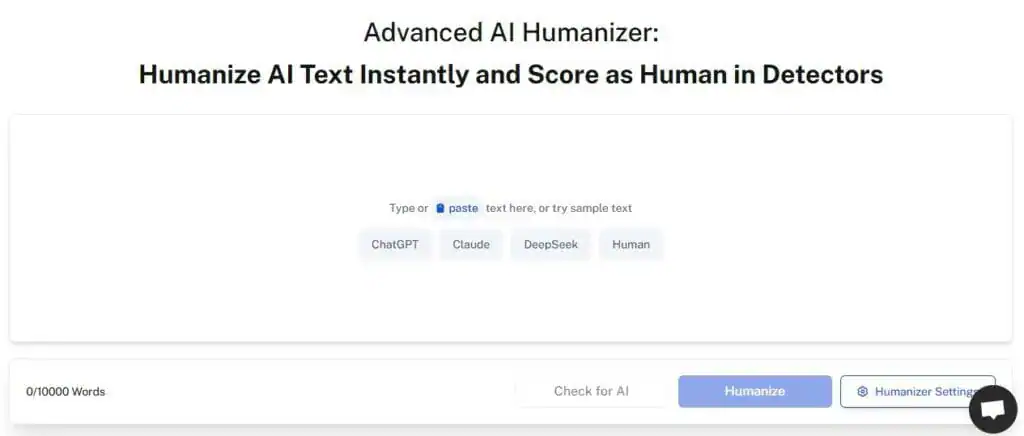
Running a draft through the AI Stealth Writer helps smooth over the mechanical patterns that detectors are trained to notice, so what you submit reads like something you actually sat down and wrote.
2. Master “Deep” Paraphrasing
Paraphrasing in the way that actually works is nothing like swapping a few words for synonyms. To hold up against today’s detection models, you need to reimagine how the information is presented.
- Absorb the idea first. Don’t reword sentence by sentence; understand the point, then explain it your own way.
- Restructure the sentence. Switch passive constructions to active, or combine several short sentences into one more complex thought to break the “machine rhythm” detectors are trained to spot.
3. Inject Personal Voice and Subjectivity
AI cannot replicate the specific insight that comes from your own engagement with the material.
- Add anecdotes. Weave in personal stories, regional phrasing, or details from a specific class discussion that no model would know.
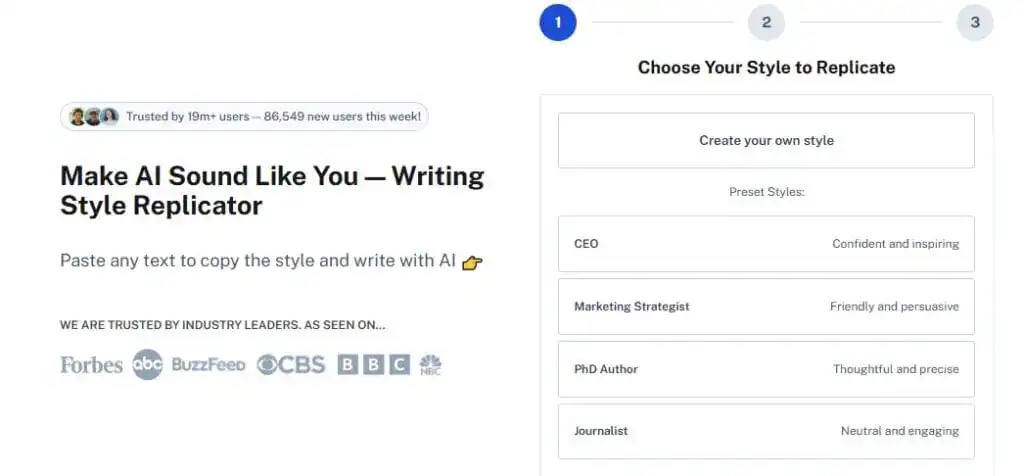
- Keep your voice consistent. Our Writing Style Replicator can help align new writing with your established vocabulary and sentence habits, which matters because Turnitin checks voice consistency against your prior submissions.
4. Choose a Unique Topic and Verify Every Claim
Picking a genuinely specific topic naturally reduces the odds that Turnitin’s database finds a close match. Once you’ve settled on an angle, run your claims through TruthScan to confirm they hold up.
This groundwork turns your paper into a real piece of original research rather than a patchwork of generic points.
5. Incorporate Course-Specific Evidence
One of the most reliable ways to ground a paper in your own voice is to include details that only someone actually sitting in your class would know.
- Lecture references. Mention specific points your professor raised in a seminar or lecture.
- Assigned readings. Cite the exact texts or case studies required for your module, not generic sources a model would default to.
- Personal insight. Explain how your research specifically answers the prompt your professor gave you, which adds a layer of tailored analysis generic AI output simply can’t fake.
Common Mistakes That Get Flagged
Even well-intentioned students trip Turnitin’s detector in predictable ways. Watch for these patterns:
- Submitting AI output with only light edits. Since Turnitin’s detection suite now specifically looks for humanized or bypassed text, a quick synonym swap is often easier to catch than raw AI text was a year or two ago.
- Overly uniform sentence length. Low burstiness (every sentence roughly the same length and shape) is one of the clearest statistical signals of machine writing.
- Generic, prompt-shaped structure. Essays that open with a restated thesis, march through three even body paragraphs, and close with a summary often mirror how AI models are prompted to write, even when a human wrote every word.
- Inconsistent voice across a document. Mixing AI-assisted sections with your own original writing can trigger the same voice-consistency checks used to compare your work against past submissions.
Benefits of Using Undetectable AI

Used the right way, Undetectable AI is a tool for strengthening your own writing process, not a substitute for it.
Refines your writing without replacing your thinking. By analyzing vocabulary, syntax, and transitions, the platform helps you build a more natural flow instead of just handing you finished text. For non-native English speakers especially, that kind of feedback on proper word usage and sentence construction can function like a personalized writing tutor.
Helps you get past writer’s block. Structural prompts and guidance on structuring essays make it easier to organize complex ideas into a logical argument instead of staring at a blank page.
Protects against unfair flags, not just AI use. Because standard detectors sometimes mistake authentic human writing for AI output, running your own work through an AI Detector before you submit gives you a chance to catch and address a false flag before an instructor ever sees it.
Supports learning, not just submission. Tools built for brainstorming, editing, and clarifying ideas, used as intended, reinforce the same evaluation and synthesis skills instructors are actually trying to teach. That’s the same philosophy behind using AI responsibly across your coursework rather than treating it as a shortcut.
Works across languages and academic levels. With support across thousands of languages and settings you can tailor to high school, undergraduate, or graduate-level writing, the tone stays appropriate for whatever you’re submitting.
What to Do If You’re Falsely Flagged
Because no detector is immune to error, it’s worth knowing your options before you ever get a flag.
- Keep a paper trail. Work in Google Docs or a similar platform that preserves version history, so you can show exactly how your ideas developed over time.
- Save your early materials. Outlines, research notes, and rough drafts are some of the strongest evidence of original effort.
- Request the actual report. Ask your instructor for the specific AI writing score and flagged sections rather than accepting a summary secondhand.
- Know you’re not alone. Real student cases of false AI flags show that even carefully researched, entirely human-written work has been wrongly flagged, and that appeals do succeed when students can document their process.
A Pre-Submission Checklist Before You Hit Submit
A few minutes of prep before you upload your final draft can save you a much longer conversation with your instructor later.
- Check your version history. Cloud tools like Google Docs and Word Online automatically log every edit with a timestamp. A teaching and learning team at Indiana University Bloomington recommends reviewing this record yourself before submission, since a natural pattern of drafting, revising, and editing over time is one of the clearest signs of authentic authorship.
- Read your paper out loud. Sections that sound stiff or oddly repetitive to your own ear are usually the same sections a detector’s perplexity score will flag.
- Compare it against your last submission. If your tone, vocabulary, or sentence rhythm shifts noticeably from your previous work, expect Turnitin’s voice-consistency check to notice too.
- Confirm your citations are complete. Missing or vague sourcing invites closer scrutiny across every part of your submission, not just the sections in question.
- Give yourself a buffer before the deadline. Rushed, last-minute writing tends to be more generic and less detailed, which is exactly the profile detectors are tuned to catch.
FAQs
Is it possible to bypass Turnitin AI detection without violating academic rules?
Yes, if you treat AI as a collaborator for brainstorming rather than a replacement for your own work. Ethical bypassing means deeply paraphrasing any AI-assisted drafts, varying your sentence rhythm, and adding personal insight that reflects genuine understanding of the topic.
Can Turnitin detect “humanizer” or “bypasser” tools?
Yes. Turnitin’s detection suite now includes bypasser detection, built specifically to identify text that shows signs of being processed by humanizer or word-spinning tools. Flagged text is often labeled “AI-paraphrased” in the report, so running AI output through a generic rewording tool is no longer a dependable shortcut on its own.
What’s the most effective way to avoid being falsely flagged?
Maintain a clear paper trail. Work in a platform like Google Docs that preserves version history, and keep your early outlines and research notes as evidence of your original effort.
Does bypassing Turnitin’s AI detector count as academic dishonesty?
It depends entirely on what you’re bypassing. Using tools to refine your own original writing, catch a false flag, or improve clarity is not dishonest. Submitting AI-generated work and disguising it to look human-written is a different matter and typically violates academic integrity policies. The distinction is authorship, not tool use.
How often does Turnitin update its AI detection model?
Frequently, and often without a visible change to the interface. Turnitin has rolled out multiple model updates addressing everything from bypasser detection to language-specific accuracy improvements, which is part of why static “tricks” tend to stop working over time while genuine, voice-driven writing continues to hold up.
Conclusion
Turnitin’s AI detector has gotten sharper, but it hasn’t gotten infallible, and that gap is exactly where ethical, well-informed writers have room to work.
The techniques that actually hold up over time are the same ones that make you a better writer: absorbing ideas instead of reshuffling words, grounding your work in course-specific detail, and keeping a paper trail that proves the thinking was yours.
Undetectable AI is built to support that process, not shortcut it, helping you catch false flags, sharpen your voice, and submit work you can stand behind with confidence.
Try Undetectable AI today.