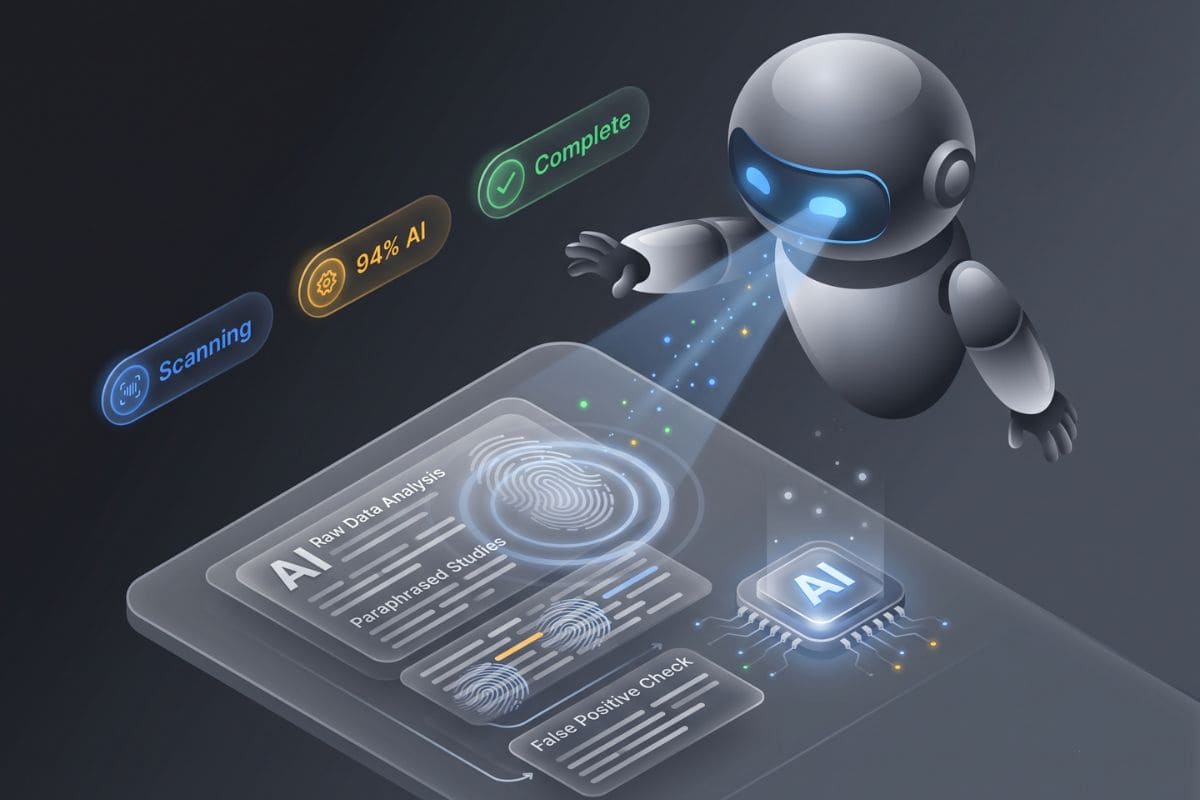
Type “best AI detector” into Google and you will get hundreds of tools, each claiming near-perfect accuracy on its own landing page. Then you actually use one, and it flags your grandmother’s birthday card as “87% AI.” Or worse, it waves through a fully AI-written essay without blinking.
If that sounds familiar, you are not alone. Frustrated users everywhere are asking the same question: is any of this accurate, or did I just pay for a glorified coin toss?
To cut through the noise, independent researchers, journalists, and academic institutions have started putting these tools through controlled, side-by-side testing. The results are eye-opening.
One widely cited fact from current research is that many popular detectors fail to catch AI content once it has been lightly paraphrased, missing as much as 60% of machine-generated text in some trials.
In this updated guide, we break down five major, data-driven studies and a handful of newer 2026 findings to see exactly where Undetectable AI stands in the rankings, and whether it actually lives up to its name.
Let’s dive in.
Key Takeaways
- Independent, third-party testing is the only reliable way to separate marketing claims from real-world performance, especially when it comes to hybrid and paraphrased content.
- Across five major studies, Undetectable AI’s accuracy consistently lands between 85% and 100%, placing it near the top of the industry.
- False positives are just as important as catching AI. A tool that flags honest human writing as “robotic” can do real damage, particularly to students and non-native English speakers.
- No single detector should be treated as a final verdict. The most reliable approach combines multiple tools, human judgment, and transparency about how a score was reached.
- Undetectable AI’s federated, consensus-based approach (checking a piece of text against several detection models at once) is what consistently separates it from single-algorithm competitors in independent testing, and its companion Humanizer and Watermark Remover tools give writers a way to close the gap between “AI-assisted” and “AI-flagged.”
What AI Detector Tests and Studies Actually Measure
When researchers run ai detector tests and studies, they are looking for far more than a simple pass or fail grade.
Accuracy, Sensitivity, and Specificity
Accuracy refers to a tool’s ability to correctly identify the origin of text across thousands of samples. Within that, researchers separate out sensitivity, which is how well a tool catches AI-written content, from specificity, which is how well it avoids falsely flagging human writing.
A detector can be great at one and terrible at the other, which is why a single “accuracy” percentage on a marketing page rarely tells the whole story.


Never Worry About AI Detecting Your Texts Again. Undetectable AI Can Help You:
- Make your AI assisted writing appear human-like.
- Bypass all major AI detection tools with just one click.
- Use AI safely and confidently in school and work.
Lab Conditions vs. Real-World Use
Most studies test a mix of content types: raw AI output, human-written essays, and “hybrid” text where a person has edited an AI draft to see if the tool can still catch the machine’s influence.
This matters because marketing claims are often based on lab conditions that do not reflect how people actually write. In a lab, a detector might catch a plain ChatGPT response every time.
Writers use different prompts, mix in their own edits, and run drafts through paraphrasing tools. Independent studies measure how detectors hold up against this kind of “adversarial” content, the same content designed to slip past them.
Why Results Vary So Much Between Tools
Every algorithm prioritizes different linguistic fingerprints, such as perplexity, which measures word choice randomness,, or burstiness, which looks at variety in sentence structure.
That is a big part of why the same essay can score “10% AI” on one tool and “80% AI” on another. Looking at results across multiple independent sources gives users a reliable baseline instead of a lucky guess.
Why Accuracy in AI Detection Actually Matters
Academic Integrity
In schools and universities, a single false accusation of AI use can derail a student’s academic career. High accuracy is non-negotiable here because the consequences of a mistake are permanent.
Reliable detection helps confirm that a student’s work reflects real intellectual effort, without letting a culture of suspicion take over the classroom.
If you want a closer look at how often this goes wrong, we have covered real cases of a student falsely accused by AI detectors and what to do if it happens to you.
Content Trust in Newsrooms and Publishing
For publishers, trust is the only currency that matters. A journalist who accidentally publishes AI-fabricated “quotes” or facts can damage their outlet’s reputation in a single afternoon.
Accuracy ensures that published information is grounded in verifiable human reporting, which is essential for maintaining a credible brand.
False Positives
A false positive unfairly penalizes a human author and chips away at trust in detection technology generally. When someone spends hours crafting an original piece only to have it labeled “robotic,” it is genuinely discouraging, and it can happen more often than most people realize.
Minimizing these errors is the primary goal for any team building a serious detection system. We break down exactly how these errors happen and how to avoid them in more detail, and if you are wondering whether the tools themselves can simply be wrong, that is worth reading too.
False Negatives
On the flip side, letting AI-generated content slip through unchecked can lead to grade inflation in schools or a flood of low-quality, repetitive content online. A tool that misses too many AI fingerprints is not much use to any gatekeeper trying to maintain editorial or academic standards.
Real-World Legal Impact
The stakes get even higher in the legal field. Courts have been sanctioning attorneys with increasing frequency for filing briefs that contain fabricated citations or invented case law, a problem widely referred to as AI hallucination.
In one recent case covered by Forbes, a federal judge removed attorneys from both sides of a lawsuit after AI-generated legal citations turned up in their filings, a sign that courts are losing patience with unverified AI use.
Legal teams increasingly rely on accurate verification tools to make sure every contract and pleading is backed by genuine, checkable authority.
How Independent Studies Validate AI Detector Claims
Independent studies act as the referee in a crowded, noisy market. While a company might advertise 99% accuracy on its homepage, third-party researchers run rigorous tests to see if those numbers actually hold up.
These studies typically use large, standardized datasets spanning everything from medical journals to creative short stories, so a tool’s performance can be judged across different niches rather than one narrow use case.
They also look past a single percentage, using metrics like the Area Under the Curve (AUC) and F1 Score to measure the balance between catching AI and avoiding false alarms.
This is the kind of needed quality check the entire industry benefits from, and it gives professionals in education and business a way to choose tools based on data instead of slick advertising.
Key AI Detector Studies and What They Found

Below are the most reliable ai detector tests and studies conducted by independent, third-party organizations that have put Undetectable AI and its competitors through real testing.
Study 1: PubMed Central and Indian Journal of Psychological Medicine
Study Title: How Sensitive Are the Free AI-detector Tools in Detecting AI-generated Texts? A Comparison of Popular AI-detector Tools
Authors: Kar SK, Bansal T, Modi S, Singh A
Published: Indian Journal of Psychological Medicine, archived by PubMed Central
Researchers tested ten free AI detection tools against a 500-word scientific article generated by ChatGPT 3.5. To raise the difficulty, they ran the text through QuillBot, Grammarly, and ChatGPT itself for paraphrasing, simulating the “stealth” techniques people use to hide machine authorship.
Undetectable AI’s Performance: The study found Undetectable AI was one of only three tools to achieve a flawless 100% detection rate. It correctly identified the original AI text and all three paraphrased versions, versions that successfully fooled other major detectors in the same test.
Study 2: A Widely Cited Tech Publication’s Multi-Round Detector Test
Study Title: Best AI Content Detector Testing Series
Author: David Gewirtz, a senior tech editor whose ongoing detector testing series has run for multiple years
This series has tested up to 11 different tools using distinct blocks of text, a mix of purely human-written samples and ChatGPT-generated ones, with a “pass” defined as a probability score above 70% for the correct origin.
Undetectable AI’s Performance: Undetectable AI has repeatedly landed among the small group of tools that correctly identify every human and machine-generated sample in the set. Reviewers have pointed to its “federated consensus” approach, checking multiple detection models at once, as the reason it tends to outperform tools built on a single algorithm.
Study 3: ReadWrite’s Hands-On Evaluation
Study Title: Best AI Detectors: Top-Performing Content Checkers
Author: James Jones, ReadWrite
This was an expert, hands-on evaluation focused on how well tools identify content from advanced models like GPT-4, Claude, and Gemini, analyzing syntax, structural patterns, and the ability to catch “mixed” or edited content.
Undetectable AI’s Performance: ReadWrite ranked Undetectable AI as the number one AI detector for professionals, citing an accuracy range of 85 to 95% and its ability to catch structural nuances that competitors like Winston AI and ZeroGPT missed on newer, 2026-era LLM output.
Study 4: The Independent’s Top AI Detectors Overview
Study Title: The Top 7 AI Detectors (Free and Paid)
Author: Devan Leos, The Independent UK
This review combined comparative analysis with real-world user feedback and outside ratings, specifically looking for tools that minimize false positives while keeping sensitivity high.
Undetectable AI’s Performance: The Independent verified a 95% detection accuracy rate for Undetectable AI, calling out its “multi-detector” view, which lets users cross-check results by seeing how other popular detection models would likely score the same text.
Study 5: 2026 Benchmark Against Newer Generative Models
Study Title: Real Test of Humanization and Detection Accuracy Source: Independent media benchmarking
Published: April 2026
This more recent study compared Undetectable AI’s latest model updates against newer generative engines, including GPT-5-class and Claude 3.5 output. It focused on how well the tool handled multimodal content and text that had been “humanized” to claim it was undetectable.
Undetectable AI’s Performance: The platform held its position as an industry standard, flagging 100% of the AI-generated samples in the set. Reviewers highlighted its speed, its no-account-required accessibility, and its ability to catch hidden AI watermarks that most basic scanners miss entirely.
The False Positive Problem Nobody Talks About Enough
Accuracy headlines get all the attention, but the false positive side of this story deserves just as much space, especially in 2026 as more schools and employers lean on these tools for real decisions.
This problem was first documented in a widely cited 2023 Stanford paper, which found that GPT detectors carried a real risk of unjust outcomes for non-native English writers, misclassifying more than half of TOEFL essays as AI-generated compared to a near-zero rate for US-authored essays in the same test. That concern has held up under more recent scrutiny, too.
University of Chicago Booth working paper stress-tested several leading commercial detectors across genres like resumes, novels, and product reviews, and found that false positive risk is still very real: an open-source baseline model misclassified human writing as AI-generated up to 78% of the time, and even the best-performing commercial tools, while far more reliable, were not immune to the same threshold trade-offs.
You can read a plain-language summary from Chicago Booth Review of the full study.
That is not a small margin of error. It is the difference between a confident, correct verdict and a student sitting across from a professor trying to prove their own essay is real.
It is also exactly the kind of gap that a “consensus” approach, cross-checking a single piece of text against several models before rendering a verdict, is designed to close, since one biased model is less likely to sway the outcome when it has to agree with several others.
If you are curious how this plays out on specific platforms, we have separate breakdowns on what AI detector Canvas actually uses, what AI checkers colleges rely on, and how one of the most talked-about tools stacks up in our GPTZero accuracy rate breakdown.
It is also worth noting that even outside of text detection, one recent Forbes analysis found overall detection accuracy for AI-generated media hovering barely above chance in some categories, a reminder that no corner of the AI detection industry, text included, has fully solved this problem yet.
That kind of honesty from outside researchers is exactly why academic standards are upheld instead of eroded, because institutions that actually read the research tend to build in human review rather than treating any single score as final.
Tips for Evaluating AI Detector Accuracy
- Use human judgment alongside tools: If a detector flags a piece but you personally know the author and trust their voice, the human read should usually carry more weight.
- Don’t trust a single test result: A tool might ace an essay about the Great Depression and fail on a technical coding document. Look for results across multiple genres before drawing conclusions.
- Compare multiple tools side by side: Platforms that show you the verdicts of other detectors, like Undetectable AI’s multi-detector view, are signaling confidence in their own logic.
- Test with different content types: Try a casual email, a formal report, and a creative story. A reliable tool should stay reasonably consistent regardless of tone or subject matter.
- Look beyond percentage scores: A “90% Human” score is more useful than a binary pass or fail, since it acknowledges that AI detection is inherently probabilistic, not absolute.
- Understand the tool’s limitations: No detector is 100% accurate. Treat results as a guide for human review, not an unquestionable authority. For a deeper look at how accurate AI checkers really are in practice, this breakdown walks through real examples.
- Prioritize transparency over claims: Choose tools that explain how they reached a verdict. Knowing whether a flag came from sentence structure, repetitive phrasing, or something else is essential for an editor or teacher making a final call. If you want the technical side of this, we cover how AI detectors actually work under the hood.
How Undetectable AI Performs in Real-World Use
In practical, day-to-day testing, Undetectable AI has shown a consistent ability to catch “stealth” AI content, text that has been manually tweaked to sound more human.
While many tools lean on basic word-frequency analysis, this platform digs into the deeper linguistic patterns of a piece of writing.
That cross-tool consistency is a big reason it has become a favorite among university faculty who need academic standards upheld in a world where AI assistance is one click away for every student.
User feedback also consistently points to one thing: the tool is comparatively good at avoiding the false positives that plague higher-sensitivity competitors. Writers who use English as a second language have specifically reported that Undetectable AI feels “fairer” than alternatives, since it does not automatically treat simple or structured grammar as a red flag for machine authorship.
That balance of sensitivity and fairness is exactly the gap the Stanford research above identified as an industry-wide weak spot, and it is the gap this platform has worked to close.
How Undetectable AI Improves Content Quality
Catching AI is only half the equation. The rest of the platform is built to improve the overall readability, originality, and impact of your writing, so your content holds up under scrutiny and reads well for actual human beings.
AI Detector
The flagship AI Detector evaluates structure, syntax, and stylistic markers to identify machine-generated patterns from models like GPT-4o, Claude, and Gemini. Instead of a blunt pass-or-fail, it delivers a “consensus” score by cross-referencing multiple detection algorithms at once.
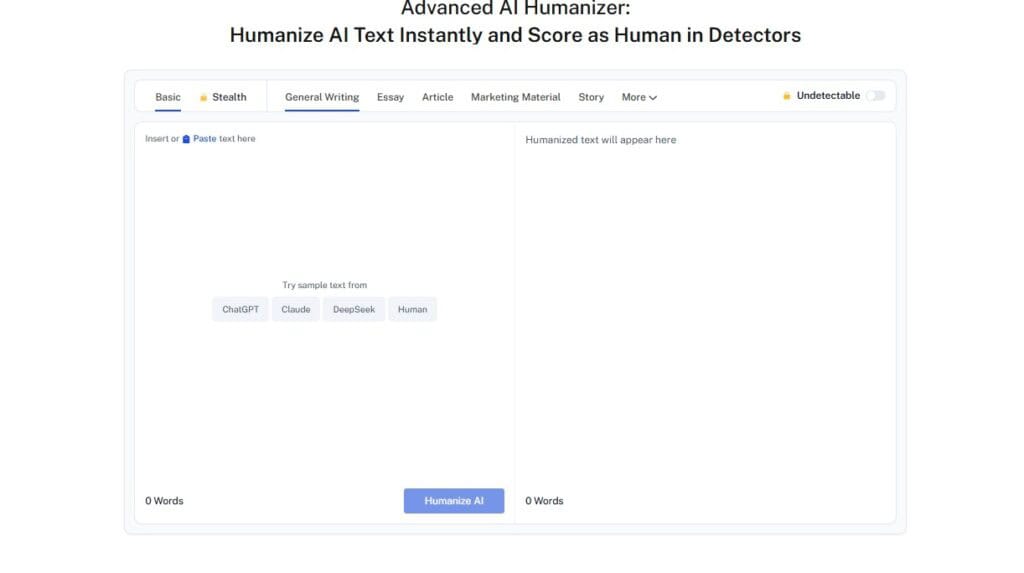
AI Humanizer
Our AI Humanizer reworks the actual syntax and rhythm of sentences to mimic the natural burstiness of human speech. That means you can use AI to build a rough outline or draft while making sure the final version carries a genuinely human voice that resonates with readers.
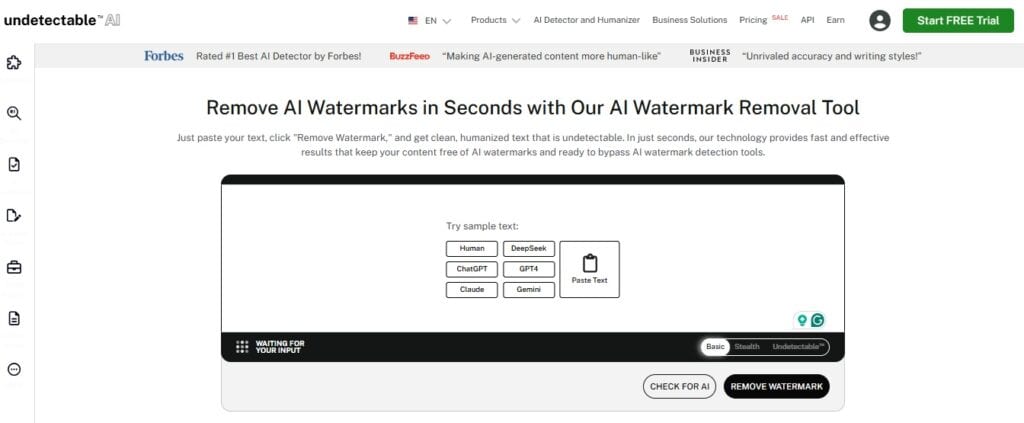
AI Text Watermark Remover
Modern AI generators often leave behind invisible digital watermarks, statistical patterns that make text easy for detectors to trace back to a machine.
Our AI Text Watermark Remover clears these hidden identifiers without altering your meaning, keeping your draft clear and far less traceable by security filters.
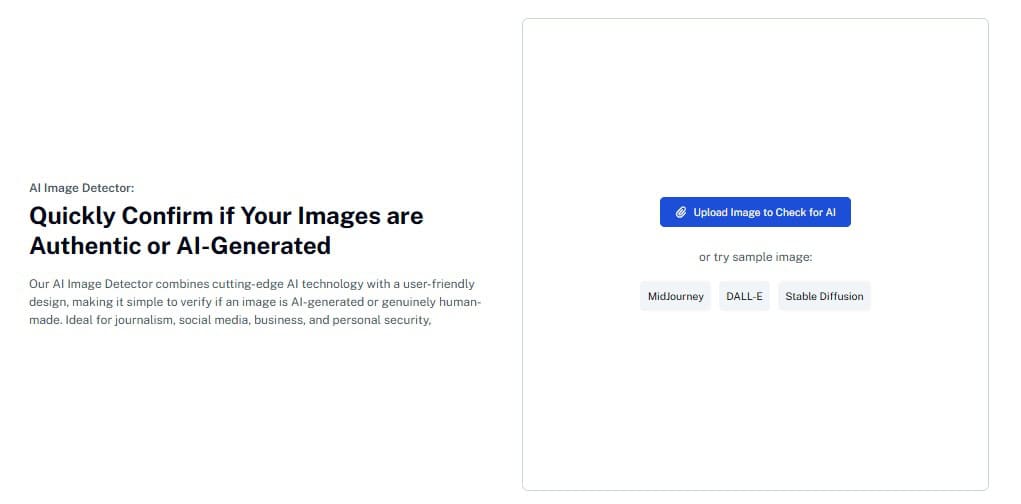
AI Image Detector
With generative art and deepfakes becoming harder to spot by eye, our AI Image Detector analyzes pixel-level content to flag manipulated or synthetic media, helping you verify the authenticity of visual evidence in real time.
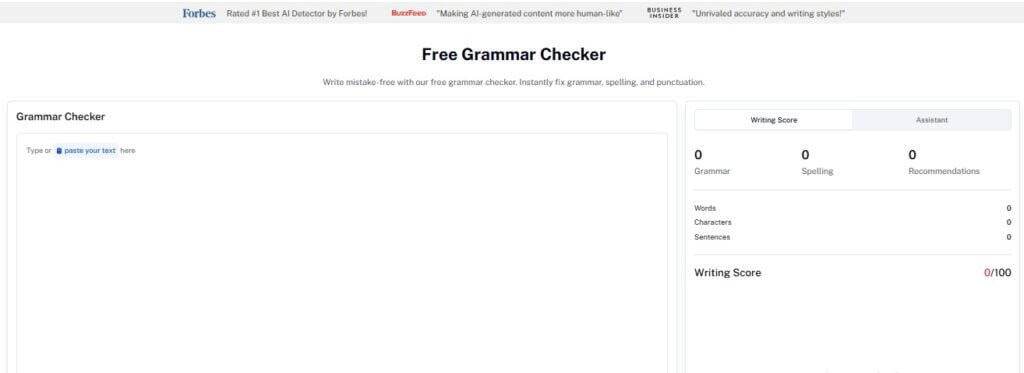
Grammar Checker
Our Grammar Checker is tuned for the specific quirks of AI-assisted writing. It goes beyond basic spelling and grammar fixes to preserve your intended meaning while making the final piece read as more polished and engaging for a professional audience.
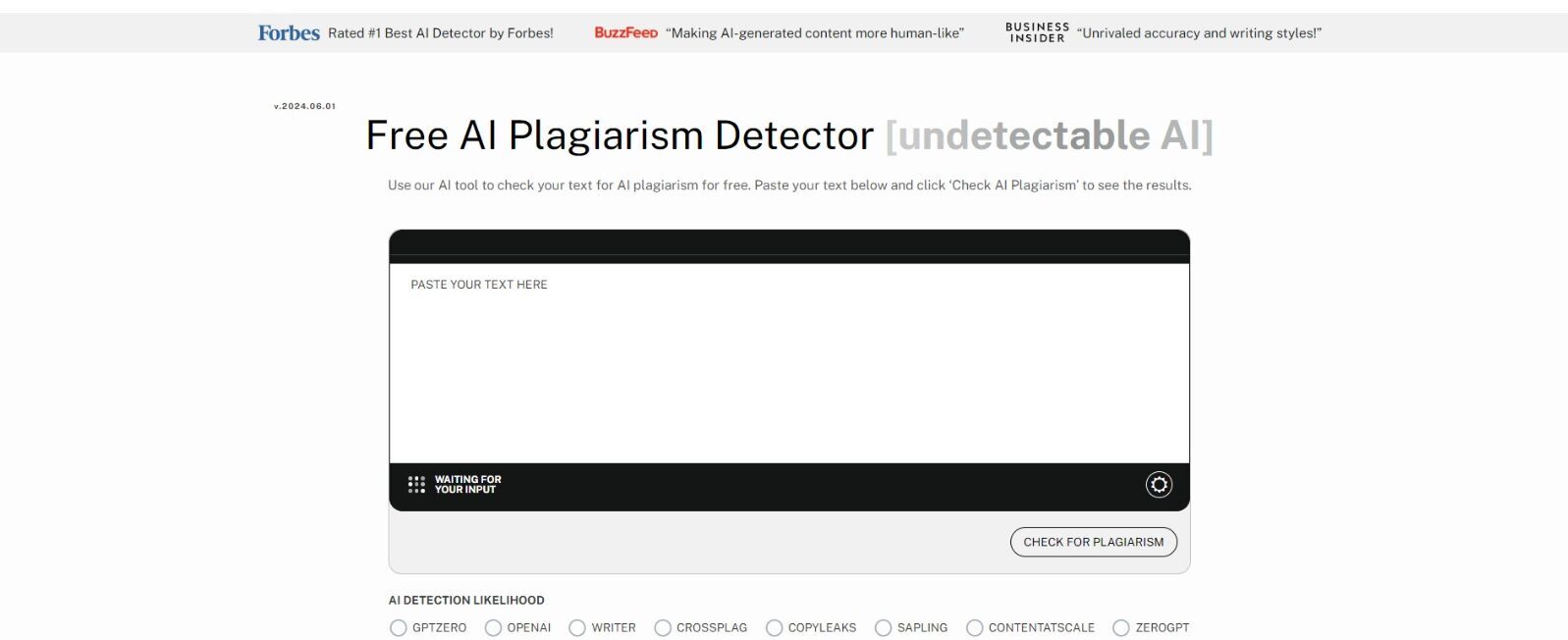
AI Plagiarism Checker
Our AI Plagiarism Checker uses a dual-layer approach, flagging both traditional copy-paste plagiarism and AI-assisted paraphrasing, so your content stays genuinely original and safe from the negative SEO effects of duplicate or repurposed material.
FAQs
How can I tell if an AI detector is actually accurate?
Look for independent studies from credible outlets rather than a tool’s own marketing page. If a detector consistently ranks in the top few across several different tests, that consistency is a much stronger signal than any single accuracy claim.
Why do some detectors give different scores for the same text?
Each tool weighs different signals. One might lean on word choice, another on sentence-length variation. A consensus-based tool like Undetectable AI, which checks a piece against several models at once, tends to produce more stable results than a single-algorithm detector.
Can AI detectors catch content from the newest models, like GPT-4o or GPT-5-class tools?
Only if the detector is updated frequently. Tools trained on older datasets tend to struggle against the newest, more human-sounding outputs, which is why the studies above specifically re-test detectors against current-generation models.
What is the “multi-detector” feature?
It is a feature unique to Undetectable AI that shows a consensus view, visualizing how several different major detectors would likely score your text, so you are not relying on one model’s opinion alone.
Does a high AI score always mean someone cheated?
No. It means the text shares statistical patterns with machine-generated writing, nothing more. Treat the score as a prompt for a human conversation, not a final verdict, especially given how often false positives show up for non-native English writers and technical or formulaic writing styles.
Is it possible for a detector to be both highly accurate and prone to false positives?
Yes, and this is one of the more counterintuitive findings across these studies. A tool can correctly catch nearly all AI-generated text (high sensitivity) while still misfiring on a meaningful share of human writing (low specificity for certain groups).
That is why looking at both numbers, not just one headline accuracy figure, matters so much when comparing tools.
Discover how our AI Detector and Humanizer can help—find them in the widget below!
Final Thoughts
Across every major independent study reviewed here, Undetectable AI holds its position as an industry standard for AI detection, with a track record that consistently outpaces single-model competitors.
That said, no tool in this space, including this one, is immune to the false positive risks the Stanford research and others have documented, which is exactly why pairing any detector with human judgment still matters in 2026.
By combining a sophisticated, consensus-based AI Detector with a powerful Humanizer, Watermark Remover, and Plagiarism Checker, Undetectable AI offers a fuller toolkit for navigating the realities of machine-generated text, rather than a single blunt instrument.
Trusting the data behind these studies, and staying honest about their limits, means your work, whether it lands in a newsroom, a courtroom, or a classroom, will hold up under real scrutiny.