
College essays are some of the hardest work you’ll do—not because you don’t have ideas ready to go, but because you’re expected to stretch a single thought into a thousand words.
So you start turning “use” into “utilize” and before you know it, you’re replacing “because” with “due to the fact that.”
Congratulations! You’ve just discovered circumlocution, not fluff, but the ancient art of writing something in the longest (college-professor-acceptable) way possible.
Yet unlike “fluffing” it up, circumlocution isn’t only something students do when they’re scrambling to add more words.
It’s also an intentional rhetorical device that many writers and politicians use quite a lot.
Sometimes it’s intentional and clever. Other times, it’s accidental and makes your writing sound like a Terms and Conditions agreement.
This guide will help you understand what circumlocution actually is, when it’s useful, and how to avoid accidentally turning your prose into a bureaucratic nightmare.
Key Takeaways
- Circumlocution means using more words than necessary to express an idea
- It can be a purposeful literary device or an unintentional writing flaw
- It’s common in everyday speech when we forget words or try to be polite
- It’s useful for creative writing, diplomacy, and emphasis
- It’s problematic when it makes writing unclear or pretentious
- Tools like AI detectors can help identify overly complex phrasing
What Is Circumlocution?
Circumlocution can serve various purposes beyond adding extra words.
Circumlocution Definition
Circumlocution is the use of many words where fewer would do.
It’s talking around a point instead of getting straight to it. The word itself comes from Latin: “circum” (around) and “locutio” (speech).


Never Worry About AI Detecting Your Texts Again. Undetectable AI Can Help You:
- Make your AI assisted writing appear human-like.
- Bypass all major AI detection tools with just one click.
- Use AI safely and confidently in school and work.
So, quite literally, it means “talking around.”
Think of it like taking the scenic route when you could’ve just driven straight down Main Street.
Sometimes the scenic route is beautiful and worth it, while other times you’re just wasting gas.
In rhetoric and writing, circumlocution can be intentional or accidental.
Intentional circumlocution serves a purpose: maybe you’re being tactful, creating a specific mood, or emphasizing something through elaboration. Accidental circumlocution just makes your writing bloated.
Circumlocution Examples
Let’s look at some real examples to see how this works in practice.
Example 1: The Word Count Stretch
- Circumlocution: “In today’s modern society, we find ourselves in a position where we must consider the fact that…”
- Direct: “Today, we must consider that…”
Example 2: Corporate Speak
- Circumlocution: “We are currently experiencing a temporary suspension of normal operational activities.”
- Direct: “We’re closed right now.”
Example 3: Euphemistic Circumlocution
- Circumlocution: “He’s been let go as part of a workforce optimization initiative.”
- Direct: “He was fired.”
Example 4: Literary Circumlocution (Intentional)
- Circumlocution: “The bright celestial body which illuminates our days and warms our planet.”
- Direct: “The sun.”
Notice how the former example actually sounds kind of nice? That’s because it’s using circumlocution as a stylistic choice.
The others just sound like someone’s trying too hard.
Why People Use Circumlocution

People use circumlocution for various reasons, and not all of them are negative.
Understanding the motivation helps you decide when it’s appropriate.
- Politeness and Tact: Sometimes being direct is rude. “Your idea won’t work” is less tactful than “I wonder if we might consider some alternative approaches.” The second version is circumlocution, but it’s also just… nicer.
- Emphasis and Drama: Writers use circumlocution to slow readers down and draw their attention. When Shakespeare writes “the undiscovered country from whose bourn no traveler returns” instead of just “death,” he’s creating atmosphere.
- Forgetting Words: This one’s relatable. Ever called something “that round thing you use to eat soup” because your brain blanked on the word “spoon?” That’s circumlocution born from necessity.
- Sounding Smart: This is the dangerous one. People often think that more words equals more intelligence. It typically doesn’t. Your college professor can smell those attempts from a mile away.
- Avoiding Responsibility: Politicians and corporations love this one. “Mistakes were made” is a circumlocution that avoids saying “I made a mistake.”
- Creating Humor: Comedians use absurdly roundabout descriptions all the time. It’s funny to call a cat “a small, fluffy, judgmental mammal that occasionally tolerates your presence.”
How Circumlocution Shows Up in Everyday Speech
You probably use circumlocution every single day without realizing it.
Here’s where it commonly appears:
- When You Can’t Remember a Word: “Can you hand me that thing that… you know… the thing that makes the bread brown and hot?” You mean the toaster. Your brain knows you mean the toaster. But in the moment, “thing that makes bread brown and hot” is all you’ve got.
- In Awkward Situations: “I was wondering if perhaps you might possibly consider the option of maybe turning down the volume just a little bit?” Translation: “Please turn that down.”
- When Giving Bad News: Nobody says “Your dog died.” They say, “I’m so sorry, but Fluffy has passed away,” or “is no longer with us,” or “crossed the rainbow bridge.” These are all circumlocutions that soften reality.
- In Customer Service: “I’m afraid that item is currently unavailable” sounds better than “We don’t have it.” It means the same thing, but the roundabout version feels more professional.
- When Bragging (But Trying Not To): “I was fortunate enough to receive recognition for my modest contributions to the project,” beats “I won an award,” but just barely. This is circumlocution disguised as humility.
The key thing to understand is that everyday circumlocution is often completely fine to use.
We’re social creatures, and sometimes taking the long way around makes communication smoother.
Types of Circumlocution
Circumlocution isn’t one-size-fits-all.
There are different varieties, and recognizing them helps you use this device more effectively.
- Euphemistic Circumlocution: This is when you use roundabout language to avoid saying something uncomfortable. “Passed away” instead of “died.” “Let go” instead of “fired.” “Pre-owned” instead of “used.” These are all euphemisms achieved through circumlocution.
- Periphrasis: This is the fancy term for describing something by its characteristics instead of using its name. “The Bard of Avon” for Shakespeare. “The Big Apple” for New York. “The beautiful game” for soccer. It adds color to your writing.
- Pleonasm: This is redundant circumlocution, where you say the same thing twice with different words. “Free gift.” “Past history.” “Future plans.” “End result.” Each of these could lose a word without losing meaning.
- Verbiage: This is just straight-up wordiness. Unnecessary filler that doesn’t add meaning or style. “At this point in time” instead of “now.” “In spite of the fact that” instead of “although.” This is the type you want to avoid.
- Tautology: Similar to pleonasm, but more to do with logic. It’s saying the same thing in different words within the same statement. “It is what it is” is a tautology. So is “either it will rain or it won’t rain.” Technically true, but completely unhelpful.
Circumlocution in Literature and Storytelling
Writers use circumlocution deliberately all the time, and when done well, it’s actually pretty great.
- Building Atmosphere: Gothic writers love circumlocution. Instead of saying “the house was scary,” they’ll spend a paragraph describing “the looming edifice with its darkened windows that seemed to watch like malevolent eyes.” That’s circumlocution at its finest.
- Character Voice: Some characters talk in circles. It reveals personality. A nervous character might say, “Well, I mean, I was thinking that maybe, if you’re not busy, we could possibly…” instead of just asking someone out. That circumlocution says something about who they are.
- Poetry and Kennings: Old English poetry used kennings, which are basically poetic circumlocutions. “Whale-road” for ocean. “Sky-candle” for sun. “Battle-sweat” for blood. These create imagery while being technically roundabout.
- Mystery and Revelation: Sometimes authors use circumlocution to delay revealing information. They’ll describe something in a roundabout way to build suspense before finally naming it, keeping readers engaged.
- Satire and Social Commentary: Writers use excessive circumlocution to mock bureaucratic language or pretentious speech. George Orwell did this brilliantly in his essay “Politics and the English Language.“
The common thread? In literature, circumlocution serves the story. It’s not accidental wordiness but a choice that enhances meaning, mood, or character.
How to Identify Circumlocution in a Sentence
Spotting circumlocution is easier once you know what to look for.
Here are the telltale signs:
- Unnecessarily Complex Phrases: If you can replace a phrase with a single word without losing meaning, that’s probably circumlocution. “At this point in time” becomes “now.” “Due to the fact that” becomes “because.”
- Passive Voice Overload: “It has been decided that changes will be made” is both passive and circumlocutionary. “We decided to make changes” is cleaner.
- Redundant Modifiers: “Past experience,” “future plans,” “completely unanimous,” and “end result” all contain unnecessary words. The modifier doesn’t add information.
- Nominalizations: This is when you turn a simple verb into a noun phrase. “Make a decision” instead of “decide.” “Give consideration to” instead of “consider.” “Reach a conclusion” instead of “conclude.”
- Hedging Language Stacks: One hedge is fine. Multiple hedges become circumlocution. “I think that it might possibly be the case that perhaps we should consider maybe changing this,” is hedging taken too far.

Here’s where AI tools can help. Undetectable AI’s AI Detector is designed to flag overly mechanical or unnecessarily complex phrasing.
While it’s primarily used to identify AI-generated text, it’s also surprisingly good at catching accidental circumlocution.
The tool highlights sections in which your writing is too formulaic or artificially complex, which often overlap with circumlocutionary patterns.
If your detector flags a section, ask yourself: Am I actually communicating here, or just filling space? Could this be simpler? Is the complexity serving a purpose?
Common Mistakes Learners Make
Everyone learning to write makes these circumlocution mistakes. Recognizing them is the first step to fixing them.
- Mistaking Length for Quality: New writers often think that more words equal better writing. They’ll write “utilize” instead of “use” and feel sophisticated. They’re wrong. Good writing is clear writing.
- Over-explaining Simple Concepts: You don’t need to say “the activity of running, which involves moving your legs rapidly in a forward motion.” Just say “running.” Your readers know what running is.
- Thesaurus Abuse: Using a thesaurus is fine. Using it to replace every simple word with a complex synonym creates unnatural circumlocution. Nobody “perambulates” to the store. They walk.
- Padding for Word Count: We get it. The essay needs to be 2,000 words, and you’ve got 1,600. But padding with circumlocution makes your writing worse, not longer. Add actual content instead.
- Imitating Academic Writing Badly: Academic writing uses more complex structures, but good academic writing is still precise. Bad academic writing is just circumlocution dressed up in scholarly clothing.
- Forgetting Your Audience: Sometimes circumlocution is appropriate for your audience. Sometimes it’s not. Writing a children’s book? Keep it simple. Writing legal documents? Some circumlocution is actually expected. Know your context.
- Not Reading Aloud: Circumlocution sounds even worse when you read it aloud. Your ear catches what your eye misses. If you stumble reading your own sentence, it’s probably too convoluted.
How to Use Circumlocution Purposefully in Your Writing
Okay, so we’ve established that circumlocution isn’t always a bad thing.
Here’s how to use it intentionally and effectively.
- For Character Development: Give your verbose characters appropriately roundabout dialogue. A pretentious academic might say “I find myself unable to concur with your assessment” instead of “I disagree.” That’s characterization.
- To Create Rhythm: Sometimes the longer version sounds better. Poetry and literary prose often prioritize sound over brevity. If the circumlocution creates a rhythm you want, keep it.
- For Emotional Impact: Delaying the point can build tension. Horror writers do this constantly. They’ll describe something scary in elaborate, long-winded terms before revealing what it actually is.
- In Dialogue for Realism: People don’t always speak efficiently. We ramble. We hedge. We talk around things. Realistic dialogue includes some circumlocution.
- To Emphasize Through Repetition: Saying something in multiple ways can bring home its importance. Political speeches use this technique. “We shall fight on the beaches, we shall fight on the landing grounds, we shall fight in the fields…” You get it.
- When Being Tactful: Professional and formal contexts often require diplomatic language. “We’re pursuing other candidates” is more tactful than “You didn’t get the job.”
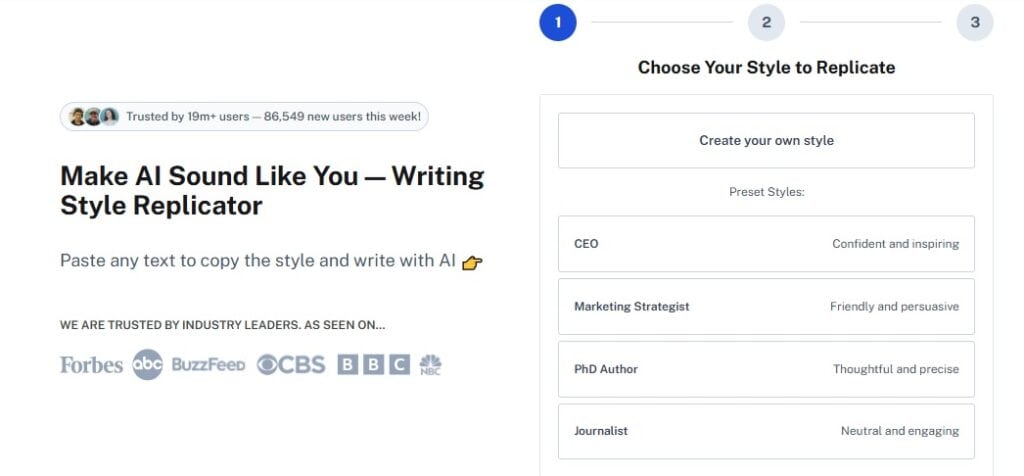
Tools can help you experiment here. Undetectable AI’s Writing Style Replicator lets you try different approaches to the same sentence.
You can test a direct version against a more elaborate, circumlocutionary version and see which better serves your purpose.
Maybe the roundabout phrasing actually does add elegance. Or maybe it just sounds pretentious. The tool helps you compare options.
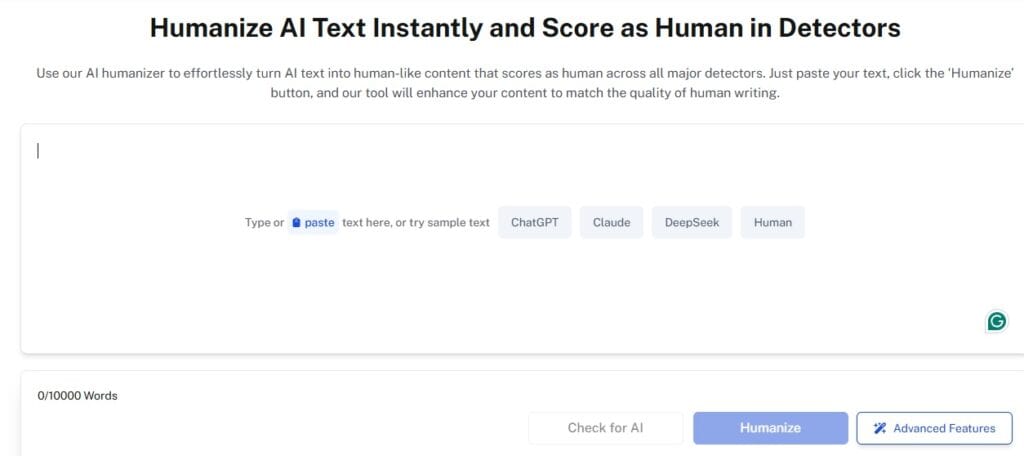
Once you’ve drafted with intentional circumlocution, Undetectable AI’s AI Humanizer becomes invaluable.
It refines your writing to avoid awkward or forced circumlocution while preserving the intentional instances.
The humanizer distinguishes between “elaborately descriptive” and “unnecessarily wordy,” helping you strike the right balance.
It’s particularly good at identifying parts where circumlocution feels robotic rather than natural.
The key is being deliberate. Consider whether something serves your purpose, or whether you’re just avoiding getting to the point.
Try out our AI Detector and Humanizer right below!
No More Verbose Vibes
Circumlocution gets a bad rap, but it’s not inherently evil.
Like most writing techniques, it’s all about context and intention.
Padding your essay to hit a count, corporate-speak that obscures meaning, or thesaurus overkill are all instances of bad circumlocution.
Thoughtful circumlocution is different. It adds personality to characters, creates atmosphere in descriptions, and lets you be tactful when directness would be cruel.
Useful circumlocution serves your reader. Useless circumlocution serves your word count..
If you’re serious about improving your writing and learning to use techniques like circumlocution effectively, Undetectable AI offers a complete suite of tools to help.
The AI Detector identifies complex phrasing, the Writing Style Replicator lets you experiment with different approaches, and the AI Humanizer refines everything into natural, engaging prose.
Whether you’re working on an essay, a story, or professional content, these tools help you make intentional choices rather than accidental mistakes.
Now go forth and be deliberately wordy when it serves you. And delightfully concise when it doesn’t.