
Is ai content detection always accurate? How exactly does it work? These are questions that everyone from students to business owners should have answers to in 2026.
Recent advancements in artificial intelligence have led to the creation of incredibly realistic AI-generated content that blurs the line between machine and man.
While this has opened up new possibilities in various industries, it also presents a massive challenge in distinguishing between human-generated and AI-generated content.
As an industry-leading product, Undetectable AI has proven that machine-written text can indeed be virtually indistinguishable from human prose.
In this guide, we will investigate the process of identification, exploring the techniques, detector tools, and the future of content authenticity.
Let’s dive in.
Key Takeaways
- AI detection is probabilistic rather than definitive, meaning tools calculate the likelihood of a machine origin based on mathematical patterns.
- Accuracy remains a significant hurdle for the industry because false positives often flag non-native English speakers or highly formal human writers.
- Hybrid strategies are the most effective for identifying synthetic text, combining automated software with human editorial oversight and fact-checking.
- The arms race between AI and detection is constant as generative models evolve to mimic human “imperfections” more effectively every day.
- Transparency is becoming more valuable than policing since many organizations now focus on the quality and helpfulness of content rather than its technical origin.
What Is AI Content Detection and Why It Matters
AI content detection is the process of using specialized software to analyze text and determine if it was produced by a Large Language Model (LLM) like ChatGPT or Claude.
This matters because it touches on the core of digital trust.
In education, it helps maintain academic integrity; in journalism, it ensures that reporting is based on human observation; and in search engine optimization, it helps platforms identify low-effort spam that might clutter the web.


Never Worry About AI Detecting Your Texts Again. Undetectable AI Can Help You:
- Make your AI assisted writing appear human-like.
- Bypass all major AI detection tools with just one click.
- Use AI safely and confidently in school and work.
As we move deeper into 2026, the ability to identify synthetic content has become a matter of security.
From deepfake articles to automated misinformation campaigns, knowing the source of information is essential for a functional society.
Detection tools act as a first line of defense, helping users verify that the “voice” they are listening to is backed by human experience and accountability.
How AI Content Detection Tools Actually Work
To understand how a detector flags a sentence, you have to realize that these tools do not “read” for meaning like a person does. Instead, they perform a deep statistical analysis of the text’s structure.
Pattern Recognition and Predictability
AI models are designed to predict the most likely next word in a sequence. This leads to a high level of mathematical “smoothness” in the text.
Detectors look for this lack of friction; if every word is the most statistically probable choice, the tool identifies it as a machine-generated pattern.
Perplexity and Burstiness Explained Simply
Perplexity measures how “surprising” the text is to a model. Human writing is often high perplexity because we make unexpected word choices.
Burstiness refers to the variation in sentence length and structure. Humans write in bursts—a long, flowery sentence followed by a short, punchy one. AI tends to be very uniform, creating a flat, rhythmic “hum” that detectors quickly identify.
Language Modeling Signals
Detectors often use a “mirror” version of the AI they are trying to catch.
By running a passage through a detection model, the software can see if the text aligns perfectly with the probability maps of a generator. If the text follows the exact path a machine would take, it triggers a high detection score.
Machine Learning Classifiers Behind Detection
Most modern tools use “classifiers” that have been trained on millions of examples of both human and AI text. These classifiers learn to spot the tiny, invisible differences in how humans and machines use function words like “the,” “it,” or “is.”
Over time, these models become highly sensitive to the subtle “stiffness” of synthetic prose.
Why Detection Results Are Probabilities, Not Certainties
It is vital to understand that an AI detector does not provide a “Yes” or “No” answer. Instead, it provides a probability score, such as “85% likely to be AI.”
Because human writing can sometimes be predictable and formal, and AI writing can be tweaked to be chaotic, these tools can only offer an educated guess based on current data.
Common Signs of AI-Generated Content
While software is helpful, the human eye can often spot “telltale” signs of machine origin if you know what to look for.
- Overly Polished but Generic Language: AI often writes in a way that is grammatically perfect but completely devoid of personality or unique “flavor.”
- Repetitive Sentence Structures: Machines often start multiple sentences in a row with the same word or use the exact same length for every sentence in a paragraph.
- Lack of Personal Experience or Specific Detail: An AI can describe a concept, but it cannot share a specific anecdote about a mistake it made or a unique sensory detail from a real-life event.
- Predictable Paragraph Flow: AI-generated content usually follows a very strict “Introduction, Point A, Point B, Point C, Conclusion” format without the organic wandering of human thought.
- Vague Transitions and Safe Conclusions: Look for phrases like “In conclusion,” “It is important to note,” or “Furthermore” used in a mechanical way that doesn’t add real value to the narrative.
Most Popular AI Content Detection Tools Today

Several tools have emerged as the leaders in the space, each offering different strengths for various types of users.
Undetectable AI
Undetectable AI is unique because it offers a multi-model approach. Instead of relying on one single algorithm, its free detector combines the logic of over seven different detection models into one single interface.
This gives users a more “broad” view of how their text might be perceived by different systems across the web.
Turnitin AI Detection
Turnitin is the dominant force in the academic world. Its tool is specifically tuned to find AI in student essays and research papers.
It is widely used by universities globally, though it has faced criticism for occasionally flagging original human work as machine-generated.
GPTZero
Originally created as a thesis project at Princeton, GPTZero was one of the first tools to gain mainstream popularity. It is known for its “Perplexity” and “Burstiness” scores, which help users see the exact mathematical reasons why a piece of text feels “robotic.”
Copyleaks
Copyleaks is favored by businesses and enterprises because of its high accuracy and its ability to detect “paraphrased” plagiarism. It is particularly effective at identifying when someone has taken AI text and made minor manual changes to try and hide it.
Originality.ai
This tool is marketed primarily toward web publishers and SEO professionals. It is designed to be highly sensitive, often flagging even small amounts of AI assistance. It is a favorite for those who need to ensure that the content they are buying from freelancers is 100% human-authored.
How to Check AI Content Effectively (Step-by-Step Workflow)
Knowing how detection works is one thing. Applying it properly is what makes the difference. If you rely on a single tool or a quick scan, you are more likely to get misleading results.
A structured approach helps you see patterns, reduce errors, and make better decisions about your content.
Here is a simple workflow you can follow to check AI content more effectively:
Step 1: Run text through multiple detectors (not just one)
Start by testing your content across several AI detection tools instead of relying on a single platform. Each detector uses its own model, dataset, and scoring system, which means results can vary significantly.
Running your text through multiple tools gives you a broader perspective and reduces the risk of depending on a false positive or false negative.
For example, one tool might flag your content as highly likely AI, while another may consider it mostly human.
These differences are valuable signals, not confusion. The goal here is not to find a perfect answer but to gather enough data points to form a more balanced view of your content’s origin.
Step 2: Compare probability scores (look for consistency)
Once you have results from multiple detectors, the next step is to compare the probability scores. Look for patterns rather than focusing on a single number.
If most tools show a high likelihood of AI, there is a stronger chance your content contains machine-like patterns.
On the other hand, if results are mixed, it may indicate that your text sits in a gray area. Consistency across tools is more important than any individual score.
Pay attention to how close the percentages are and whether they lean in the same direction. This helps you move away from guesswork and toward a more informed interpretation of the data.
Step 3: Manually review for human signals (voice, specificity, variation)
Detection tools are helpful, but they cannot fully replace human judgment. After reviewing the scores, read the content yourself with a critical eye.
Look for signs of real human writing such as a clear voice, unique phrasing, and specific details that feel grounded in experience.
Check if the sentences vary in length and rhythm or if they feel too uniform. Notice whether the content includes original insights or if it stays overly safe and generic. Human writing often has small imperfections and personality, while AI tends to sound polished but flat.
This step helps you validate or challenge what the tools are telling you.
Step 4: Cross-check facts and sources
AI-generated content can sometimes include outdated, vague, or even incorrect information. That is why fact-checking is a key part of the process.
Go through the main claims in the content and verify them using reliable sources. Look for specific data points, references, or examples that can be confirmed.
If the content makes broad statements without backing them up, that is a red flag. This step not only helps you detect possible AI involvement but also improves the overall quality and credibility of your content.
Even human-written drafts benefit from this level of review, so it is always worth the extra effort.
Step 5: Revise using human editing or humanization tools
After gathering insights from tools and manual review, refine the content to improve its quality and authenticity. This can involve rewriting sections, adding clearer transitions, or introducing more natural variation in sentence structure.
You can also use humanization tools to adjust tone and flow, but these should support your editing, not replace it. Focus on making the content sound like something a real person would say, with a consistent voice and purposeful wording.
The goal is not just to pass detection but to create content that feels engaging, credible, and genuinely useful to the reader.
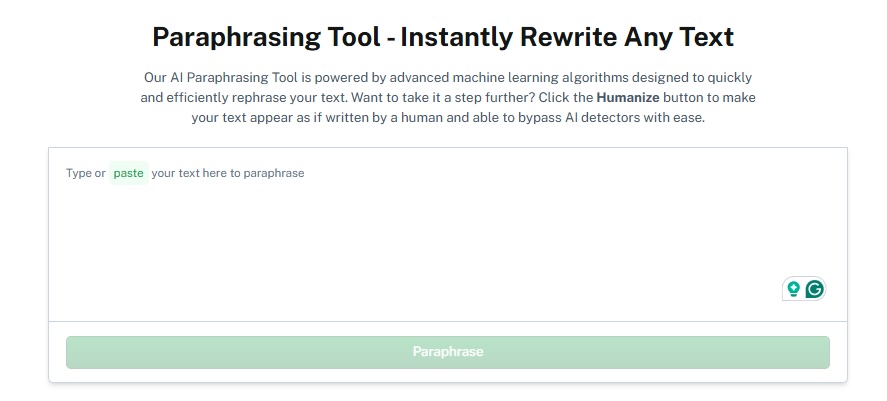
Our Undetectable AI’s Paraphrasing Tool helps rework rigid or repetitive phrasing into more natural, human-sounding language that is less likely to trigger detection patterns.

Also, Undetectable AI’s AI SEO Content Writer helps create structured drafts that are easier to review, fact-check, and refine for both quality and authenticity.
The Accuracy Problem: Can AI Content Detection Be Trusted?
The most controversial aspect of the industry is the question of reliability. While detection tools are improving, they are far from perfect, and their errors can have real-world consequences.
False Positives on Human Writing
A “false positive” occurs when a tool incorrectly identifies human writing as AI. This often happens with highly structured writing, such as legal documents, scientific reports, or even the Bible. This has led to many cases of students being wrongfully accused of cheating.
False Negatives on AI Content
A “false negative” happens when AI-generated text passes as human.
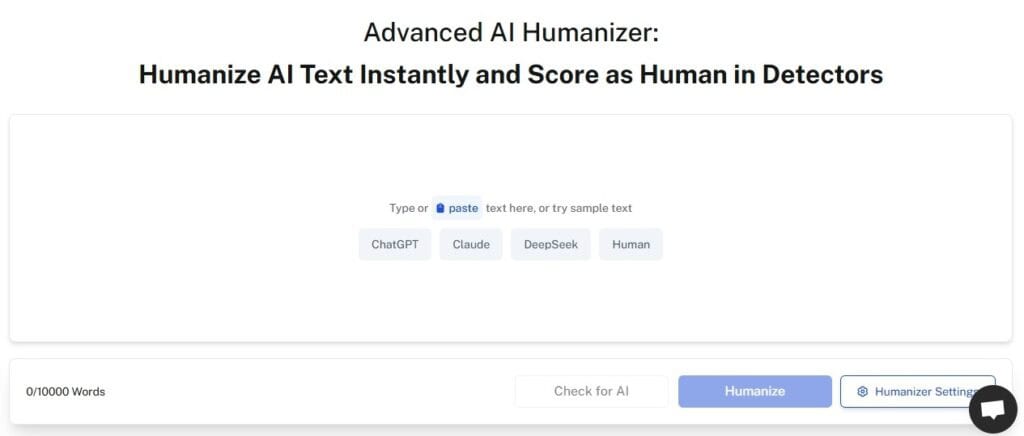
With tools like the Undetectable AI’s AI Humanizer, it is now possible to rewrite machine text so that it mimics the complexity and randomness of human prose, effectively bypassing almost all current detectors.
Bias Against Non-Native English Writers
Research has shown that AI detectors are more likely to flag the writing of non-native English speakers.
Because these writers often use more formal, less varied vocabulary, their work naturally mirrors the statistical patterns that detectors look for, leading to unfair biases in academic and professional settings.
Who Uses AI Content Detection (And Why)
The adoption of these tools is widespread, but the motivations vary depending on the industry.
| User Group | Primary Goal | Why Results Often Vary |
| Educational Institutions | Prevent academic dishonesty and cheating. | Academic writing is naturally formal, which confuses many basic detectors. |
| Content Marketing Teams | Ensure content is “helpful” and ranks well in search. | Different tools prioritize different SEO signals and keyword densities. |
| Publishers and Media | Maintain brand authority and human voice. | Journalism often uses short, punchy sentences that can look like “low burstiness” to AI. |
| Recruiters | Filter out mass-produced, AI-written cover letters. | Professional resumes use standardized templates that machines mimic perfectly. |
How Undetectable AI Helps Improve Human-Like Writing
While detection is one side of the coin, the other is “humanization.” Undetectable AI provides a suite of tools that help writers use AI responsibly while ensuring their final output feels authentic.
Reducing Predictable AI Patterns
The software analyzes your draft and identifies the “machine-like” sequences that would normally trigger a flag. It then intelligently reorders and rewords these sections to create a more natural flow.
Enhancing Natural Flow and Voice
By utilizing the AI Humanizer, writers can inject the “burstiness” and linguistic variety that machines usually lack. This results in text that is not just “undetectable,” but genuinely more engaging for the human reader.
Refining Tone and Sentence Variation
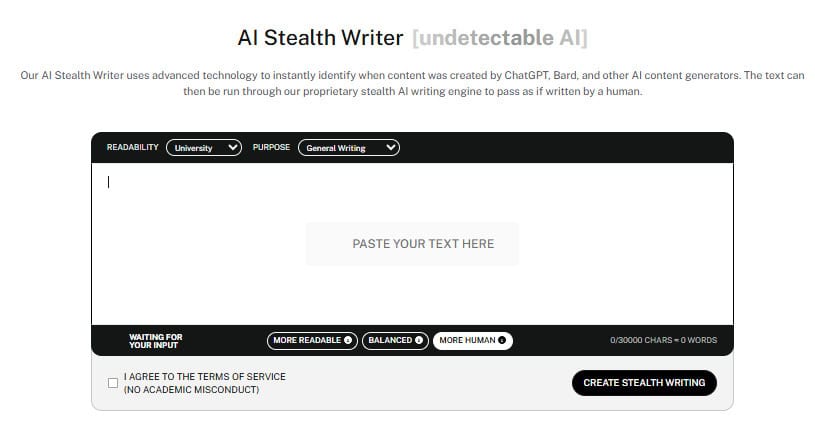
Our AI Stealth Writer allows users to choose from various “Human” levels, from high school level to university or professional.
This ensures that the tone remains consistent with the intended audience, preventing the “tonal whiplash” that occurs when raw AI tries to sound too smart.
Supporting Responsible AI Use
The goal is not to deceive, but to improve. By providing an AI Content Detector alongside humanization tools, Undetectable AI encourages writers to check their work, cite their sources, and ensure that their final submission is a true reflection of their own ideas and editing.
Best Practices for Using AI Content Without Getting Flagged

Using AI in your writing process is not the problem. The issue comes from how it is used. If you rely too heavily on raw outputs, your content can feel flat, predictable, and easy to detect.
Following a few simple best practices can help you create content that feels natural, reads well, and holds up under closer review.
Avoid publishing raw AI output
Publishing content straight from an AI tool is one of the quickest ways to get flagged. Raw outputs often follow predictable patterns, use generic phrasing, and lack a clear sense of voice.
Even if the grammar is perfect, the writing can feel flat and mechanical. Taking the time to review and refine the content allows you to catch these issues early.
You can adjust awkward phrasing, remove repetition, and make the structure feel more natural. This step alone can significantly improve how your content is perceived by both readers and detection tools.
Always edit for tone and voice
AI-generated text often struggles to maintain a consistent tone, especially when writing for a specific audience. Editing for tone and voice helps align the content with your brand or personal style.
Read the text out loud and ask yourself if it sounds like something you would naturally say. Adjust sentence flow, simplify overly complex phrases, and remove anything that feels too formal or robotic.
A clear and consistent voice makes your content more engaging and helps it stand out from generic AI writing.
Add personal insights, examples, or opinions
One of the easiest ways to make content feel human is to include personal insights or real-world examples. AI can explain concepts, but it cannot share lived experiences or unique perspectives.
Adding your own thoughts, observations, or stories gives the content more depth and authenticity. Even small details can make a big difference.
This not only improves readability but also builds trust with your audience, making the content feel more credible and relatable.
Use AI as a draft assistant, not final writer
AI works best as a starting point, not the finished product. Think of it as a tool to help you organize ideas, generate outlines, or create a rough draft.
From there, your role is to shape and refine the content into something that feels complete and original.
Relying on AI for the entire process often leads to generic results. When you treat it as an assistant instead, you stay in control of the final output and ensure the content reflects your intent and standards.
Combine AI + human review
The most reliable approach is to combine AI efficiency with human judgment. Use AI to speed up the writing process, then apply careful review to improve clarity, accuracy, and tone.
This includes checking facts, refining structure, and making sure the content flows naturally. A human review adds context, nuance, and critical thinking that AI alone cannot provide.
This combination helps you produce content that is both efficient to create and strong in quality, making it far less likely to be flagged or dismissed.
The Future of AI Content Detection
As we look toward 2027 and beyond, the battle between generation and detection will continue to reshape how we interact with information online.
- The Ongoing AI vs. Detection Arms Race: Every time a detector gets smarter, the generators get better at mimicking human “noise.” This cycle will likely continue until we reach a point of “perfect parity.”
- Smarter Detection Algorithms: Future tools will likely look at “metadata” and “fingerprinting” techniques, such as hidden watermarks embedded by the companies that create the AI models.
- The Shift Toward Transparency Instead of Policing: Many experts suggests that we will eventually stop trying to “catch” AI and instead focus on verifyable “human-in-the-loop” workflows.
- Why Writing Skills Still Matter: Even in a world full of AI, the ability to edit, fact-check, and provide unique human perspective remains the most valuable skill a writer can possess.
Try our AI Detector and Humanizer in the widget below!
FAQs
Is AI content detection always accurate?
No, it is probabilistic. False positives are a common occurrence, especially with formal or non-native English writing. You should always use detection results as a starting point for investigation rather than a final judgment.
Can Google penalize me for AI-generated content?
According to Google Search Central, Google focuses on the quality and helpfulness of the content. If your AI content is unhelpful or created purely to manipulate rankings, it will be penalized, regardless of whether it was written by a machine.
How do I make my AI content undetectable?
The most effective way is to use a humanization tool like Undetectable AI, which restructures the text to match human linguistic patterns. However, the best results always come from adding your own personal stories and unique insights manually.
Does Turnitin catch all AI content?
Turnitin is highly advanced but can still be bypassed by sophisticated rewriting and humanization. It is best used by teachers to look for general patterns of inconsistency in a student’s work over time.
Can AI content detection tools detect paraphrased AI text?
Not always. While advanced tools can sometimes identify paraphrased AI content, heavily edited or humanized text can bypass detection.
This is why relying on a single tool is risky. A combination of multiple detectors and manual review is the most reliable approach.
Is it unethical to use AI-generated content if it passes detection?
Not necessarily. The ethics depend on how the content is used. In marketing and content creation, AI is widely accepted as a tool.
However, in academic or professional settings where originality is required, passing AI detection does not automatically make the content ethical. Transparency and proper attribution remain key.
Conclusion
As artificial intelligence becomes a permanent fixture in our creative and professional lives, understanding ai content detection is essential for maintaining integrity and trust.
While detection tools offer a valuable look into the mathematical origin of a text, they are not infallible judges.
The most successful creators in 2026 are those who use these tools responsibly, combining the efficiency of AI with the irreplaceable warmth and nuance of a human voice.
By staying informed and using a multi-layered approach to verification, you can navigate the modern web with confidence.
Authenticity is the most valuable currency in the age of automation. Make sure your voice is heard, not just your prompts.
Ready to ensure your writing is both high-quality and authentically you? Explore Undetectable AI to humanize your drafts and maintain your professional edge.