
You have a great product. You have a website. You start selling. The money should be pouring in any day now! But when you check your analytics, the traffic is flat, and sales aren’t happening.
It’s a frustrating experience, but the problem is usually not the product itself. You’re just having a marketing problem.
It is easy to get distracted by the latest social media trends or flashy advertising tactics. But before you pour money into complex campaigns or viral gimmicks, you need a solid foundation.
You could be launching a startup, growing an established business, or building new skills for your career, but mastering the basics is non-negotiable.
Marketing fundamentals provide timeless frameworks for making informed decisions in product development, pricing, promotion, and customer engagement.
When you understand these core principles, you stop throwing spaghetti at the wall and start building strategies that prioritize your customers’ unique needs and, most importantly, drive sales.
This guide breaks down the essential concepts every marketer needs to build a successful marketing strategy from the ground up, including the 4 Ps, digital marketing channels, and how to measure performance.
Let’s dive in.
Key Takeaways
- Marketing fundamentals focus on understanding customer needs to create, communicate, and deliver value.
- The 4 Ps of marketing (Product, Price, Place, Promotion) provide a practical framework for building any marketing strategy.
- Digital marketing gives brands access to a wide range of affordable channels to reach their target audience.
- Measuring performance with data and analytics is what separates guesswork from a successful marketing strategy.
- Customer retention is often more valuable than acquisition, making long-term engagement a core priority.
What are Marketing Fundamentals?
At its simplest, marketing is the process of getting people interested in your company’s product or service. But that definition barely scratches the surface.
Marketing fundamentals are the building blocks for understanding customer needs, so you can create, communicate, and deliver value.
Basic Concepts of Marketing
Marketing fundamentals cover a wide range of disciplines, from understanding consumer behaviour to crafting the right promotional message.


Never Worry About AI Detecting Your Texts Again. Undetectable AI Can Help You:
- Make your AI assisted writing appear human-like.
- Bypass all major AI detection tools with just one click.
- Use AI safely and confidently in school and work.
At the core of all marketing concepts is a simple idea: you need to know your customers better than they know themselves.
What are they struggling with? What do they want? What would make their lives easier? When you can answer those questions clearly, your marketing strategies become far more focused and effective.
Understanding these basics also helps you make smarter decisions about where to invest your time and money. Not every marketing channel will work for every business.
Some brands thrive on social media, while others see their best results from email marketing or search engine optimization (SEO).
The fundamentals give you the knowledge to evaluate your options and choose the right approach for your specific situation.
The Importance of Market Research
You need to do some market research to understand your target audience demographics, psychographics, and behaviors. A customer-centric mindset is foundational for developing effective marketing strategies.
When you understand your audience deeply, you can adapt your messaging to speak directly to their pain points.
It’s the difference between speaking to someone in their native language versus one they barely know.
Analyzing competitors and market conditions is a basic step in any marketing strategy, allowing you to identify gaps you can fill and build a competitive advantage.
Simply collecting data from a customer survey puts a brand in a much better position to craft messaging that stands out in a crowded market.
Segmentation, Targeting, and Positioning
The STP Model is a classic framework that helps clarify this process. It stands for Segmentation, Targeting, and Positioning.
First, you segment your broader market into smaller groups with shared characteristics.
Next, you target the specific group most likely to buy from you.
Finally, you position your product in a way that highlights its unique value proposition (UVP).
Differentiation involves using research to find a unique selling proposition (USP) that separates a brand from competitors.
Brands that invest in this process early tend to build stronger customer loyalty over time and attract customers who genuinely connect with what they stand for.
Understanding the 4 Ps of Marketing
To put these concepts into practice, marketers rely on a framework known as the marketing mix. The marketing mix consists of the 4 Ps: Product, Price, Place, and Promotion.
The 4 Ps of marketing help marketers consider all the factors that go into marketing a product or service.
Product
Product refers to the item or service being offered, which must have a Unique Selling Point (USP) to attract customers. Before you can market anything, you need to be clear on what you are actually selling and why it matters to your customers.
This means looking beyond the physical products themselves and considering the overall experience you are providing. What features does it have? How is it packaged? What kind of support comes with it?
Price
Price involves determining the value of a product, considering factors like perceived value and competitor pricing.
Pricing is one of the most critical decisions you will make, as it directly impacts your profitability and how your brand is perceived in the market.
Price too high, and you might lose potential customers. Price too low, and people might question the quality of what you are offering.
You have to find the sweet spot where customers feel they are getting genuine value for their money.
Place
Place refers to how and where a product is distributed and sold to consumers. It doesn’t matter how great your product is if people cannot figure out how to buy it.
Are you selling directly through your own website? Are you using third-party online platforms? Are you stocking items in physical retail stores?
Managing the supply chain and logistics is key to converting prospects into loyal customers, and it is one of the most fundamental areas marketers often overlook.
Promotion
Promotion encompasses the methods used to communicate the product’s value to customers, including advertising and public relations. This is what most people think of when they hear the word “marketing.”
It covers things like email marketing, social media campaigns, influencer marketing, and display advertising. The goal of promotion is to reach your target audience with the right message at the right time.
Common Types of Modern Marketing
The ways we communicate have evolved, and so have the strategies we use to reach people. Today, businesses use a blend of different approaches to build brand loyalty and drive sales.
Understanding the different types of marketing helps you make smarter decisions about where to focus your efforts.
Inbound Marketing
Inbound marketing focuses on drawing customers in by creating valuable content and experiences tailored to them.
Instead of interrupting people with ads, you provide information they are actively searching for via queries on Google, Bing or even Reddit.
This often involves content marketing, where you create blog posts, videos, or podcasts that answer common questions and build trust with your audience.
Creating engaging content is essential for driving customers through your marketing funnel, from awareness all the way through to purchase.
Pro Tip: If you are struggling to optimize your content for search engines, try using Undetectable AI’s AI SEO Content Writer to help structure your articles and hit the right keywords naturally.
Outbound Marketing
Outbound marketing, on the other hand, involves pushing your message out to a broad audience. This includes traditional tactics like TV commercials, cold calling, and display advertising.
Digital, Social Media, and Influencer Marketing
Digital marketing is cheaper, more immediate, and more customizable compared to traditional outbound approaches, which is why so many brands have shifted their budgets toward digital channels.
That said, outbound tactics can still be effective for building rapid brand awareness, particularly for brands targeting older demographics or local markets.
Influencer marketing has also become a major channel for brands looking to reach new audiences.
By partnering with creators who already have the trust of your target market, you can get your product in front of highly engaged customers without the hard sell.
Social media marketing works hand-in-hand with influencer marketing, giving brands a platform to share content, respond to customers, and build a community around their products.
One of the biggest bottlenecks in marketing is inconsistent voice across campaigns, platforms, and channels.
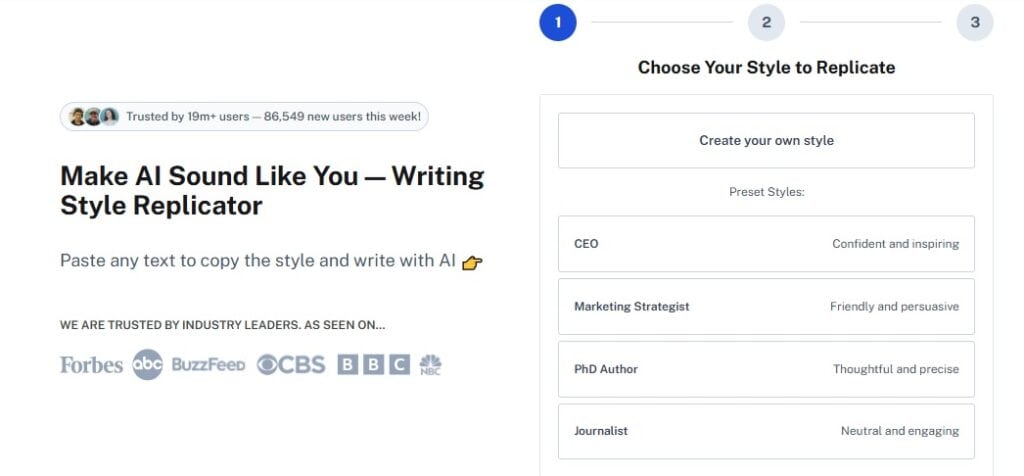
Our Undetectable AI Writing Style Replicator is designed to eliminate these issues across your marketing emails, landing pages, ads, or long-form content, so every piece sounds like it came from the same brand brain.
Digital Marketing Channels Businesses Use
Digital marketing refers to the use of all internet-based marketing efforts. The 5 Ds of digital marketing include Digital Devices, Digital Platforms, Digital Media, Digital Data, and Digital Technology.
A solid grasp of digital marketing fundamentals helps you make sense of these channels and decide which ones are worth your time and budget.
Content marketing is the backbone of most digital marketing strategies. When you create genuinely useful digital content, you attract customers who are already interested in what you offer.
This content feeds your marketing funnel at every stage: blog posts and videos bring in new visitors, social media marketing helps those posts reach a wider audience, email marketing nurtures visitors into leads, and targeted campaigns convert those leads into paying customers.
Website
Digital marketers need to optimize their digital content for various devices to provide a consistent experience across smartphones, tablets, and desktops.
Your website needs to load quickly, look clean on every screen, and make it easy for customers to take action. Google and other search engines reward sites that deliver a great user experience, so this is both a technical and a marketing priority.
Search Engine Marketing and SEO
Search engine marketing (SEM) and SEO are critical for making sure your business appears when people search for solutions on a search engine like Google.
A strong SEO strategy helps you attract organic traffic over time, while paid search engine marketing can generate results more quickly.
Email Marketing
Email marketing remains one of the most effective channels for nurturing leads, with studies consistently showing it delivers strong ROI compared to other digital marketing tactics.
Brands that combine strong SEO with a consistent email strategy tend to build more predictable revenue streams over time.
Brands that invest in consistent, high-quality content tend to see compounding returns over time. As their digital presence grows across channels, their authority in the market strengthens.
Marketing Budgeting and Resource Planning

You cannot run a successful marketing strategy without a clear plan for how you will spend your time and money.
Budgeting requires you to look at your overall business goals and determine how much you can realistically invest in acquiring new customers.
Start by identifying your key performance indicators (KPIs). What metrics matter most to your business? A marketing manager will typically set these priorities at the start of each quarter and adjust based on performance data.
Are you focused on website traffic, lead generation, or direct sales? Once you know what you are measuring, you can allocate your budget to the channels most likely to deliver those results.
Resource planning also involves deciding who will execute your strategy. Do you need to hire a dedicated team, or can you handle the work yourself with the help of digital tools?
Will you need to invest in new technologies or software to manage your campaigns? Making these decisions up front prevents overspending and keeps your marketing efforts focused.
If you are just getting started, online courses are a great place to build your knowledge. A structured digital marketing course will walk you through the fundamentals in a logical order, giving you the prior experience and context you need to make smarter decisions.
Platforms like Google and Coursera offer free and paid options that cover the fundamentals of digital marketing, so you can build new skills without a huge upfront investment.
Many brands find that investing in team training pays off quickly, as a team with a solid grasp of digital marketing fundamentals makes better decisions at every level.
Measuring Marketing Performance and Results
If you are not measuring your results, you are just playing a guessing game.
Data-driven decision-making uses analytics to measure marketing performance against goals so you can adjust strategies that aren’t making you money.
To be effective in digital marketing, you need to track your results and measure your return on investment (ROI).
Tools like Google Analytics provide deep customer insights into how people are interacting with your website. You can see where your traffic is coming from, which pages are the most popular, and where people are dropping off in your marketing funnel.
Google Search Console is another valuable tool that shows you how your site is performing in search results.
Real-world examples are everywhere. A brand might notice that their email campaigns are driving more conversions than their paid ads, so they shift more of their budget toward email.
Or they might find that a particular blog post is bringing in a large amount of organic traffic, and use that insight to create more content on similar topics.
Continuous improvement is necessary to adapt digital marketing strategies based on performance data.
How Undetectable AI Can Assist Marketing Strategies
Developing and executing a comprehensive marketing strategy takes a significant amount of time and effort.
Creating engaging content consistently is one of the biggest challenges digital marketers face, particularly when you are managing multiple channels at once.
Undetectable AI can help you come up with campaign ideas, draft copy for your targeted campaigns, and refine your messaging so it resonates with your audience.

Try using Undetectable AI’s AI Chatbot as your brainstorm buddy, a sounding board for your ideas and marketing strategies that can also give you feedback.
For brands trying to scale their digital marketing efforts without scaling their team, AI support can be genuinely transformative. But the most engaging marketing feels like a person is just talking to you.

You can use the Undetectable AI AI Humanizer to refine your generated content so your human voice shines through.
Use the widget below to test our AI Detector and Humanizer!
Frequently Asked Questions About Marketing Fundamentals
What are the most important marketing fundamentals for beginners?
The most important marketing fundamentals for beginners include understanding your target audience, defining your value proposition, and learning how to use the 4 Ps of the marketing mix.
From there, building skills in digital marketing, content creation, and data analysis will give you a strong foundation to grow from.
What is the difference between inbound and outbound marketing?
Inbound marketing draws customers in by creating valuable content they are actively searching for, while outbound marketing pushes messages out to a broad audience through advertising and direct outreach.
Most modern marketing strategies use a combination of both, with digital marketing channels making inbound tactics more accessible and cost-effective than ever.
How do I measure the success of my marketing strategies?
The best way to measure success is to set clear key performance indicators (KPIs) before you launch a campaign. Tools like Google Analytics can help you track website traffic, conversions, and customer behaviour.
For email marketing, track open rates, click-through rates, and conversions. Regularly reviewing your data allows you to adjust your strategies and improve results over time.
What is a marketing funnel?
A marketing funnel describes the journey a customer takes from first becoming aware of your brand to making a purchase. The top of the funnel focuses on attracting new visitors through content marketing, SEO, and organic search.
The middle of the funnel nurtures those visitors with email marketing and targeted campaigns. The bottom of the funnel converts leads into paying customers through strong offers and clear calls to action.
Do I need a digital marketing course to get started?
Not necessarily, but a structured course can accelerate your learning significantly.
It gives you a framework for understanding how all the different channels and strategies fit together, and it provides the prior experience and context that makes real-world application much easier.
Google offers free courses through its Digital Garage, which is a great place to start.
Final Take on the Fundamentals of Marketing
Building a strong marketing foundation takes time, but the payoff is worth it.
When you understand how to identify your target market, develop a compelling value proposition, and communicate that value across the right channels, you give your business a genuine competitive advantage.
The fundamentals of marketing haven’t changed, even as new technologies and platforms emerge.
Keep learning, keep testing, and always keep your focus on delivering real value to your customers. Brands that stay curious, measure their results, and adapt their digital marketing strategies based on data are the ones that build lasting customer loyalty.
The best marketers are not the ones with the biggest budgets; they are the ones who understand their customers deeply and communicate with them consistently across every channel.
The tools will evolve, but the core principles of good marketing will always remain the same. Brands that build on a solid foundation of these fundamentals will always have an advantage over those who chase trends without a strategy.
Turn your marketing ideas into clear, compelling, and human sounding content with Undetectable AI.